Indian Stock Markets Plunge Amid Rising US-Iran Tensions
Synopsis
The Indian stock markets saw a notable decline due to escalating tensions between the US and Iran. With major indices sinking, investor sentiment remains shaky, reflecting concerns over geopolitical uncertainties. This article delves into the market's performance, expert insights, and sector-wise impacts.
Key Takeaways
Indian stock markets declined sharply due to US-Iran tensions.
Nifty fell by 1.24%, closing at 24,865.70.
Sensex dropped by 1.29%, finishing at 80,238.85.
Increased volatility indicated heightened market fear.
Expert analysis suggests watching key support levels.
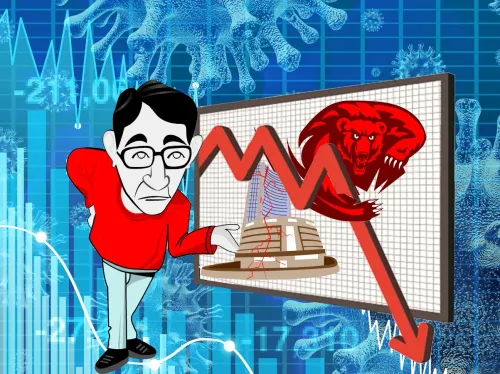
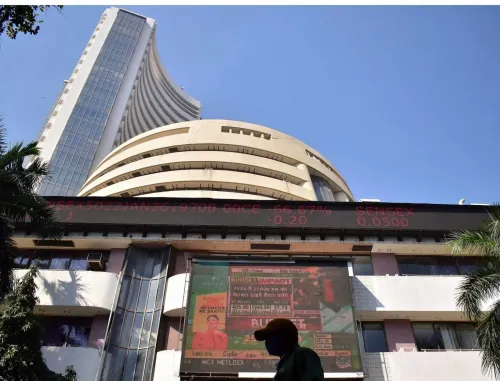
Mumbai, March 2 (NationPress) The Indian stock markets experienced a significant downturn on Monday, as escalating tensions between the United States and Iran negatively impacted investor confidence, leading to widespread selling across various sectors.
The benchmark Nifty index declined by 1.24 percent, equating to 312.95 points, closing at 24,865.70. Meanwhile, the Sensex fell by 1.29 percent, or 1,048.34 points, finishing at 80,238.85—its lowest closing since September 2025.
Despite some recovery from the day’s minimum points, both indices remained firmly in the negative territory at session’s end.
Experts have pointed out that in terms of the Nifty's technical outlook, a crucial support level is established at 24,600.
“If there’s a decisive breakdown below this threshold, it could initiate a more profound correction within the market. On the upside, resistance is anticipated at 25,000,” stated an analyst.
“As long as the Nifty stays below 25,000, the overall sentiment is expected to lean towards bearishness,” noted another expert.
Among the 30 stocks in the index, only BEL, Sun Pharma, and ITC managed to close with gains. Conversely, IndiGo was the leading loser, plummeting by 6.25 percent.
Other major losers included Maruti Suzuki India, Asian Paints, Bajaj Finserv, and Reliance Industries.
The nervousness among investors was evident in the volatility index. The NSE Nifty India Volatility Index, known as India VIX, soared 25.01 percent, concluding at 17.13, indicating increased fear in the market.
The broader markets fared even worse than the main indices. The Nifty MidCap index dropped by 1.58 percent, and the Nifty SmallCap index fell by 1.75 percent.
Sector-wise, stocks in the auto and oil & gas sectors were under the most pressure. The Nifty Auto index was the worst-performing sector, ending down 2.20 percent.
In contrast, the Nifty Metal index managed to finish in positive territory, closing up 0.24 percent, outperforming other sectoral indices despite the overall weak market sentiment.
Market participants expressed that geopolitical uncertainties are making investors more cautious, resulting in diminished risk-taking and profit booking across various segments.
“Investor sentiment remains significantly impacted due to escalating geopolitical tensions in the Middle East, with concerns now translating into visible economic issues across multiple sectors,” remarked an analyst.
Point of View
It's clear that escalating geopolitical tensions are impacting market dynamics. The significant downturn in the Indian stock markets highlights the sensitivity of investor sentiment to global events. It's crucial for market participants to remain vigilant and informed as these developments unfold.
NationPress
28 Sept 2026
Frequently Asked Questions
What caused the decline in the Indian stock markets?
The decline was driven by rising tensions between the US and Iran, which dampened investor sentiment and led to widespread selling across sectors.
What were the closing values of Nifty and Sensex?
The Nifty closed at 24,865.70, down 1.24%, while the Sensex finished at 80,238.85, down 1.29%.
Which sectors were most affected?
The auto and oil & gas sectors faced the most pressure, with the Nifty Auto index being the worst-performing sector.
How did the volatility index react?
The NSE Nifty India Volatility Index, or India VIX, surged 25.01% to end at 17.13, reflecting increased fear in the market.
What should investors watch for in the future?
Investors should monitor key support and resistance levels, especially the crucial 24,600 support for Nifty, as well as geopolitical developments.