Pakistan won't gain lasting US favour from West Asia role: AEI analyst
Synopsis
American Enterprise Institute scholar Michael Rubin delivers a blunt verdict: Pakistan's current diplomatic honeymoon with Trump — built on West Asia mediation and the honouring of Army chief Asim Munir — will end the same way every previous US-Pakistan courtship has, with Washington walking away the moment it no longer needs Islamabad.
Key Takeaways
Michael Rubin of the American Enterprise Institute wrote in The Sunday Guardian that Pakistan will not collect lasting benefits from its current closeness with the Trump administration .
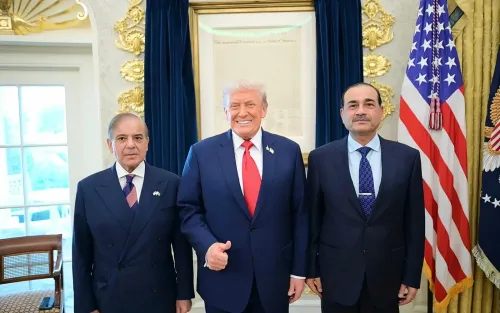
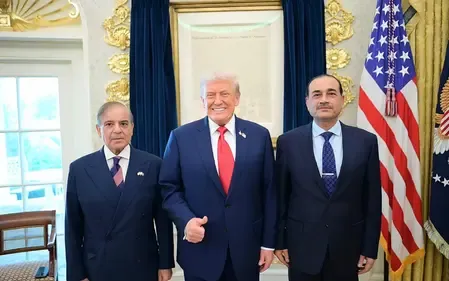
President Trump honoured Pakistan Army chief Field Marshal Asim Munir despite Pakistan's history of sheltering Osama bin Laden and sponsoring the Taliban, according to Rubin.
Rubin argues Trump's moves have "systematically shredded" a 25-year effort to build a US-India strategic partnership.
The US sanctioned Pakistan repeatedly over 50 years , including Glenn Amendment sanctions after Pakistan's 1998 nuclear test, lifted only in 2001 for Afghan cooperation.
With US forces out of Afghanistan , Rubin contends Pakistan's strategic utility to Washington has again disappeared.
American Enterprise Institute senior fellow Michael Rubin has argued that Pakistan stands to gain little lasting benefit from its current proximity to the Trump administration, warning that Washington has a long history of using Islamabad as a strategic tool and then abandoning it. Writing in The Sunday Guardian, Rubin contended that US President Donald Trump's decision to honour Pakistan Army chief Field Marshal Asim Munir — rather than hold the country accountable for sheltering Osama bin Laden, sponsoring the Taliban, and its prolonged double-dealing with the United States — has come at a significant strategic cost.
A Quarter-Century Partnership Shredded
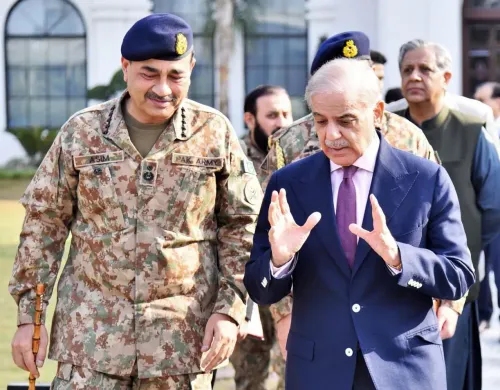
"In doing so, President Trump has systematically shredded a quarter century effort to build a US-India partnership," Rubin wrote. He described Munir as an "unapologetic terror apologist" with, in his words, both American and Indian blood on his hands. The elevation of Munir, Rubin argued, sends a damaging signal to New Delhi at a time when the US-India strategic relationship had been painstakingly constructed over 25 years.
The West Asia Mediation Gambit
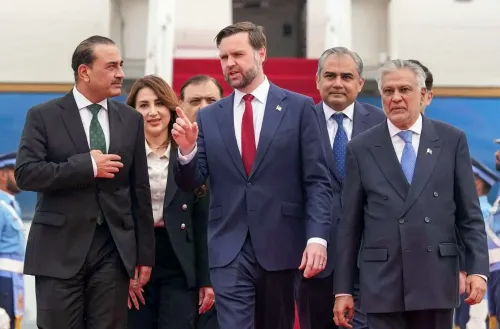
Trump reportedly turned to Pakistan to mediate between the US and Iran on the West Asia conflict, effectively placing Islamabad on what Rubin described as a "pedestal." Rubin noted the sharp contrast with Trump's first term, when the President had publicly criticised Pakistan's "lies and deceit" — a posture that has now shifted to describing Pakistanis as "brilliant people." Critics argue this reversal reflects transactional short-termism rather than a coherent South Asia strategy.
Pakistan's Strategic Miscalculations
Rubin suggested that Pakistani authorities may believe Trump will sell them advanced technology to offset India's military advantage, or that Munir hopes to leverage a US mediation opening on Kashmir. However, Rubin cautioned that such calculations ignore the historically misaligned objectives of the two countries. "America sought to stop if not roll back Soviet expansion; Pakistan was more obsessed with India," he wrote. He noted that Pakistani officials had a "unique ability not only to start every single war with India, but to convince themselves and Pakistani society after they lost that Pakistan was the victim from the start."
A History of US Sanctions and Strategic Abandonment
Rubin characterised Pakistan as "a criminal state" and pointed to a recurring pattern: the United States has sanctioned Pakistan repeatedly over the past 50 years, even while nominally treating it as an ally. After Pakistan detonated its nuclear weapon in 1998, Glenn Amendment sanctions came into force and remained until 2001, when President George W. Bush waived them to secure Pakistani cooperation on Afghanistan. Neither President Lyndon Johnson nor Richard Nixon fully accepted the Pakistani narrative, and Washington never seriously considered mobilising against India on Pakistan's behalf — even under National Security Advisor Henry Kissinger, whose animosity toward Prime Minister Indira Gandhi Rubin described as "unhinged."
Pakistan's Leverage May Already Be Gone
With US forces no longer stationed in Afghanistan, Rubin argued, the strategic rationale that previously compelled Washington to court Islamabad has evaporated. "The United States uses Pakistan and then turns its back on the country as soon as Washington no longer needs its assistance," he wrote. His conclusion was pointed: "Pakistan may believe it is playing Trump for a fool, but the opposite may be true. Pakistan will never collect on Trump promises." The analysis suggests that whatever diplomatic capital Munir believes he is accumulating may prove illusory once Washington's immediate regional objectives are met.
Point of View
And under-reported, is the cost being imposed on the US-India relationship in the process — a quarter-century of careful diplomatic architecture being traded for what may amount to a temporary mediation role. If Munir believes this moment is different, the historical record offers little comfort.
NationPress
26 Sept 2026
Frequently Asked Questions
What did Michael Rubin write about Pakistan and the Trump administration?
Michael Rubin, a senior fellow at the American Enterprise Institute, argued in The Sunday Guardian that Pakistan will not gain lasting benefits from its current closeness with President Trump. He warned that the US has a consistent pattern of using Pakistan for strategic purposes and then abandoning it once those needs are met.
Why did Trump honour Pakistan Army chief Asim Munir?
According to Rubin's analysis, Trump turned to Pakistan to mediate between the US and Iran on the West Asia conflict, which placed Islamabad in a position of temporary diplomatic favour. Rubin argues this honour came despite Pakistan's history of sheltering Osama bin Laden and sponsoring the Taliban.
How has the US-Pakistan relationship historically played out?
Rubin points to a recurring cycle: the US courts Pakistan for strategic needs — Soviet containment, Afghan operations — then imposes sanctions or withdraws support once those needs pass. Glenn Amendment sanctions after Pakistan's 1998 nuclear test, lifted only in 2001 for Afghan cooperation, are cited as a key example.
What is the impact on US-India relations?
Rubin argues that Trump's decision to honour Munir has 'systematically shredded' a 25-year effort to build a US-India strategic partnership. The elevation of a Pakistani military chief he describes as a 'terror apologist' sends a damaging signal to New Delhi.
Does Pakistan have leverage over the US through Kashmir or technology deals?
Rubin suggests Pakistani authorities may hope to leverage the current moment for advanced US military technology or US mediation on Kashmir, but argues these hopes are misplaced. With US forces out of Afghanistan, he contends Pakistan's strategic utility to Washington has largely disappeared.