Pakistan Unreliable US Ally: Major Non-NATO Status Under Scrutiny
Synopsis
A new American Thinker report brands Pakistan an 'extremely problematic' US partner, citing Field Marshal Asim Munir's White House visits alongside Islamabad's documented support for Hamas operatives, pro-Iran voting at the UN, and PM Shehbaz Sharif calling Khamenei's death a 'martyrdom' — exposing a stunning double game at the heart of US-Pakistan relations.
Key Takeaways
American Thinker report labels Pakistan an 'extremely problematic partner' for the United States , calling for reconsideration of its Major Non-NATO Ally (MNNA) status.
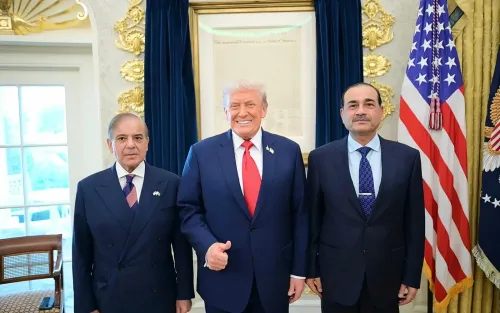
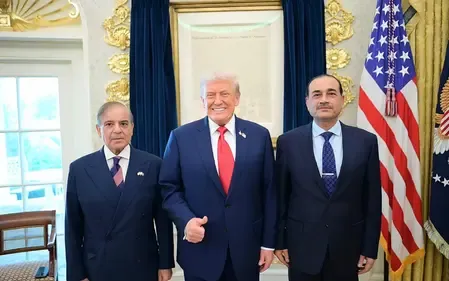
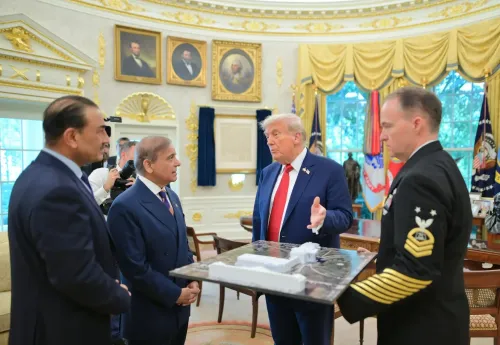
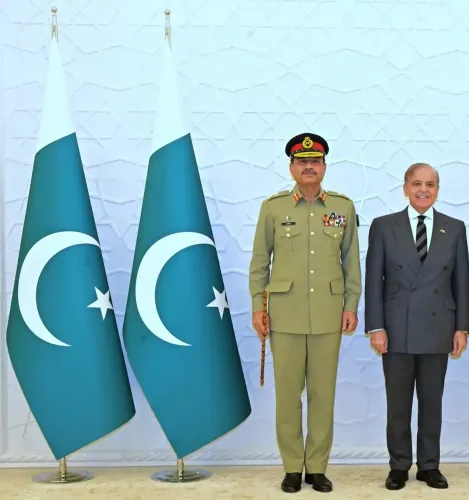
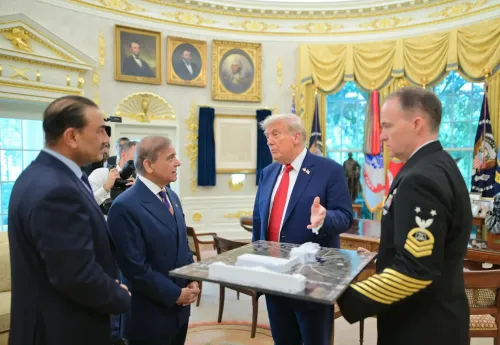
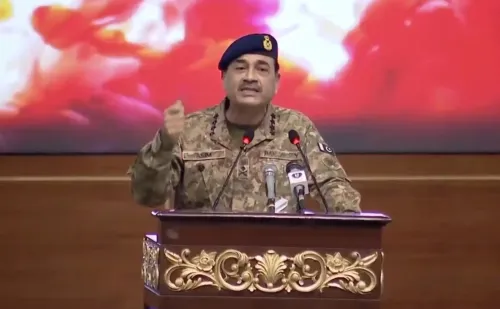
Field Marshal Asim Munir , described as Pakistan's real leader, visited the White House twice during summer 2025 , signalling deepening US-Pakistan engagement even as contradictions mounted.
Hamas representative Naji Zaheer operates freely in Pakistan , sharing platforms with US-designated terror groups Lashkar-e-Taiba and Jaish-e-Muhammad .
During the June 2025 12-Day War , Pakistan sided with Iran against the US-Israel coalition , undermining its role as a neutral intermediary.
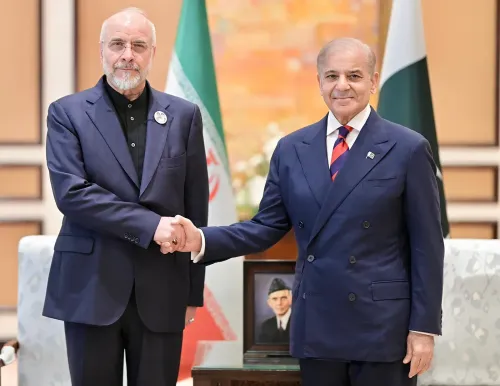
PM Shehbaz Sharif called Iranian Supreme Leader Ali Khamenei's death a 'martyrdom' following US-Israeli strikes — a statement the report says reflects ideological alignment with Tehran .
On January 24, 2026 , Iran publicly thanked Pakistan for voting against a UN Human Rights Council resolution investigating Tehran's crackdown on domestic protests.
Washington, April 25: A damning new report has labelled Pakistan an "extremely problematic partner" for the United States, arguing that Islamabad's Major Non-NATO Ally (MNNA) status deserves urgent reconsideration given its persistent pattern of undermining American strategic interests. Published in American Thinker, the report concludes that despite decades of political, economic, and military engagement, Pakistan has repeatedly failed to act as a reliable or impartial ally for Washington.
Pakistan's Deepening Ties With Washington Mask a Troubling Reality
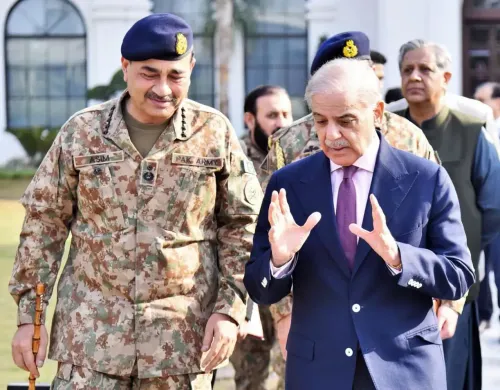
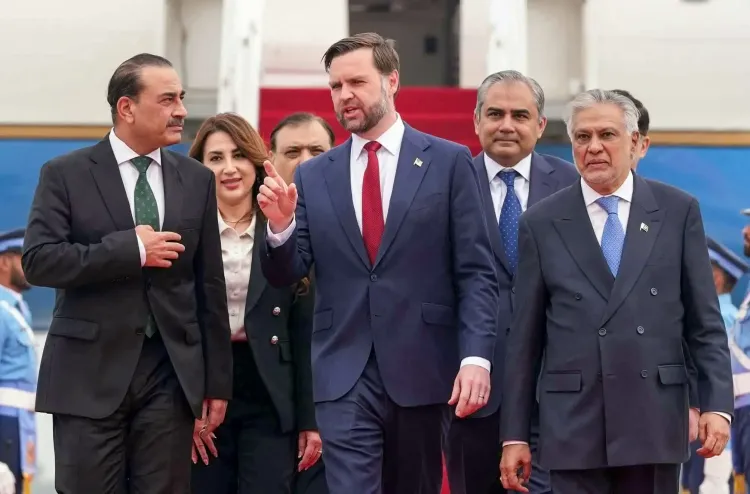
The report acknowledges that the Trump administration has recently moved to strengthen relations with Islamabad, pointing to Pakistan's MNNA designation — a status that grants privileged access to US military cooperation and equipment. In a striking display of renewed engagement, Chief of Army Staff Field Marshal Asim Munir — described in the report as "the real leader of Pakistan" — visited the White House twice within a short period during the summer of 2025.
Beyond military ties, the United States has also expressed interest in expanding cooperation with Pakistan in emerging sectors, including the cryptocurrency industry. Pakistan's participation in the 'Board of Peace' has further elevated its international profile, lending it a veneer of diplomatic credibility that the report argues is undeserved.
Hamas Links and Anti-Israel Activity on Pakistani Soil
The report directly challenges Pakistan's credibility as a neutral intermediary, particularly in the context of the US-Iran conflict. Following the October 7, 2023 Hamas attack on Israel, Islamabad allowed Hamas representatives to operate freely within its borders, participate in public events, and forge ties with local extremist networks.
Naji Zaheer, identified as the current special representative of Hamas in Pakistan, was reportedly invited as a guest of honour at major events and has become a regular presence at anti-Israel rallies and conferences across the country. Critically, Zaheer has been documented sharing platforms with Lashkar-e-Taiba (LeT) and Jaish-e-Muhammad (JeM) — both designated as terrorist organisations by the United States and linked to deadly attacks on India.
This is not an isolated incident. It reflects a consistent pattern of Pakistan providing institutional space to groups that openly oppose US allies and interests — a pattern that stretches back decades and has previously strained US-Pakistan relations, most notably after the 2011 discovery of Osama bin Laden in Abbottabad.
Pakistan's Pro-Iran Tilt During the 12-Day War of 2025
The report's most pointed criticism concerns Pakistan's conduct during the June 2025 12-Day War — a direct military clash between Iran and a coalition of Israel and the United States. Rather than maintaining neutrality, Islamabad adopted a posture openly supportive of Tehran, a stance that the report argues fundamentally contradicts its obligations as a US Major Non-NATO Ally.
The pro-Iran alignment continued into 2026. On January 24, Iranian Foreign Minister Abbas Araghchi publicly thanked Pakistan for backing Tehran at the UN Human Rights Council, after Islamabad voted against a resolution seeking to expand an international investigation into Iran's violent crackdown on domestic protests.
Earlier, following US-Israeli strikes that killed Iranian Supreme Leader Ali Khamenei, Pakistani Prime Minister Shehbaz Sharif expressed condolences and described Khamenei's death as a "martyrdom" — extending solidarity with the Iranian people in their "hour of grief and sorrow." The language was striking in its ideological alignment with Tehran and its implicit rebuke of Washington.
Strategic Contradictions Washington Can No Longer Ignore
The report's conclusion is unambiguous: "Pakistan's conduct reflects a consistent pattern of prioritising regional and ideological ties with Tehran over its strategic commitments to Washington." These are not aberrations — they are a deliberate foreign policy posture that exploits American goodwill while hedging toward adversaries.
This raises a fundamental question about the value of Pakistan's MNNA status. Historically, the designation was intended to reward partners who share US strategic objectives. Critics argue that continuing to extend these privileges to Islamabad — in the face of documented support for Hamas operatives, alignment with Iran, and tolerance of US-designated terror groups — sends a deeply contradictory signal to genuine American allies across the region, including India.
The broader implication is significant: if Washington continues to treat Pakistan as a trusted partner despite this evidence, it risks undermining its own credibility as a strategic guarantor — particularly at a moment when US influence in South Asia is being actively contested by China, which maintains an all-weather alliance with Islamabad.
As geopolitical pressures intensify across South Asia and the Middle East, the US Congress and State Department are expected to face increasing pressure to formally review Pakistan's MNNA designation — a decision that could reshape the strategic architecture of the region for years to come.
Point of View
Not a bug, of Islamabad's foreign policy calculus. What makes this report significant is its timing: it arrives as the Trump administration deepens engagement with Pakistan, apparently prioritising short-term tactical leverage over long-term strategic reliability. The uncomfortable truth that Washington repeatedly avoids is that Pakistan has never fully chosen the American side — it has always used American patronage as a subsidy while hedging toward China, Iran, and Islamist networks. India, which has borne the direct cost of Pakistan-sponsored terrorism for decades, will watch Washington's next move closely — and so will Beijing, which understands that every dollar of American goodwill extended to Islamabad is a strategic gift to its own regional ambitions.
NationPress
16 Sept 2026
Frequently Asked Questions
Why is Pakistan called an 'extremely problematic' US partner?
A report in American Thinker labelled Pakistan an 'extremely problematic' US partner because Islamabad has repeatedly undermined American strategic interests — including allowing Hamas representatives to operate on its soil, voting with Iran at the UN, and expressing solidarity with Tehran during the 2025 US-Israel-Iran conflict. Despite holding Major Non-NATO Ally status, Pakistan's actions reflect consistent alignment with US adversaries.
What is Pakistan's Major Non-NATO Ally (MNNA) status and why does it matter?
Pakistan's MNNA status grants it privileged access to US military cooperation, equipment, and defence agreements — a designation typically reserved for close strategic partners. The report argues this status warrants serious reconsideration given Pakistan's documented support for Hamas operatives and its pro-Iran stance during the 2025 12-Day War.
Who is Naji Zaheer and what is his role in Pakistan?
Naji Zaheer is identified as Hamas's current special representative in Pakistan. According to the report, he has been invited as a guest of honour at major Pakistani events and regularly shares platforms with US-designated terrorist organisations Lashkar-e-Taiba and Jaish-e-Muhammad.
How did Pakistan respond to the killing of Iran's Supreme Leader Ali Khamenei?
Pakistani Prime Minister Shehbaz Sharif expressed condolences following the killing of Iranian Supreme Leader Ali Khamenei in US-Israeli strikes, describing his death as a 'martyrdom' and extending solidarity with the Iranian people. Critics say this language reflects Pakistan's ideological alignment with Tehran over its stated commitments to Washington.
What was Pakistan's position during the US-Iran conflict in 2025?
During the June 2025 12-Day War between Iran and a US-Israel coalition, Pakistan adopted a position supportive of Iran rather than maintaining neutrality. This was followed by Islamabad voting against a UN Human Rights Council resolution scrutinising Iran's crackdown on protests, for which Iranian Foreign Minister Abbas Araghchi publicly thanked Pakistan in January 2026.