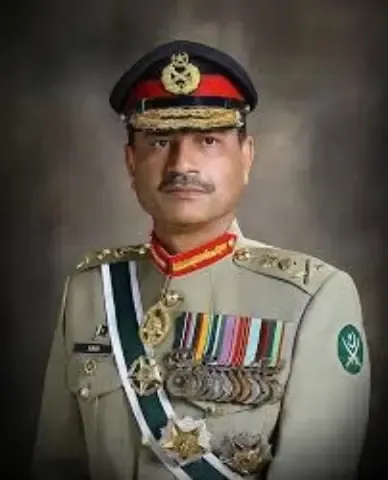
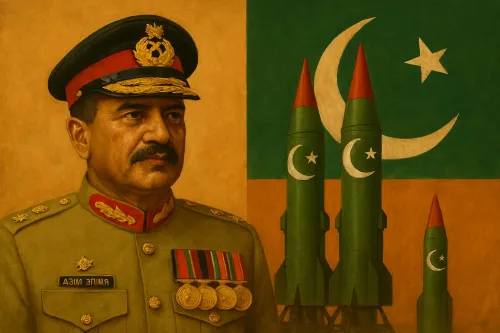
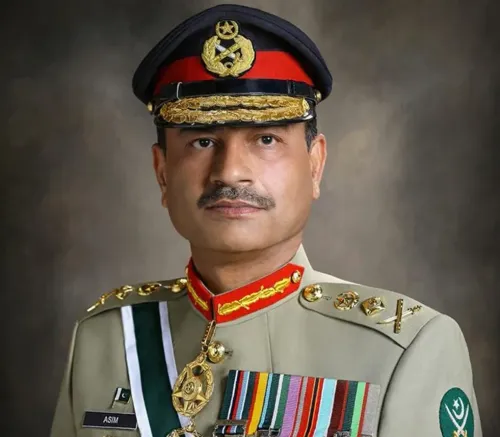
Trump's Munir strategy 'dangerously short-sighted', warns US analyst
Synopsis
A Washington-based analyst has published a pointed critique of Trump's embrace of Pakistani Army Chief Asim Munir as a US-Iran back-channel, arguing that Munir reinforced Tehran's negotiating position rather than balanced it — and that rewarding Pakistan's military establishment without accountability will destabilise South Asia, not steady it.
Key Takeaways
Washington analyst Siddhant Kishore has called Trump 's reliance on General Asim Munir as a US-Iran intermediary “dangerously short-sighted” in a piece for The Cipher Brief .
Munir reportedly told Trump that the US blockade of Iranian ports was obstructing negotiations — a stance critics say aligned with Tehran 's position.
Clashes in Pakistan-occupied Kashmir last month claimed more than 30 lives as security forces were deployed against protesters.
Baloch activist Mahrang Baloch was sentenced to life imprisonment in June 2026 in what rights groups call a politically motivated case.
Kishore argues Pakistan “hedges with Iran, deepens ties with China, antagonises India” — interests that diverge sharply from US strategic priorities.
US President Donald Trump's diplomatic outreach to Pakistani Army Chief General Asim Munir may carry the appearance of transactional statecraft, but the approach is “dangerously short-sighted,” according to a new analysis published in The Cipher Brief. The assessment, authored by Siddhant Kishore, a Washington-based national security and foreign policy analyst, argues that Washington is rewarding a military establishment whose domestic grip is actively destabilising the very region the United States seeks to stabilise.
The Core Argument Against the Trump-Munir Axis
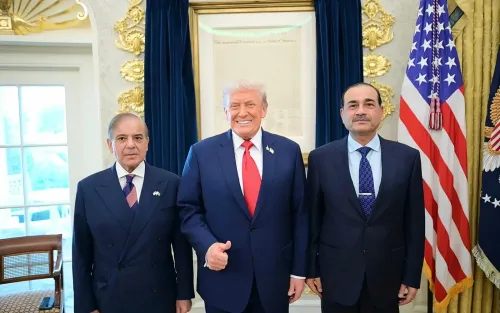
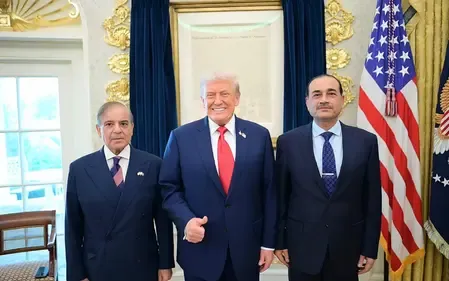
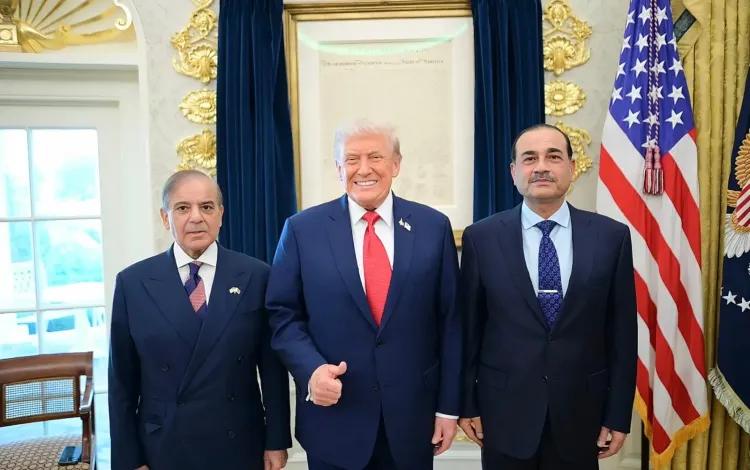
The Trump administration has leaned on Munir as a principal back-channel intermediary in US-Iran diplomacy, welcoming him to the White House and publicly crediting Pakistan with facilitating dialogue during periods of heightened tension. Trump has reportedly called Munir his “favourite” and praised Pakistan's “special insight into Iran,” stating that Pakistanis “know Iran very well, better than most.”
Kishore, however, contends that Munir's actual conduct in those negotiations warrants scrutiny rather than applause. According to the analysis, Munir reportedly told Trump that the US blockade of Iranian ports was a major obstacle to negotiations — a position that reinforced Tehran's demands rather than offering a balanced mediation. “It appeared to align with Tehran's demand that Washington ease pressure before talks could proceed,” Kishore wrote.
Repression at Home: PoK and Balochistan
The analysis draws attention to a pattern of domestic coercion under Munir's watch. In Pakistan-occupied Kashmir (PoK), mass protests over governance failures, elite privileges, and political representation have repeatedly turned violent. Clashes last month claimed more than 30 lives, with police and paramilitary forces deployed against demonstrators.
In Balochistan, the picture is described as grimmer still. Prominent Baloch activist Mahrang Baloch was charged in more than two dozen anti-terrorism cases following a prolonged period of what Kishore described as “unlawful detention.” She was sentenced to life imprisonment in June 2026 in what rights groups have characterised as a “politically motivated and procedurally flawed case.”
Afghanistan Operations and Regional Recklessness
Beyond Pakistan's borders, Kishore flagged that the Pakistani military's operations in Afghanistan have been marked by what he described as recklessness and widespread devastation. This comes amid what the analyst characterises as deepening militarisation within Pakistan itself, raising questions about the long-term consequences of US engagement with the army establishment.
Strategic Divergence: Where Pakistan and the US Part Ways
Kishore warned that Washington's growing engagement with Islamabad risks empowering a military establishment whose regional ambitions do not align with American priorities. “Pakistan hedges with Iran, deepens ties with China, antagonises India, suppresses democratic dissent, and uses its military-commercial complex to convert foreign engagement into domestic power,” he wrote.
The analyst argued that elevating Munir without insisting on accountability will neither bring stability to South Asia nor the Middle East. Instead, it risks legitimising a military regime that has, in his assessment, “learned to profit from crisis, repression and its strategic geography” — a form of “short-termism disguised as diplomacy.” The broader question now is whether the Trump administration will recalibrate its Pakistan posture before strategic costs compound.
Point of View
Manage China's rise, and sustain a working relationship with India — yet its chosen Pakistani interlocutor has interests that cut across all three. Kishore's most pointed charge is not that Munir is unreliable, but that he is reliable in the wrong direction, reinforcing Tehran's demands rather than mediating them. The deeper problem is structural: the US has a long history of outsourcing regional stability to Pakistan's army, and that army has a longer history of converting that trust into domestic impunity. Unless the Trump administration ties engagement to measurable accountability benchmarks, it risks repeating a cycle that has repeatedly disappointed American strategists since the 1980s.
NationPress
14 Oct 2026
Frequently Asked Questions
Why is Trump's reliance on Pakistan Army Chief Asim Munir called 'dangerously short-sighted'?
Washington-based analyst Siddhant Kishore argues in The Cipher Brief that the Trump administration is rewarding a military establishment whose domestic repression and regional hedging actively undermine US strategic goals. He contends that elevating Munir without accountability will destabilise South Asia and the Middle East rather than steady them.
What role has Asim Munir played in US-Iran diplomacy?
Munir has reportedly served as a back-channel intermediary, conveying messages between Washington and Tehran during periods of heightened tension. However, Kishore's analysis alleges that Munir reinforced Iran's demand that the US ease port blockades before talks could proceed, rather than offering neutral mediation.
What is happening in Pakistan-occupied Kashmir and Balochistan?
In Pakistan-occupied Kashmir, protests over governance and political representation turned violent last month, claiming more than 30 lives. In Balochistan, activist Mahrang Baloch was sentenced to life imprisonment in June 2026 on anti-terrorism charges that rights groups have described as politically motivated and procedurally flawed.
How does Pakistan's strategy diverge from US priorities?
According to Kishore, Pakistan hedges with Iran, deepens economic and strategic ties with China, antagonises India, and suppresses democratic dissent — none of which aligns with core US objectives in South Asia or the Middle East.
Who is Siddhant Kishore and where was this analysis published?
Siddhant Kishore is a Washington-based national security and foreign policy analyst. His critique of the Trump-Munir relationship was published in The Cipher Brief, a platform focused on intelligence and national security affairs.