Asim Munir's Dominance: A Threat to Pakistani Democracy?
Synopsis
The increasing military influence in Pakistan, highlighted by Army Chief Asim Munir's pivotal role in US-Iran negotiations, raises serious questions about the future of democracy. As military power consolidates, what does this mean for civilian governance?
Key Takeaways
Asim Munir is central to US-Iran diplomatic efforts.
Military power in Pakistan is consolidating.
Concerns over democratic erosion are rising.
The 27th Amendment reinforces military authority.
Civilian governance faces increasing challenges.
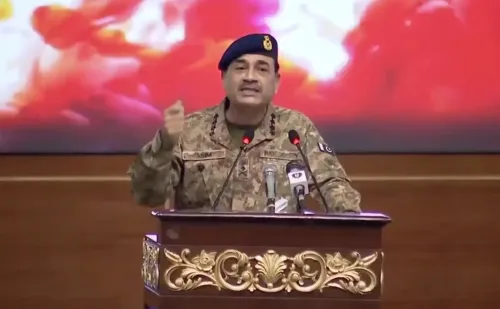
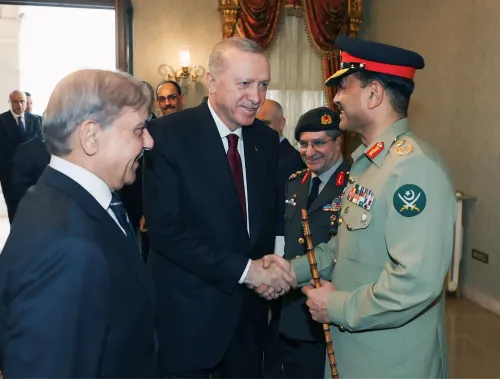
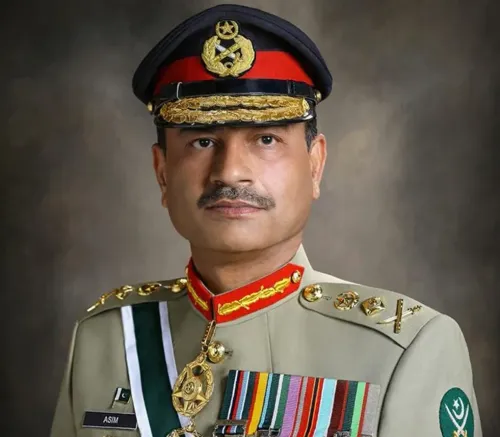
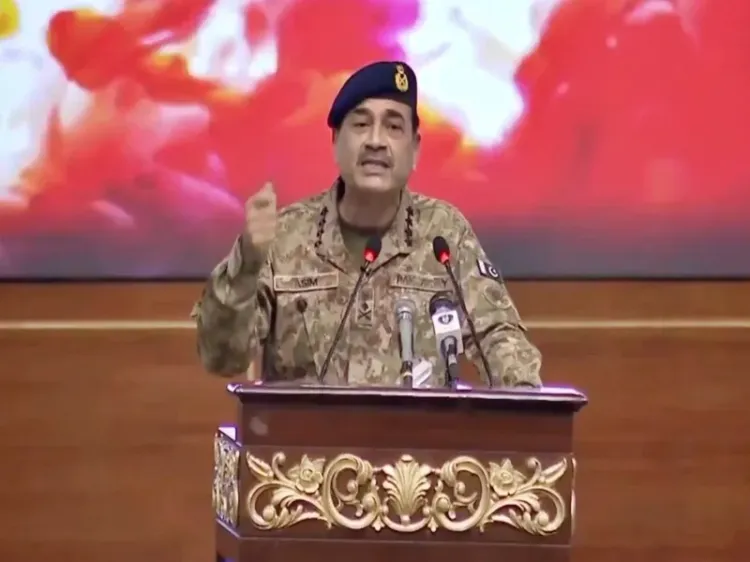
New Delhi, April 17 (NationPress) The civilian administration in Pakistan is once again grappling with increasing military authority, particularly during critical US-Iran negotiation efforts where Army Chief Field Marshal Asim Munir's essential involvement highlights Rawalpindi's growing influence over foreign affairs, raising profound concerns regarding the decline of democratic processes.
As reported by The Guardian on Friday, “Pakistan has emerged as an unexpected diplomatic intermediary between Iran and the US, with Munir being recognized as a pivotal figure.”
“The army chief is among the select few who successfully connected with US and Iranian leaders, relaying messages as a reliable intermediary for both parties. The negotiations are primarily orchestrated from Rawalpindi, the military’s headquarters, rather than Islamabad, the parliamentary seat,” the article added.
Maleeha Lodhi, Pakistan’s former ambassador to both the UN and the US, remarked in an interview that it is indeed the army chief who is “the driving force”, emphasizing that the talks would falter without his involvement.
“The foreign ministry acts merely as a subordinate partner. Nations like Iran and the US trust Asim Munir. Our government ministers are essentially an adjunct,” she further asserted.
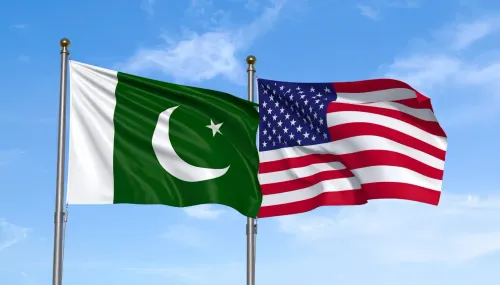
Earlier reports from Islamabad highlighted Munir “making history” by being the first active military head to meet a sitting US President without any political title. On June 18, 2025, he met with President Donald Trump at the White House, which included a formal luncheon and discussions with US Cabinet members.
In the context of the US-Iran mediation efforts, sources indicate that President Trump primarily communicated with the Army Chief rather than Prime Minister Shehbaz Sharif, showcasing a distinct preference for Munir in covert diplomacy. Trump has repeatedly signaled that he relies more on Munir than the Prime Minister.
According to The Guardian, “Trump is reported to have directly urged Munir to leverage his influence and insight regarding the Iranians to facilitate a resolution. During the US and Iranian delegations' meeting in Islamabad on Saturday, Munir acted as a third party in the discussions.”
Recent developments in Pakistan indicate a structural entrenchment of military authority. The 27th Constitutional Amendment, enacted in November 2025, reinforced military dominance by creating a Chief of Defence Forces role for the Army Chief, granting oversight over the Navy and Air Force. This amendment also offers lifetime legal protection to five-star officers, such as Field Marshal Asim Munir, shielding them from legal actions and effectively eliminating civilian oversight.
These changes have intensified worries regarding the fragility of civilian governance, with ongoing reports highlighting persistent threats of corruption, human rights violations, and the repression of dissent under military control.
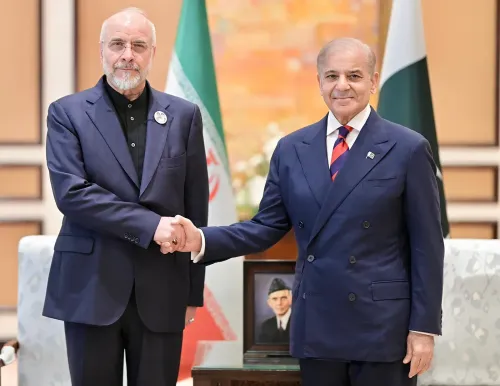
As Pakistan positions itself as a mediator in the US-Iran conflict -- having previously hosted an inconclusive discussion in Islamabad amid a fragile ceasefire -- Prime Minister Shehbaz Sharif has publicly acknowledged Munir's “crucial role” in transmitting messages between Washington and Tehran.
Further developments include Munir’s recent trip to Tehran with a delegation, alongside Interior Minister Mohsin Naqvi, aimed at facilitating a second round of discussions prior to the ceasefire's expiration.
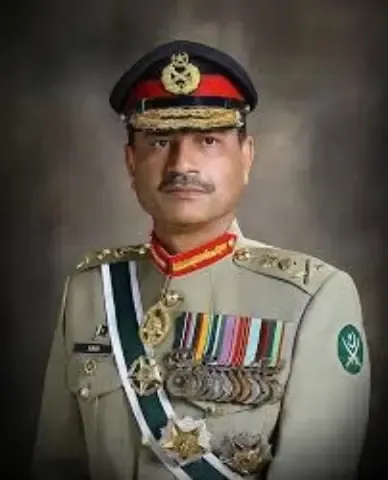
Munir's promotion to Field Marshal in May 2025, despite military setbacks against India during Operation Sindoor, is largely perceived as a strategic move to consolidate power and protect him from internal challenges. His personal connection with US President Donald Trump has further established him as a key negotiator, maximizing ties with both Tehran and Washington.
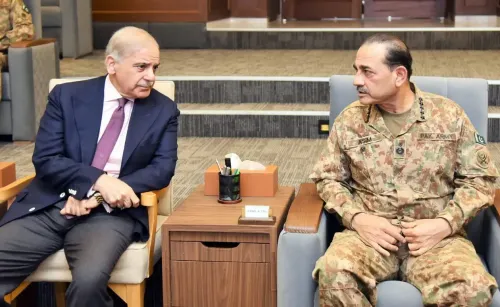
Civilian leaders, including the Prime Minister, have largely yielded to his authority, as demonstrated by Sharif’s consistent public endorsements of the military’s preparedness and Munir's diplomatic initiatives.
The Sharif administration continues to heavily depend on military support, as evidenced by their backing of the 27th Amendment despite international condemnation from organizations like the International Commission of Jurists, which described it as an “assault on judicial independence.”
This reliance further skews the power dynamics between Rawalpindi and Islamabad, placing politicians at risk of removal, imprisonment, or worse should they challenge the military establishment — as seen in previous cases, such as the ousting of former Prime Minister Imran Khan.
The ongoing mediation effort appears to hinge significantly on the army chief, potentially sidelining the Prime Minister and indicating risks to civilian governance should the discussions collapse. While Munir's growing prominence may enhance Pakistan's geopolitical significance, it compromises the balance of democracy, effectively institutionalizing military veto power over policy decisions.
If the mediation succeeds, it could further elevate Munir’s standing while exacerbating civilian marginalization; if it fails, it may incite backlash against Sharif’s administration. Analysts caution that this situation could introduce new instability, as Pakistan's history of military interventions continues to constrain the autonomy of elected officials.
Point of View
The evolving dynamics between Pakistan's military and civilian government suggest a concerning trend of military dominance. This shift raises crucial questions about the integrity of democratic practices and civilian oversight in the country, necessitating a vigilant examination of governance structures.
NationPress
29 Jul 2026
Frequently Asked Questions
What role is Asim Munir playing in US-Iran negotiations?
Asim Munir is acting as a key intermediary in US-Iran negotiations, facilitating communication between both nations and highlighting the military's influence in Pakistan's foreign policy.
How has the military's power changed in Pakistan recently?
Recent constitutional amendments have solidified the military's authority, allowing it to exert more control over civilian governance and foreign relations.
What implications does this military dominance have for democracy in Pakistan?
The increasing military dominance poses significant risks to democratic processes, as it sidelines civilian leaders and restricts political pluralism.
What has been the international response to Pakistan's military influence?
International entities, including the International Commission of Jurists, have criticized the military's growing power, describing it as detrimental to judicial independence and democratic integrity.
What are the potential outcomes of the current US-Iran mediation efforts?
If successful, these efforts could enhance Munir's influence and further marginalize civilian governance; if unsuccessful, they may lead to domestic turmoil and challenges for the Sharif administration.