Pakistan's neutrality as US-Iran mediator questioned: Report
Synopsis
Pakistan's bid to broker US-Iran talks has unravelled — not over logistics, but trust. Iran reportedly suspects Islamabad of leaking confidential exchanges to Washington, while sections of Tehran view the Pakistan track as cover for US military repositioning. Oman, with its record of quiet neutrality, has now emerged as the only credible venue, leaving Pakistan's diplomatic ambitions exposed.
Key Takeaways
The second round of US-Iran talks in Islamabad collapsed after the Iranian Foreign Minister departed early and Washington suspended its envoys' visit.
A report by Maldivian outlet Etruth MV identified a 'persistent and structural weakness' in Pakistan 's credibility as a neutral mediator.
Iran reportedly suspects Pakistan of passing inconsistent messages and sharing confidential details with the United States .
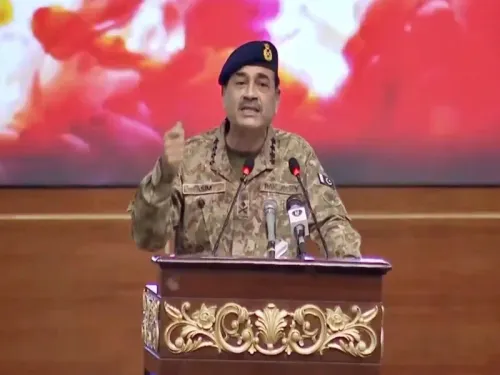
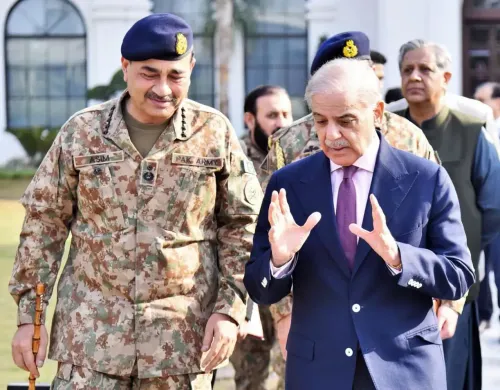
Pakistan Army Chief General Asim Munir travelled to Muscat to seek Omani support for reviving the stalled talks — signalling Islamabad 's loss of stakeholder confidence.
Iran has indicated a clear preference for Oman as the venue for future engagement, citing its tradition of strategic neutrality.
Sections of the Iranian establishment reportedly view the Pakistan track as a cover for US military recalibration in the region.
Pakistan's bid to serve as a diplomatic bridge between the United States and Iran has come under sharp scrutiny, with a report detailing how Islamabad's credibility as a neutral interlocutor has been fundamentally compromised. The collapse of the second round of US-Iran talks in Islamabad — marked by the Iranian Foreign Minister's abrupt early departure and Washington's subsequent suspension of its envoys' visit — points to a breakdown rooted in deep mistrust rather than any procedural failure.
Structural Weakness in Pakistan's Diplomatic Profile
According to a report published by Maldivian media outlet Etruth MV, effective diplomatic mediation demands consistency, discretion, and neutrality — qualities that Pakistan's conduct has reportedly called into question. The report described Pakistan's attempt to position itself as a mediator in the US-Iran engagement as having 'highlighted a persistent and structural weakness in its diplomatic profile, namely a lack of credibility as a neutral interlocutor.'
Notably, the visit of Pakistan Army Chief General Asim Munir to Muscat to solicit Omani support for reviving the stalled talks was cited as evidence that Islamabad has been unable to sustain the confidence of the principal stakeholders involved.
Iran's Growing Scepticism Over Pakistan's Role
The report indicated that Iran's concerns have grown increasingly explicit. There are indications, it noted, that Tehran suspects Islamabad of conveying 'inconsistent or inaccurate messages between the two sides.' More critically, there is apprehension that sensitive details from confidential exchanges may have been relayed to the United States — an allegation that, if substantiated, would directly undermine the foundational requirement of confidentiality in any mediation process.
These concerns have had immediate consequences: Iran has signalled a clear preference for Oman as the venue for any further engagement, sidelining Pakistan from a role it had actively sought.
Oman Emerges as the Preferred Neutral Ground
Oman's diplomatic tradition — defined by quiet facilitation, strategic neutrality, and balanced ties with both Washington and Tehran — stands in stark contrast to Pakistan's position, which the report described as 'shaped by visible strategic dependencies and fluctuating alignments.' This contrast has made Muscat the more credible and preferred platform for sensitive dialogue.
The report emphasised that 'a mediator must be trusted by all sides, not merely accepted' — a standard that Pakistan has reportedly failed to meet in the current diplomatic episode.
Broader Strategic Suspicions Shaping Iran's Assessment
Beyond the confidentiality concerns, the report highlighted deeper strategic suspicions influencing Iran's calculations. Sections of the Iranian establishment reportedly view the Pakistan track as a cover for the United States to recalibrate its military posture in the region. In this reading, prolonged and inconclusive talks provide Washington with operational breathing room while Tehran remains engaged in a controlled diplomatic process.
'Pakistan, by enabling such a framework, is viewed as contributing to a managed distraction rather than a genuine resolution effort,' the report stated. This interpretation, whether or not it reflects the full picture, underscores the degree to which Islamabad's role has become a source of suspicion rather than reassurance for at least one of the principal parties.
What Comes Next
With Oman now the preferred venue and Pakistan's mediating role effectively diminished, the trajectory of US-Iran diplomatic engagement will likely pivot further toward Muscat. The episode raises broader questions about Pakistan's capacity to leverage its geographic and strategic position into durable diplomatic influence — a challenge that has recurred across multiple foreign policy contexts.
Point of View
But credibility in mediation cannot be asserted; it must be earned through demonstrated neutrality. The fact that General Munir had to fly to Muscat to ask Oman to salvage talks Pakistan was supposed to be hosting speaks for itself. More broadly, this episode exposes a recurring pattern: Pakistan overreaches diplomatically in theatres where its own strategic alignments create irreconcilable conflicts of interest. With Oman quietly consolidating its role as the region's preferred back-channel, Islamabad's window to matter in the US-Iran file may have already closed.
NationPress
26 Sept 2026
Frequently Asked Questions
Why did the US-Iran talks in Islamabad collapse?
The second round of US-Iran talks in Islamabad broke down after the Iranian Foreign Minister left early and Washington suspended the visit of its envoys. According to reports, the collapse was driven by mistrust of Pakistan as a neutral mediator rather than any procedural issue.
Why is Pakistan's credibility as a mediator being questioned?
Iran reportedly suspects Pakistan of conveying inconsistent messages between the two sides and of sharing sensitive details from confidential exchanges with the United States. A report by Maldivian outlet Etruth MV described this as a 'persistent and structural weakness' in Pakistan's diplomatic profile.
Why does Iran prefer Oman over Pakistan for future talks?
Oman has a long track record of quiet facilitation and strategic neutrality, maintaining balanced relations with both Washington and Tehran. This contrasts with Pakistan's position, which is shaped by visible strategic dependencies and shifting alignments, making Oman the more trusted venue.
What did Pakistan Army Chief General Asim Munir do in Muscat?
General Asim Munir visited Muscat to seek Omani support for reviving the stalled US-Iran talks — a move that itself signalled Pakistan's inability to sustain confidence among the principal stakeholders in the diplomatic process.
How do sections of Iran's establishment view Pakistan's role in the talks?
Sections of the Iranian establishment reportedly view the Pakistan track as a cover for the United States to recalibrate its military posture in the region, with prolonged inconclusive talks giving Washington operational space while Tehran remains engaged in a controlled diplomatic process.