White House Refuses Media Comments on Iran Negotiations
Synopsis
Amid escalating tensions, the White House remains tight-lipped on mediation efforts concerning Iran, emphasizing the confidentiality of sensitive diplomatic discussions as Pakistan steps in as a potential mediator.
Key Takeaways
White House refrains from discussing sensitive diplomatic talks.
Pakistan emerges as a potential mediator in U.S.-Iran relations.
President Trump pauses military action in light of diplomatic exchanges.
Iran denies any direct negotiations with the United States.
Back-channel communications are increasing among involved nations.
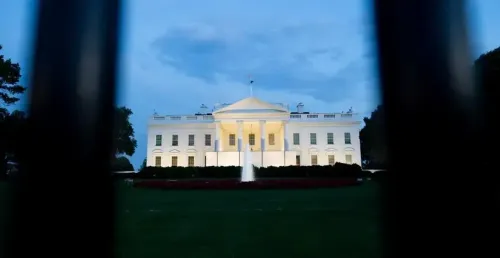
Washington, March 23 (NationPress) The White House refrained from commenting on the ongoing mediation efforts regarding the Iran crisis on Monday, emphasizing that sensitive diplomatic matters would not be made public despite indications of increasing back-channel communications.
Press Secretary Karoline Leavitt stated, "These are sensitive diplomatic discussions and the United States will not negotiate through the news media," when questioned about Pakistan's involvement in the conflict and peace negotiations.
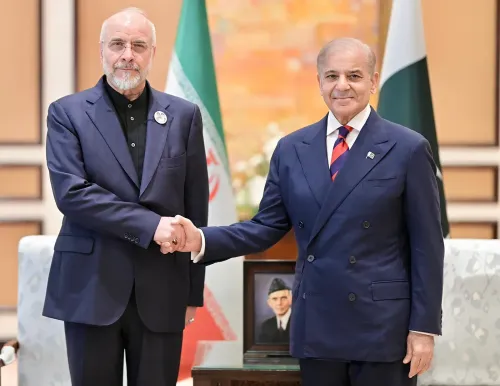
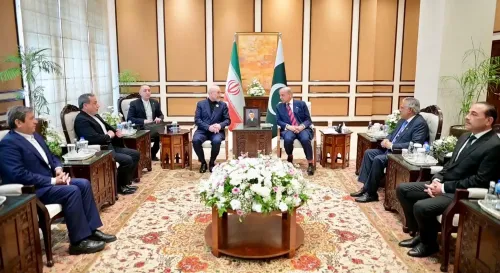
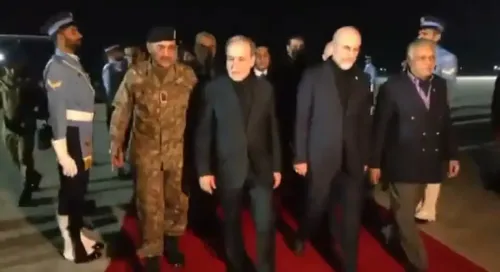
Her comments follow media reports suggesting that Pakistan is engaging in back-channel diplomacy aimed at reducing tensions between Washington and Tehran after a period of escalating conflict.
A report from the Financial Times indicated that Pakistan is positioning itself as a mediator, utilizing its connections with both Washington and Tehran. The report mentioned that Islamabad has proposed to host discussions as early as this week with key figures from both the Trump administration and Iran.
Additionally, Axios reported that Pakistan, in collaboration with Turkey and Egypt, has been relaying messages between the United States and Iran, striving to facilitate initial communications between high-ranking officials.
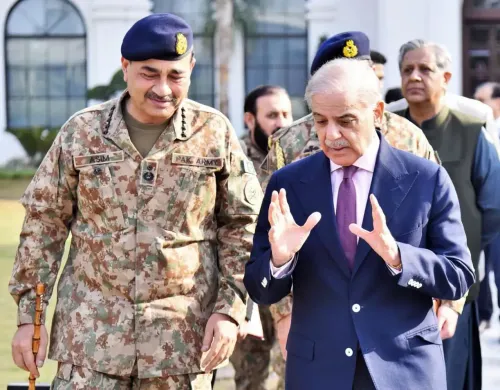
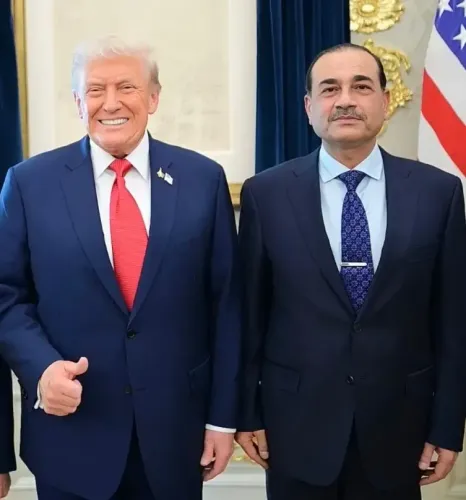
On a separate note, Pakistan’s army chief Asim Munir reportedly spoke with President Donald Trump on Sunday, as indicated by sources familiar with the conversation cited by the Financial Times, while Prime Minister Shehbaz Sharif held discussions with Iranian President Masoud Pezeshkian on Monday.
The White House did not confirm the conversation with Munir.
A readout from Pakistan indicated that Sharif assured the Iranian leadership that Pakistan would persist in playing a constructive role in promoting peace.
This surge in diplomatic activities coincided with Trump retracting a potential military strike on Iran’s power facilities, stating that there had been "very good and productive" talks aimed at resolving the conflict and ordering a pause in military actions.
Trump remarked, "BASED ON THE TENOR AND TONE OF THESE IN-DEPTH, DETAILED, AND CONSTRUCTIVE CONVERSATIONS … I HAVE INSTRUCTED THE DEPARTMENT OF WAR TO POSTPONE ANY AND ALL MILITARY STRIKES AGAINST IRANIAN POWER PLANTS AND ENERGY INFRASTRUCTURE FOR A FIVE DAY PERIOD," through a post on Truth Social.
Furthermore, Trump mentioned that his envoys were in communication with a senior Iranian official, implying that progress was underway. “We are dealing with a man that I believe is the most respected,” he stated, without specifying the individual.
Iran, however, officially denied any direct negotiations with the United States. "Over the past few days, messages were received via certain friendly states conveying the US request for negotiations to end the war," stated foreign ministry spokesperson Esmaeil Baqaei, adding that "appropriate responses were given [to those initiatives] in accordance with the country’s fundamental positions."
Mohammad Bagher Ghalibaf, the speaker of Iran’s parliament, also dismissed U.S. claims of talks, characterizing them as attempts to sway market dynamics.
Axios reported that mediating nations were working to organize a call between Iranian and U.S. representatives to ascertain the feasibility of an in-person meeting.
In related developments, Pakistan’s Foreign Minister, Ishaq Dar, engaged in discussions with Turkey’s Hakan Fidan, while Egypt’s foreign minister spoke with counterparts from Iran, Pakistan, and Turkey, as well as U.S. envoy Steve Witkoff, according to various reports.
Point of View
The refusal of the White House to comment on sensitive diplomatic negotiations reflects a strategic approach to international relations. While back-channel diplomacy is gaining traction, the focus on confidentiality underscores the complexities involved in navigating U.S.-Iran relations.
NationPress
24 Sept 2026
Frequently Asked Questions
Why is the White House not commenting on Iran talks?
The White House has stated that sensitive diplomatic discussions will not be discussed publicly to protect the integrity of negotiations.
What role is Pakistan playing in the Iran crisis?
Pakistan is reportedly engaging in back-channel diplomacy, attempting to mediate between the United States and Iran.
What was President Trump's recent statement regarding military action against Iran?
President Trump announced a pause in military actions against Iran based on productive diplomatic conversations, emphasizing a move towards negotiation.
How has Iran responded to U.S. negotiation claims?
Iran has publicly denied any direct negotiations with the U.S., stating that responses were given in accordance with their fundamental positions.
What discussions are taking place among mediating countries?
Countries like Pakistan, Turkey, and Egypt are reportedly coordinating to facilitate communication between the U.S. and Iran.