US Administration Engages Pakistan for Iran Ceasefire Negotiations
Synopsis
In a strategic move, the White House has turned to Pakistan to mediate discussions with Iran for a temporary ceasefire, revealing the complexities of international diplomacy. This report highlights the critical role played by Islamabad amid ongoing tensions.
Key Takeaways
Pakistan serves as a crucial mediator in US-Iran diplomacy.
The Trump administration utilized back-channel communication to negotiate a ceasefire.
Iran showed increased openness to limiting its nuclear program through sustained dialogue.
Public messaging from Pakistan was strategically aligned with US interests.
The ceasefire negotiations reveal the intricate dynamics of international relations.
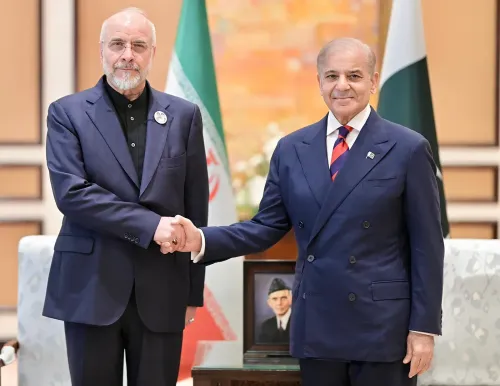
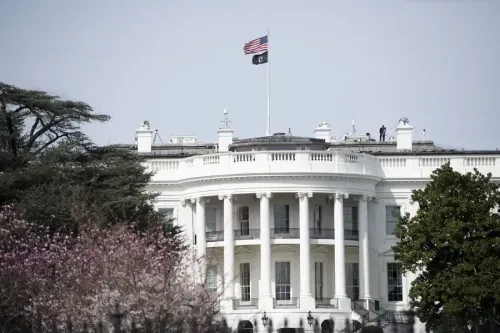
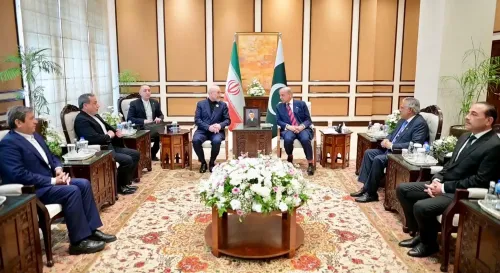
Washington, April 9 (NationPress) The White House has utilized Pakistan as a crucial intermediary to engage Iran regarding a temporary ceasefire, highlighting Islamabad's significant yet debated role in delicate back-channel diplomacy, according to a report by the Financial Times, London.
For several weeks, the Trump administration urged Islamabad to convince Tehran to agree to a halt in hostilities related to reopening the Strait of Hormuz. Pakistan's status as a neighboring Muslim-majority nation was perceived as essential in making the US-supported proposal more palatable for Iran.
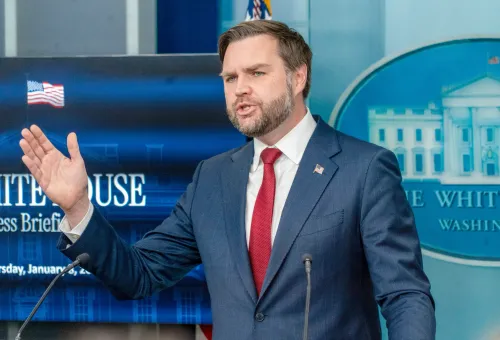
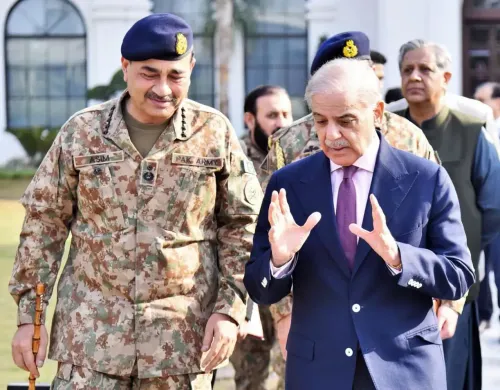
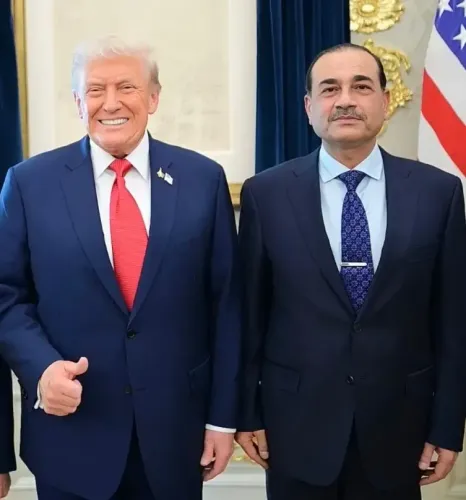
The initiative was spearheaded by Pakistan’s army chief, Field Marshal Asim Munir, who collaborated closely with high-ranking US officials. As the deadline neared, Munir engaged in discussions with President Donald Trump, Vice-President JD Vance, and special envoy Steve Witkoff, while Pakistani representatives relayed proposals between Washington and Tehran.
Islamabad communicated a US-formulated 15-point plan and shared Iran’s replies, which included five- and ten-point counter-proposals. Diplomats noted that Iran gradually showed increased willingness to restrict elements of its nuclear program, but this shift came only after persistent back-channel discussions.
The diplomacy reached a climax with a two-week ceasefire declared by the US, Iran, and Israel, even as Trump escalated rhetoric, threatening to obliterate Iran’s “entire civilization” if his demands were unmet.
In a separate report, the New York Times indicated that Pakistan’s public statements were closely aligned with Washington’s stance.
The social media outreach by Pakistan Prime Minister Shehbaz Sharif, calling for an extension of Trump’s deadline, was reportedly approved by the White House prior to its release, suggesting a level of coordination deeper than acknowledged. The report indicated that the post, which portrayed diplomacy as “advancing steadily, strongly, and powerfully,” emerged as Trump’s deadline loomed and Islamabad sought to create a diplomatic exit for both parties. The White House’s prior consent for the message underscored active diplomatic engagement behind the scenes, even as public statements remained confrontational, according to the New York Times.
Point of View
This report illustrates the intricate dynamics of international diplomacy, emphasizing the importance of Pakistan's role in facilitating dialogue between the US and Iran. It underscores the necessity of strategic alliances in addressing geopolitical challenges.
NationPress
12 Oct 2026
Frequently Asked Questions
Why is Pakistan involved in US-Iran negotiations?
Pakistan's geographical and cultural ties to Iran position it as a suitable intermediary for diplomatic discussions, particularly in the context of a Muslim-majority nation.
What was the nature of the ceasefire negotiations?
The negotiations aimed at establishing a temporary ceasefire linked to the reopening of the Strait of Hormuz, crucial for international oil trade.
How did the Trump administration coordinate with Pakistan?
The Trump administration worked closely with Pakistan's military leadership, specifically Field Marshal Asim Munir, to facilitate back-channel discussions with Iranian officials.
What was Iran's response to the US proposals?
Iran provided responses that included counter-proposals, indicating a gradual openness to limitations on its nuclear program after sustained diplomatic engagement.
What impact did the negotiations have on international relations?
The negotiations highlighted the complexities of US-Iran relations and the vital role of intermediary nations in resolving conflicts.