US Expresses Optimism Over Ongoing Iran Negotiations
Synopsis
As tensions persist in the Strait of Hormuz, the White House remains optimistic about negotiations with Iran. Press Secretary Karoline Leavitt confirms ongoing discussions, highlighting the role of Pakistan as a mediator, while clarifying that no timelines for an agreement are set.
Key Takeaways
The US remains engaged in productive negotiations with Iran.
Pakistan is the sole mediator in the discussions.
No specific timelines for an agreement have been set.
The US supports freedom of navigation while enforcing a blockade on Iranian shipping.
The White House feels optimistic about the prospects of a deal.
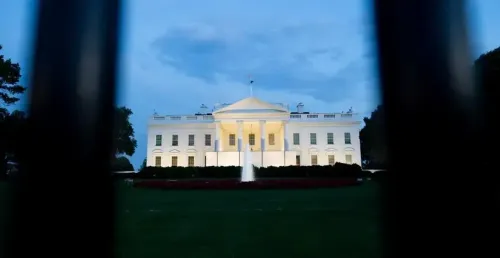
Washington, April 16 (NationPress) The White House has confirmed that discussions with Iran are currently “productive and ongoing,” amidst rising tensions in the Strait of Hormuz that influence the dynamics of the negotiations.
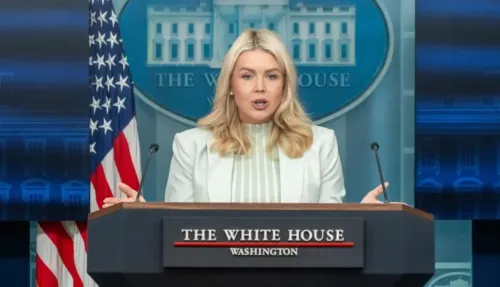
White House Press Secretary Karoline Leavitt addressed reporters on Wednesday, clarifying that the United States remains actively engaged in discussions with Iran, countering claims that Washington had officially requested an extension of the ongoing ceasefire.
“At this point, we are very much involved in these negotiations,” Leavitt stated, highlighting that the conversations are indeed “productive and ongoing.”
She noted that dialogues with Iran are taking place at various levels, with potential in-person meetings being considered, although nothing has been finalized yet.
“I’ve come across reports suggesting the possibility of face-to-face discussions again. Those talks are occurring, but nothing is confirmed until we announce it from here at the White House,” she remarked.
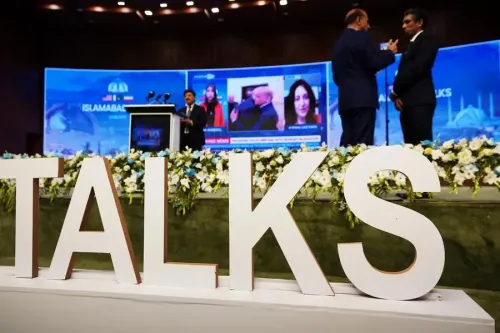
Regarding mediation, Leavitt said, “The Pakistanis have played an invaluable role as mediators throughout this process,” adding, “They are the sole mediator in this negotiation.”
While other nations have shown interest in facilitating the talks, she emphasized that the administration aims to maintain a streamlined negotiation path through Islamabad.
Leavitt indicated that, if confirmed, the next round of discussions would likely occur at the same venue as previous meetings.
The White House expressed cautious optimism about the direction of the talks. “We feel positive about the prospects of a deal,” she mentioned, referring to ongoing diplomatic efforts.
However, Leavitt underscored that the administration is not establishing any timelines for an agreement. “I will never set timelines on behalf of the president of the United States,” she asserted.
She also noted that President Donald Trump has clearly communicated his negotiating stance. “He has laid out his red lines in these negotiations very explicitly to the other side,” she stated.
The White House also clarified its stance on maritime operations in the region, noting that while there is a blockade on Iranian-linked shipping, US forces continue to support freedom of navigation for other vessels.
“Our US forces in the area are ensuring the freedom of navigation for ships that are transiting the Strait to and from non-Iranian ports,” Leavitt explained.
She highlighted that enforcement measures apply to “vessels of all nations entering or departing Iranian ports.”
Point of View
It is essential to understand the ongoing negotiations and their implications. The administration’s cautious yet hopeful approach, coupled with Pakistan’s role as a mediator, reflects a focused effort to stabilize the region without rushing to conclusions.
NationPress
19 Sept 2026
Frequently Asked Questions
What is the current status of US-Iran negotiations?
The White House has indicated that negotiations with Iran are ongoing and deemed 'productive' despite regional tensions.
Who is mediating the discussions between the US and Iran?
Pakistan is currently the sole mediator in the negotiations between the US and Iran.
Is there a timeline for an agreement?
The White House has stated that they are not setting any timelines for an agreement.
What is the US stance on maritime operations in the region?
The US supports freedom of navigation for vessels in the region while enforcing a blockade on Iranian-linked shipping.
How are these negotiations affecting global politics?
The ongoing discussions are crucial for maintaining regional stability and may influence broader geopolitical dynamics.