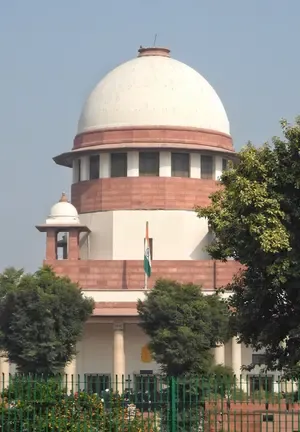
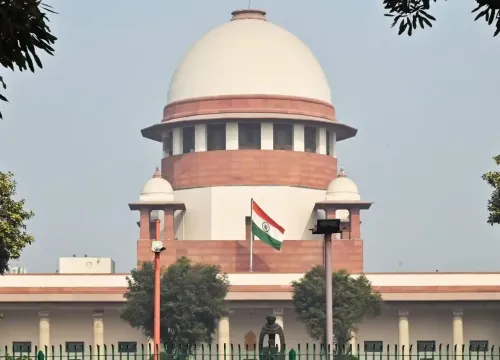
Supreme Court orders weekly bail plea listings, limits adjournments in HCs
Synopsis
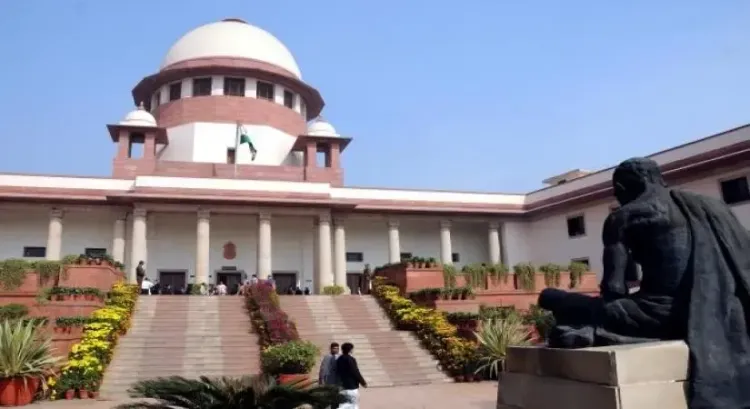
The Supreme Court, led by CJI Surya Kant, has issued sweeping directions to fast-track bail hearings in High Courts — mandating weekly listings, banning casual government adjournments, and requiring automatic relisting. The bench's frustration is pointed: bail delays are not procedural inconveniences, they are fundamental rights violations.
Key Takeaways
Supreme Court bench led by CJI Surya Kant issued bail disposal directions on 11 May 2025 .
High Courts directed to list bail pleas weekly or fortnightly , with automatic relisting every two weeks .
Fresh bail applications must be listed within one week of filing, preferably on alternate days.
Unnecessary adjournments by Union or state governments must be discouraged.
Status reports must be mandatorily filed before the first hearing of any bail plea.
Chief Justices of High Courts directed to coordinate with state governments for timely FSL report submissions.
The Supreme Court on Monday, 11 May 2025, issued a comprehensive set of directions to ensure the expeditious disposal of bail applications pending before High Courts across India, stressing that courts, investigating agencies, and governments must coordinate to safeguard the personal liberty of undertrial prisoners without compromising victims' rights.
Key Directions on Listing and Timelines
A bench headed by Chief Justice of India (CJI) Surya Kant, also comprising Justice Joymalya Bagchi, directed that bail matters be listed weekly, or at least fortnightly. High Courts were instructed to evolve an automatic mechanism for relisting pending bail pleas every two weeks, without requiring fresh procedural steps. Fresh bail pleas, the bench said, should ordinarily be listed promptly — preferably on alternate days or within a week of filing.
The apex court further directed all High Courts to prescribe an outer timeline for the disposal of bail matters. It also ruled that the longstanding practice of issuing notice at the admission stage must be dispensed with, and that advocates filing bail applications must serve an advance copy upon the office of the Advocate General or the designated agency concerned.
Curbing Adjournments by Government
In a pointed observation, the CJI-led bench said unnecessary adjournments sought by the Union or state governments should be actively discouraged.
Point of View
However, is structural: High Courts are overburdened, FSL pipelines are slow, and state governments have historically treated adjournments as a low-cost litigation strategy. Whether directions from the apex court translate into ground-level compliance without a monitoring mechanism remains the critical question. The bench's explicit linkage between bail delays and fundamental rights violations signals that future non-compliance could invite contempt scrutiny.
NationPress
24 Sept 2026
Frequently Asked Questions
What directions did the Supreme Court issue on bail pleas in High Courts?
The Supreme Court on 11 May 2025 directed High Courts to list bail applications weekly or fortnightly, introduce automatic relisting every two weeks, and prescribe outer timelines for disposal. It also barred casual adjournments by the Union or state governments and mandated advance service of bail applications on the Advocate General.
Why did the Supreme Court issue these bail-related directions?
The apex court expressed concern — and earlier 'extreme disappointment' — over bail pleas remaining pending for months and being repeatedly adjourned across High Courts. The bench held that such delays directly violate the fundamental rights of undertrial prisoners.
What is the new rule on status reports for bail pleas?
The Supreme Court directed that status reports must be mandatorily filed before the first hearing of any bail plea, ensuring that courts have adequate information from the outset rather than after multiple adjournments.
How does the order address victims' rights?
The bench directed that High Courts and investigating agencies must coordinate to ensure bail pleas are decided expeditiously without adversely affecting victims' rights. Investigating officers were also cautioned that laxity during investigation could itself become a ground for bail.
What did the Supreme Court say about forensic reports and FSL delays?
The apex court flagged delays in forensic science laboratory (FSL) reports as a contributing factor to bail delays, directing Chief Justices of High Courts to work with state governments to ensure timely FSL submissions.