Asim Munir vs Imran Khan: How personal rivalry shapes Pakistan's power crisis
Synopsis
What began as a personnel dispute inside Pakistan's intelligence directorate in 2019 has evolved into a full-blown institutional crisis: Army Chief Asim Munir has used the Shehbaz Sharif government to push through sweeping constitutional changes that centralise military authority, while Imran Khan — who once oversaw Munir's removal as ISI chief — faces 14 years in prison and a party stripped of organisational space. The personal and the institutional have become impossible to disentangle.
Key Takeaways
General Asim Munir served as ISI chief for only eight months in 2019 before being replaced — the shortest tenure in the post's history — a decision that became the alleged root of personal animosity with Imran Khan .
Khan was removed as Prime Minister via a no-confidence vote in April 2022 — Pakistan's first PM to lose office through that mechanism — and alleges the military orchestrated his ouster.
Khan was sentenced to 14 years in prison in the Al-Qadir Trust corruption case in January 2025 ; several other convictions have been suspended or overturned.
Constitutional amendments pushed by the Shehbaz Sharif government extended armed forces chiefs' tenures from three to five years and created the new position of Chief of Defence Forces (CDF) , held concurrently by the army chief.
The May 2023 protests triggered a sweeping crackdown on PTI , with hundreds tried in military courts .
Critics argue Pakistan's political stability requires restoring civilian supremacy and judicial independence to separate legal accountability from political retaliation.
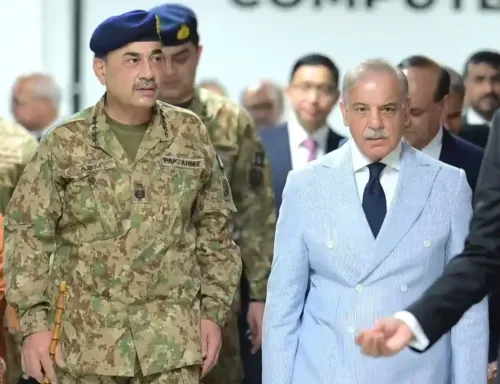
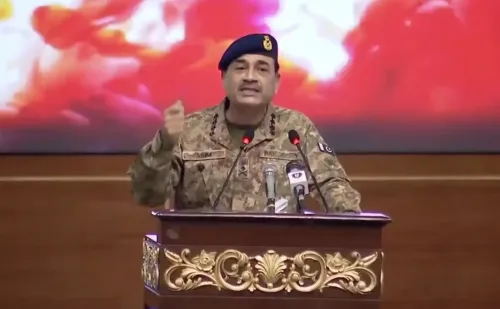
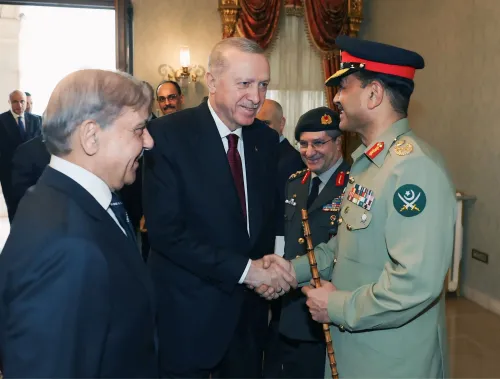
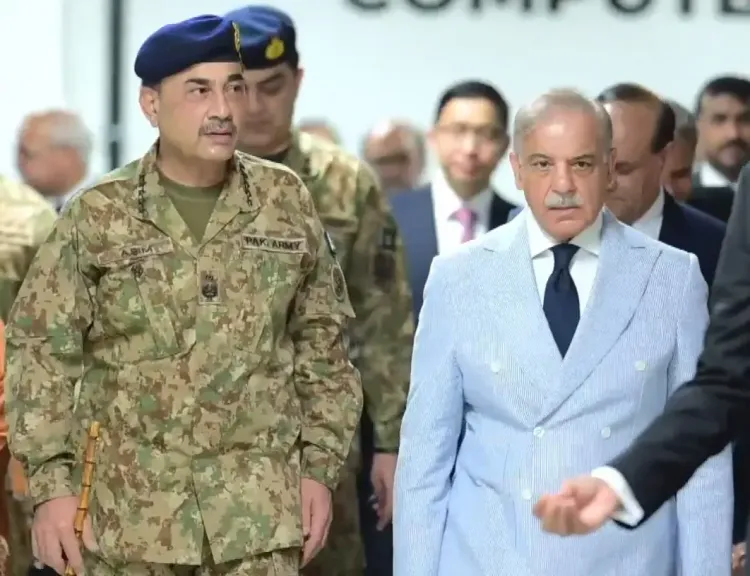
Pakistan's fractured political order is increasingly defined by the intensifying standoff between Army Chief General Asim Munir and imprisoned former Prime Minister Imran Khan, raising urgent questions about whether the Pakistani state's coercive machinery has become an instrument of personal and institutional score-settling. While Khan remains behind bars alongside hundreds of his Pakistan Tehreek-e-Insaf (PTI) party workers, the military establishment under General Munir has steadily deepened its grip on the country's political architecture, aided by constitutional manoeuvres engineered through the Shehbaz Sharif government.
The 2019 Intelligence Dispute: Where It Began
The origins of this confrontation trace back to 2019, when Khan was Prime Minister and Munir was serving as Director-General of the Inter-Services Intelligence (ISI) — a position widely regarded as the second most powerful in Pakistan after the army chief. Munir held the post for approximately eight months, the shortest tenure of any officer in that role, before being replaced by Lieutenant General Faiz Hameed. No official explanation was offered publicly. Subsequent accounts alleged that Munir had raised concerns about Khan's wife, Bushra Bibi, and corruption within her circle — allegations Khan later denied, saying Munir had never presented him with evidence. PTI countered with its own allegation: that Munir had attempted to contact Bushra Bibi after his removal to discuss his ouster.
The episode was never definitively resolved in the public domain. It nonetheless became a persistent reference point in speculation about personal animosity between the two men — a personnel decision within the intelligence establishment that metastasised into a larger political narrative.
Khan's Removal and the Army's Shadow
Khan was ousted through a parliamentary vote of no confidence in April 2022, becoming Pakistan's first Prime Minister to lose office through that mechanism. The vote brought together opposition parties and witnessed significant PTI defections. Khan and his supporters alleged that the military establishment orchestrated the move from behind the scenes, with backing from the United States and Saudi Arabia — a claim his parliamentary opponents rejected, maintaining they had exercised a legitimate constitutional right to remove a government that had lost its majority.
The broader political environment surrounding the removal remains contested. Munir was appointed Chief of Army Staff in November 2022, months after Khan's departure — a timing that intensified suspicions among PTI supporters about the institutional alignment against their leader.
May 2023 Crackdown and Escalating Legal Pressure
Khan's arrest in May 2023 triggered widespread protests across Pakistan. Demonstrators attacked military installations and other state property, including the residence of a senior military commander in Lahore. The authorities responded with a sweeping crackdown: hundreds of PTI leaders and supporters were detained, with many subsequently tried in military courts.
Khan was arrested again in August 2023 and has remained in custody under dozens of charges including corruption and anti-state activities. Although he received convictions in cases involving state gifts, a classified diplomatic cable, and his marriage, several were later suspended or overturned. In January 2025, he was sentenced to 14 years in prison in the Al-Qadir Trust corruption case. Prosecutors alleged that Khan and Bushra Bibi received land from a property developer in exchange for facilitating the return of funds to Pakistan from Britain. The accumulation of cases and his prolonged imprisonment have reinforced the perception — among his supporters and independent observers — that legal proceedings are operating within a wider political struggle, rather than purely on the merits.
Munir's Consolidation of Power
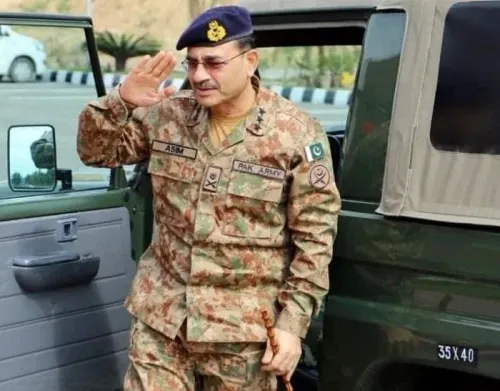
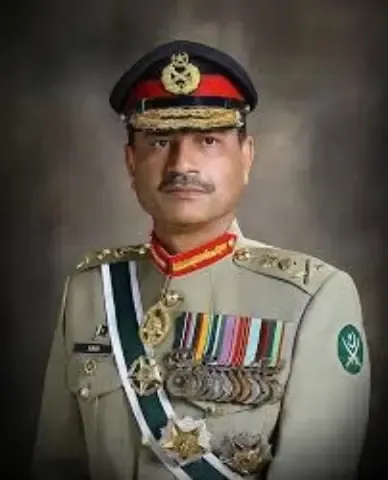
Since assuming command in November 2022, General Munir has overseen a consolidation of military authority that critics describe as unprecedented in scale. The Shehbaz Sharif government has, reportedly in exchange for establishment support, pushed through a series of constitutional amendments expanding the army chief's institutional footprint. These include extending the tenures of armed forces service chiefs from three to five years, with the possibility of an equal second term. Separately, the office of the Chairman of the Joint Chiefs of Staff Committee (CJCSC) was abolished and replaced with a new position — Chief of Defence Forces (CDF) — to be held concurrently by the army chief, further centralising command authority. This structural shift has coincided with the sustained weakening of PTI's organisational space and an expansion of the military's reach into civilian governance.
It is worth noting that Pakistan's military has historically shaped the operating boundaries of civilian governments. Khan himself benefited from establishment support during his rise to power after the 2018 election; his difficulties intensified when that relationship broke down. The pattern reflects a recurring institutional trap: political leaders who gain from military backing find their autonomy precarious the moment they seek to challenge the institution that elevated them.
What the Confrontation Reveals About Pakistan's Political Order
The Munir-Khan standoff has long ceased to be merely a dispute between two individuals. The 2019 intelligence dispute, the 2022 parliamentary removal, the May 2023 protests and crackdown, and the ongoing legal proceedings have collectively produced a political climate in which personal grievance and institutional power reinforce each other. Whether or not personal animosity has specifically shaped General Munir's posture toward Khan, the concentration of authority in the military and the prolonged suppression of political opposition raise fundamental accountability questions.
Pakistan's path toward political stability, analysts argue, requires restoring civilian supremacy, ensuring an independent judiciary, and establishing clear separation between legal accountability and political retaliation. Without institutional guardrails, the country's power struggle risks permanently subordinating democratic legitimacy to the calculations of a single dominant institution.
Point of View
And what is distinctive about the Munir era is not animus toward one individual but the formalisation of that veto through constitutional text. The tenure extensions and the CDF consolidation are not the acts of a general nursing a grudge — they are institutional lock-in. Khan's prolonged imprisonment matters not because of what it reveals about Munir's psychology, but because it demonstrates that Pakistan's judicial apparatus remains susceptible to political direction. The real accountability gap is structural, and it will outlast both Munir and Khan.
NationPress
16 Oct 2026
Frequently Asked Questions
Why are Asim Munir and Imran Khan at odds?
The conflict is rooted in a 2019 decision by then-Prime Minister Imran Khan to replace Munir as ISI chief after only eight months — the shortest tenure in that post's history. Subsequent accounts allege Munir had raised corruption concerns about Khan's wife Bushra Bibi, which Khan denied. The episode generated enduring allegations of personal animosity that have coloured Pakistan's political crisis ever since.
What charges is Imran Khan currently facing?
Khan has been imprisoned under dozens of charges including corruption and anti-state activities. In January 2025, he was sentenced to 14 years in prison in the Al-Qadir Trust case, with prosecutors alleging he and Bushra Bibi received land from a developer in exchange for facilitating the return of funds from Britain. Several earlier convictions have been suspended or overturned.
How has General Munir consolidated military power in Pakistan?
Since becoming army chief in November 2022, Munir has overseen constitutional amendments — pushed through by the Shehbaz Sharif government — that extend service chiefs' tenures from three to five years, with a possible second equal term, and abolish the Chairman of the Joint Chiefs of Staff Committee in favour of a new Chief of Defence Forces post held concurrently by the army chief.
What happened during the May 2023 protests in Pakistan?
Khan's arrest in May 2023 triggered widespread protests in which demonstrators attacked military installations and state property, including the residence of a senior military commander in Lahore. The government responded with a sweeping crackdown: hundreds of PTI leaders and supporters were detained and many were subsequently tried in military courts.
Can Pakistan resolve its civil-military crisis?
Analysts argue that resolution requires restoring civilian supremacy, securing judicial independence, and establishing a clear separation between legal accountability and political retaliation. Without institutional restraints on military authority, Pakistan's cycle of political suppression and democratic erosion is likely to persist beyond the current principals involved.