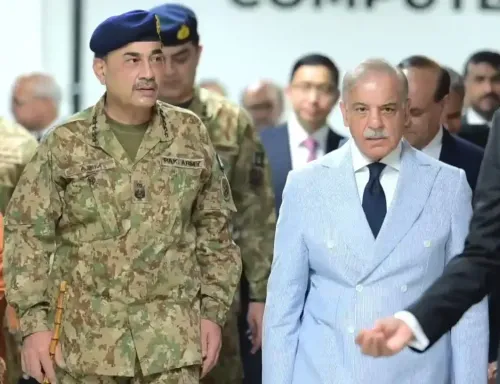
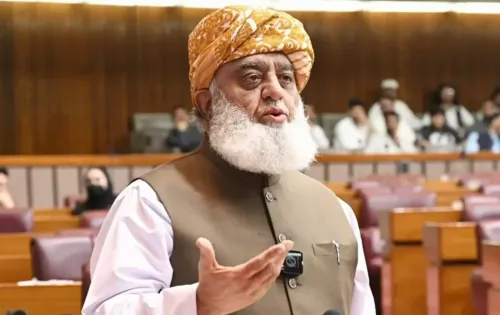
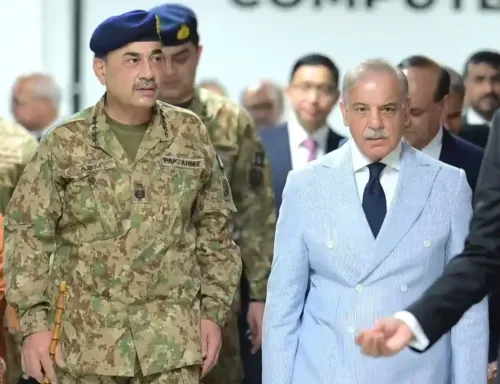
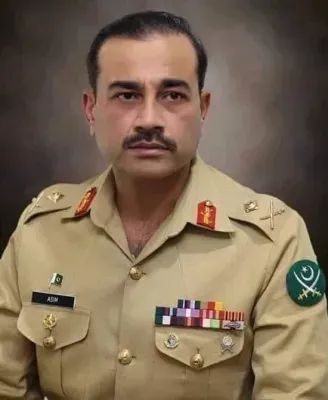
Pakistan civil-military tensions rise as Fazlur Rehman challenges Army chief Munir
Synopsis
A veteran Pakistani political insider has done what few dare: publicly challenged the country's most powerful general by name. JUI-F chief Maulana Fazlur Rehman's rejection of Asim Munir's militia plan — and his blunt demand that Munir 'take off the uniform' before doing politics — signals that Pakistan's civil-military compact, long treated as untouchable, is cracking under the weight of its own contradictions.
Key Takeaways
JUI-F chief Maulana Fazlur Rehman publicly challenged Army chief General Asim Munir over the military's political role and its push to arm civilian militias on 18 July .
General Munir holds a five-year extension as Army Chief, the five-star Field Marshal rank — only the second in Pakistan's history — and serves concurrently as Chief of Defence Forces .
The immediate flashpoint was Munir's call for civilians to form armed lashkars to combat militant violence in Khyber Pakhtunkhwa and Balochistan .
Rehman warned that arming civilians would breed 'generations of violent feuds' and expose the state's inability to protect citizens.
Rehman told Munir directly: 'If you want to do politics, take off the uniform and come; participate in the elections.' Analysts say the challenge from a veteran establishment insider signals genuine strain on Pakistan's long-standing civil-military compact.
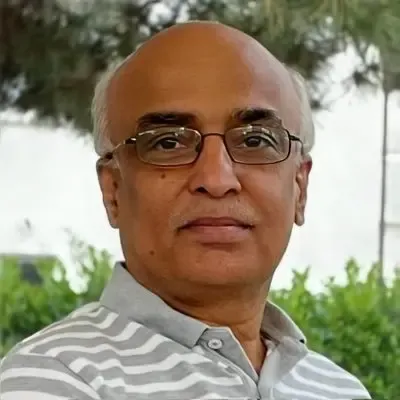
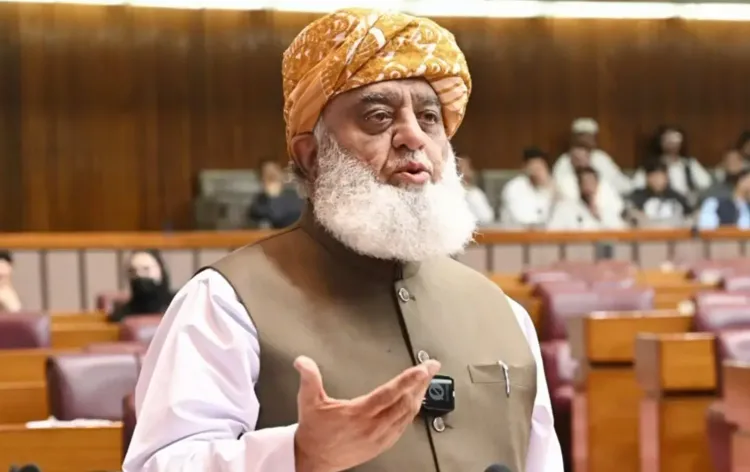
Pakistan's entrenched civil-military compact is facing one of its most pointed public challenges in years, as Jamiat Ulema-e-Islam-Fazl (JUI-F) chief Maulana Fazlur Rehman openly confronted Army chief General Asim Munir over the military's political role and its push to arm civilian militias. The confrontation, reported on 18 July, is being closely watched because Rehman is no peripheral critic — he is a veteran insider who has spent decades navigating Pakistan's deeply stratified power structure.
Why This Challenge Stands Apart
Pakistan's political history is a revolving door of elected governments brought down by courts, coups, or quiet pressure from GHQ Rawalpindi. Prime ministers have been elected, dismissed, jailed, and exiled, yet the army has endured as the ultimate arbiter of national power — ruling directly through coups or steering outcomes from behind the scenes. That structural reality is precisely what makes Rehman's public rebuke so significant.
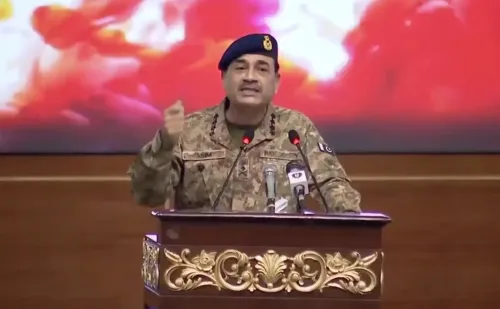
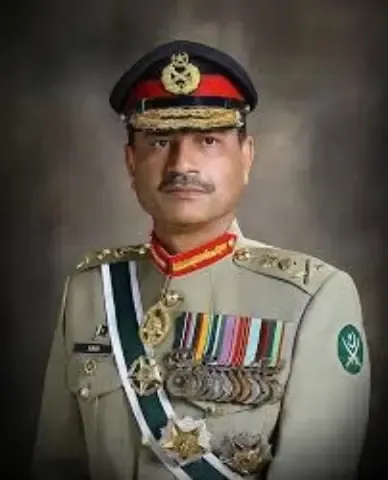
According to reports citing analysis by Strat News Global, General Munir currently wields more institutional authority than any Pakistani military leader since former army chief Pervez Musharraf. Munir holds a five-year extension as Army Chief, has been promoted to the five-star rank of Field Marshal — only the second such appointment in Pakistan's history — and simultaneously serves as the country's inaugural Chief of Defence Forces. This unprecedented concentration of roles has cemented his standing at the apex of Pakistan's security establishment.
The Lashkar Dispute at the Heart of the Rift
The immediate trigger for Rehman's challenge was Munir's call for civilians to organise armed militias, known as lashkars, to assist security forces in countering escalating militant violence across Khyber Pakhtunkhwa and Balochistan. Pakistan has experimented with such militias before, and the track record is mixed at best. Tribal leaders who aligned with the state became targets for militant groups, while ordinary communities found themselves caught between insurgents and security forces, according to the analysis.
Rehman warned that reviving the experiment would deepen Pakistan's internal conflicts rather than resolve them. He argued that national defence is the exclusive responsibility of the state, and that encouraging civilians to take up arms would entrench generations of violent feuds, breed lawlessness, and expose the state's failure to protect its own citizens.
Rehman's Direct Rebuke to Munir
Rehman's language was unusually blunt for a figure operating within Pakistan's carefully managed political space. He challenged the military's long-cultivated narrative of sacrifice, pointing out that soldiers are salaried professionals funded by taxpayer money. 'You are taking your salaries from the taxes earned through our blood and sweat. I have taken no salary. I will not form any Lashkar,' he said, according to reports.
In a remark directed personally at General Munir, Rehman added: 'If you want to do politics, take off the uniform and come; participate in the elections.' The statement is a direct challenge to the military's practice of exercising political influence while remaining formally outside electoral accountability.
What the Confrontation Signals
Analysts note that when a figure of Rehman's standing — one who has long been regarded as a reliable establishment interlocutor — openly rejects military security doctrine and questions its political legitimacy, it suggests the civil-military compact that has governed Pakistan for decades is under genuine stress. This is not routine opposition rhetoric; it is a critique from within the system by someone who understands its rules intimately.
The confrontation comes at a moment when Pakistan is simultaneously managing a deteriorating security situation in its western provinces, an economy under IMF supervision, and a political landscape still unsettled by the fallout from Imran Khan's removal and detention. How General Munir and the broader establishment respond to Rehman's challenge will be a telling indicator of how much room Pakistan's military is willing to concede to civilian dissent — even from historically allied quarters.
Point of View
It usually means back-channel negotiations have already failed. The lashkar dispute is the surface issue; the deeper question is whether Pakistan's military, now more institutionally concentrated under Munir than at any point since Musharraf, has overextended its political footprint to the point where even reliable allies are pushing back. If that reading is correct, the civil-military equilibrium that has governed Pakistan for seven decades is not just under strain — it may be entering a renegotiation phase, with unpredictable consequences for both civilian governance and security policy.
NationPress
17 Oct 2026
Frequently Asked Questions
Why is Maulana Fazlur Rehman challenging Army chief Asim Munir?
Rehman publicly challenged Munir over the Army's call for civilians to form armed militias, or lashkars, to fight militants in Khyber Pakhtunkhwa and Balochistan. He also questioned the military's broader political role, arguing that soldiers are paid public servants who should not exercise political authority while in uniform.
What powers does General Asim Munir currently hold?
General Munir holds a five-year extension as Army Chief, has been promoted to the five-star rank of Field Marshal — only the second such appointment in Pakistan's history — and serves simultaneously as Pakistan's inaugural Chief of Defence Forces. Analysts say this makes him the most powerful Pakistani military leader since Pervez Musharraf.
What is the lashkar controversy in Pakistan?
Army chief Asim Munir called for civilians to organise armed militias, known as lashkars, to assist security forces against escalating militant attacks in Khyber Pakhtunkhwa and Balochistan. Critics, including Rehman, argue that Pakistan's past experiments with such militias produced mixed and often tragic results, with tribal communities caught between insurgents and the state.
Why does Rehman's challenge carry more weight than routine opposition criticism?
Rehman is a veteran insider who has navigated Pakistan's civil-military power structure for decades and has historically been regarded as an establishment-aligned figure. His decision to publicly question military doctrine and demand electoral accountability from Munir signals that the challenge comes from within the system, not from its periphery.
What does this confrontation mean for Pakistan's political stability?
Analysts say the open rift between a historically allied political leader and the military chief suggests Pakistan's civil-military compact is under fresh and genuine strain. The confrontation coincides with a deteriorating security situation in western provinces, IMF-supervised economic pressures, and a still-unsettled political landscape, making the stakes of any breakdown significantly higher.