Is Asim Munir's Power Grasp Leading to the Disappearance of Pakistan's Opposition Leader?
Synopsis
Pakistan's political landscape is shifting dramatically under Asim Munir's military authority. As the imprisoned Imran Khan continues to symbolize resistance, the military's attempts to suppress his influence reveal the fragility of their control. This analysis dives deep into the ongoing power struggles shaping Pakistan's future.
Key Takeaways
Pakistan is transitioning towards military authoritarianism under Asim Munir .
Imran Khan remains a significant political figure despite imprisonment.
The military's strategies reflect a deeper institutional reconfiguration.
Recent constitutional amendments have expanded military power significantly.
Khan's isolation is part of a broader effort to diminish dissent.
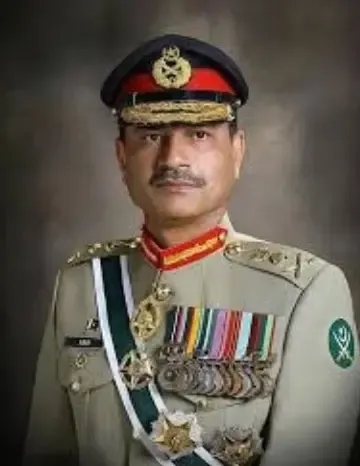
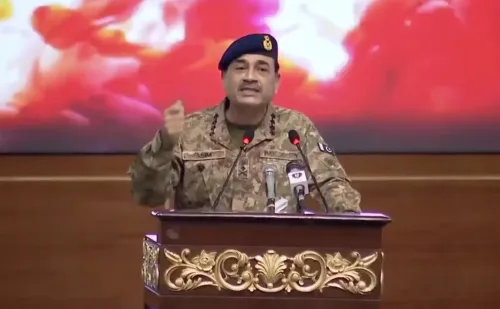
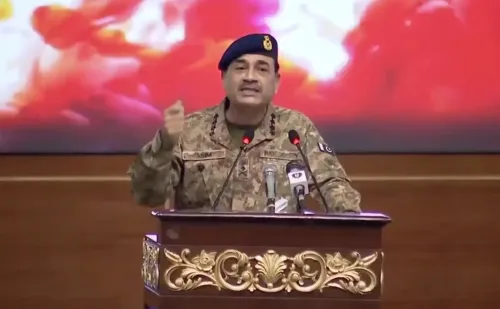
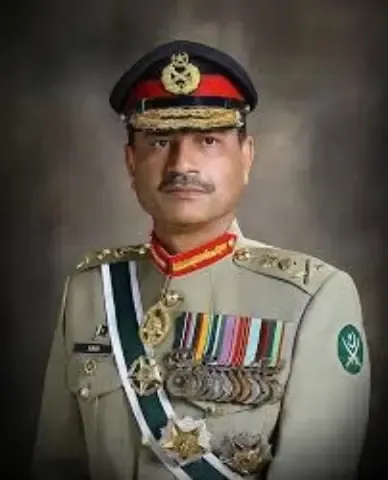
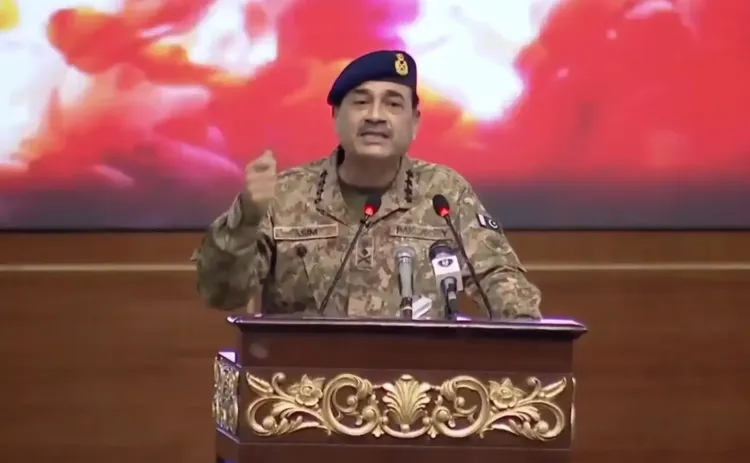
New Delhi, Dec 5 (NationPress) Pakistan finds itself in the midst of a profound political metamorphosis, arguably one of the most significant in its post-independence journey. The nation, which has historically wavered between military dominance and fragile civilian rule, is now distinctly veering towards a comprehensive military-authoritarian regime. At the forefront of this transition is Army Chief Field Marshal Asim Munir, whose methodical accumulation of authority is reshaping the institutional framework of the country.
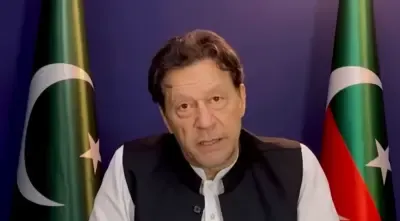
While the political elite of Pakistan has shown a surprising level of acceptance towards this evolving landscape, one individual remains a major challenge to military control: the incarcerated former prime minister Imran Khan.
Despite his imprisonment, Khan's political weight has not diminished sufficiently to placate the military hierarchy. In fact, the state's increasingly aggressive moves indicate a palpable anxiety regarding his enduring influence and ability to rally support, even from behind bars, which poses a risk to the system Munir seeks to establish.
In a concerning repetition of historical patterns, the military is seemingly exploring the limits of its power by attempting to isolate Khan from external influence.
Currently held at Adiala Jail in Rawalpindi, Khan has faced multiple corruption charges and accusations of anti-state actions, which many critics argue are politically driven.
For several months, media reports have highlighted that Pakistani authorities have restricted Khan's access to family members and legal counsel, despite court orders allowing weekly interactions.
While the courts may issue directives, prison officials, acting as enforcers of military interests, have consistently ignored these rulings. This is not merely bureaucratic inefficiency; it is a calculated strategy.
Khan's son, Qasim Khan, has publicly expressed concern over the lack of information regarding his father's wellbeing, describing the absence of details as a form of psychological torment: “Not knowing whether your father is safe, injured, or even alive is a form of psychological torture.”
Last week, when Khan's sisters staged a protest for mandated jail visits, authorities swiftly responded with violence, injuring them in the process. Videos showcasing the harsh treatment of Khan’s family quickly spread on social media, igniting a wave of unrest, with millions sharing the hashtag #WhereIsKhan on X (formerly Twitter). In light of the lack of credible updates from the government, Khan's PTI party has called for widespread demonstrations to demand information about their imprisoned leader.
Khan’s persistent political relevance highlights the state's urgency. He stands as the only political figure that the military establishment has been unable to marginalize or silence through traditional methods.
Even while imprisoned, his party retains its status as the largest political entity by public support, and his name continues to evoke strong allegiance throughout both urban and rural Pakistan. Unlike previous leaders who capitulated under military pressure, Khan remains defiant, refusing to accept any deals or endorse the political frameworks being constructed in Rawalpindi.
This defiance is intolerable for Asim Munir and the military-aligned political elite.
The core issue is not just Khan's popularity; it is that he embodies the singular symbol of resistance against military authority. His visibility and connection to the public challenge the legitimacy of Munir's emerging regime.
Thus, the effort to silence Khan should not be viewed as incidental; it is integral to Munir's project of consolidating power. The military has determined that denying Khan access to the outside world is the most effective means of undermining his political influence without triggering international outrage.
Khan’s isolation reflects a wider institutional overhaul being executed by the Munir-led military establishment, which has drastically altered the civil-military dynamics in the country.
The reshaping began when Asim Munir pressured the Shehbaz Sharif government and other parties, including the Pakistan People’s Party (PPP), to pass the 26th Constitutional Amendment in October 2024. This amendment extended the terms of military chiefs from three to five years with renewal options and modified the judicial system by increasing executive control over judicial appointments and dismissals.
However, the most significant transformation came last month with the introduction of the 27th Constitutional Amendment. This legislation elevated the Army Chief to the role of Chief of Defence Forces (CDF), conferring upon Munir overarching authority over all military branches. No previous military leader in Pakistan, not even Ayub Khan or General Zia-ul-Haq during their martial law periods, wielded such extensive unified control.
The amendment further expanded Munir's command over Pakistan’s nuclear capabilities, placing the nation's strategic assets more closely under military jurisdiction. Perhaps most notably, it partitioned the Supreme Court by establishing a Federal Constitutional Court, thus weakening the judiciary's ability to check executive or military actions.
In this so-called hybrid system, dissent is perceived as intolerable not due to its potential for instability, but because it threatens the fragile legitimacy of absolute power. Imran Khan has shown, even in confinement, that he represents that very threat. His ongoing popularity consistently challenges the establishment's narrative that Pakistan's new political framework is stable, consensual, or democratic. This reality signals to his supporters that the military isn't as infallible as the establishment would like the public to believe.
Therefore, isolating him from visitors serves a dual purpose: it is both punitive and strategic. This isolation weakens his political voice, disrupts his communication networks, and instills fear within his party ranks. It also tests public endurance: how far can the state push before a backlash occurs?
By keeping Khan hidden, Munir's regime aims to achieve what legal battles and incarceration have failed to do: erase Khan from Pakistan’s political consciousness.
Point of View
It’s crucial to recognize the ongoing power dynamics in Pakistan. The shift towards military authoritarianism under Asim Munir poses significant risks to democratic values. The treatment of Imran Khan raises concerns about human rights and the political future of the nation. We stand firm in advocating for transparency and accountability in governance.
NationPress
6 Oct 2026
Frequently Asked Questions
What is the current political situation in Pakistan?
Pakistan is experiencing a significant shift towards military authoritarianism, led by Army Chief Asim Munir, with former Prime Minister Imran Khan imprisoned and facing political suppression.
Why is Imran Khan considered a threat to the military?
Despite his imprisonment, Imran Khan maintains substantial political influence and public support, making him a symbol of resistance against military control.
What recent constitutional amendments have affected Pakistan's governance?
The 26th and 27th Constitutional Amendments have extended military chief tenures and granted the Army Chief unprecedented control over military and judicial functions.
How has the military responded to protests for Imran Khan's release?
The military has employed aggressive tactics to suppress protests, including violent actions against Khan's family members who have sought to visit him in prison.
What does Imran Khan's imprisonment signify for Pakistan's political future?
Khan's imprisonment highlights the fragility of the military's power, as his continued popularity challenges the legitimacy of the emerging authoritarian order.