How is Trump’s Strategy Positioning India as a Key Indo-Pacific Partner?
Synopsis
In a pivotal move, President Trump's National Security Strategy identifies India as a crucial ally in the U.S. Indo-Pacific strategy. This article explores the implications of this partnership for regional security and global economic dynamics. Discover how this relationship shapes the future of international relations.
Key Takeaways
India is a central pillar in the U.S.
Indo-Pacific strategy.
The NSS emphasizes enhanced cooperation between the U.S. and India.
India's role is crucial for regional security and economic growth.
The document warns of the risks of maritime choke points .
Technological collaboration is key to U.S. leadership in emerging industries.
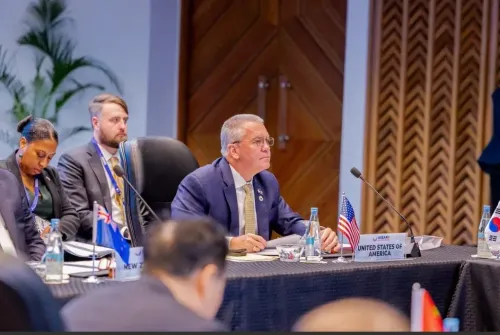
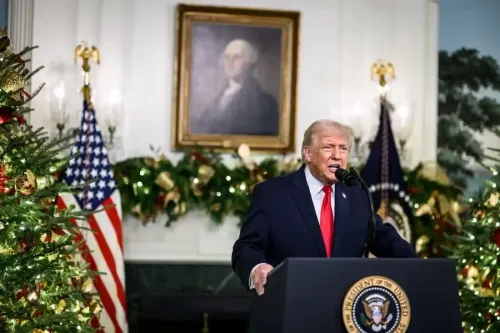
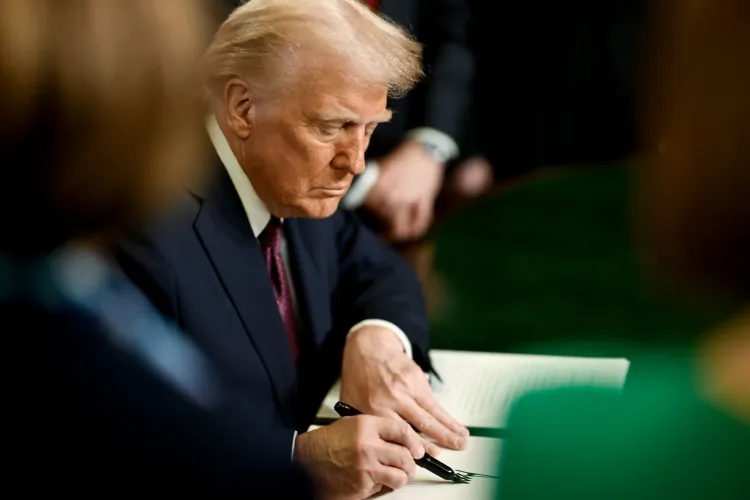
Washington, Dec 5 (NationPress) India has emerged as a vital cornerstone of the United States' Indo-Pacific strategy, as highlighted in President Donald Trump's newly released National Security Strategy (NSS).
The document, unveiled by the White House on Friday, outlines the administration's vision for global engagement while designating India as an essential ally in maintaining a “free and open Indo-Pacific.”
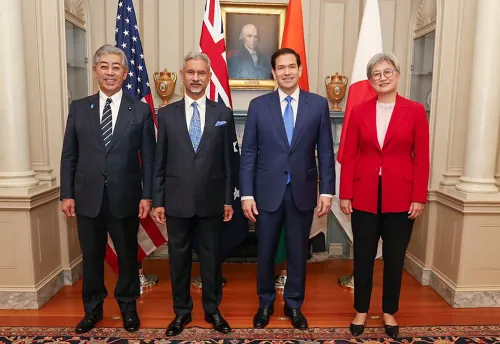
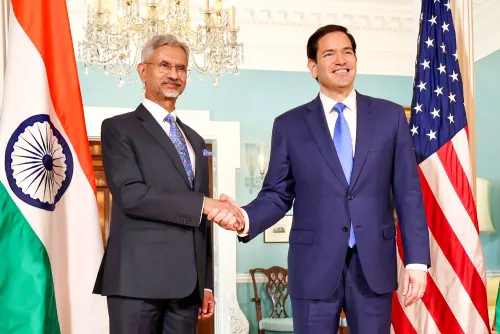
The strategy underscores that Washington “must continue to enhance commercial (and other) ties with India to inspire New Delhi's contributions to Indo-Pacific security, including ongoing quadrilateral collaboration with Australia, Japan, and the United States, known as ‘the Quad’.
It connects India's expanding economic and military presence to the U.S.'s overarching goal of ensuring that no single power dominates the region.
Reiterating its view of the Indo-Pacific as the pivotal battleground of the 21st century, the NSS highlights that the region currently constitutes nearly half of the global GDP and is set to drive future growth.
A key U.S. goal, it states, is to “prevent domination by any competing power” and to safeguard freedom of navigation across the South China Sea — a crucial route for one-third of global shipping traffic each year.
The document warns that “strong measures must be developed along with the deterrence necessary to keep those lanes open,” adding that nations “from India to Japan and beyond” would face dire consequences if maritime choke points fall under control or coercion.
It emphasizes President Trump’s recent diplomatic efforts in the region, noting that agreements reached during his October 2025 Indo-Pacific visit have “further deepened our robust ties of commerce, culture, technology, and defense.”
Technological collaboration is another significant area where India plays a key role. The NSS asserts that the U.S. must “enlist our European and Asian allies and partners, including India, to cement and enhance our joint standings” in emerging industries, supply-chain development, and the global race for crucial minerals.
The document positions India as part of a coalition that can assist in propelling U.S. leadership in AI, energy technologies, quantum computing, and autonomous systems.
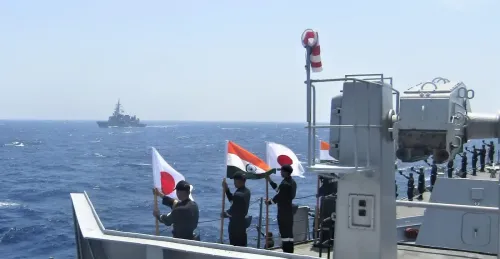
Beyond economic and technological aspects, the strategy consistently underscores deterrence and burden-sharing. It urges partners across the First Island Chain to bolster their defense investments and advocates for deeper military cooperation to “deny aggression anywhere in the First Island Chain.”
India is portrayed as a significant regional influence whose decisions will shape the broader power dynamics.
In its depiction of global competition, the document refers to President Trump’s approach as “America First diplomacy” — one that promotes fair, reciprocal trade, robust national borders, and the protection of American workers. While it sharply criticizes “predatory, state-directed subsidies,” intellectual property theft, and coercive economic practices, it presents a resolute stance.
Point of View
It is clear that India's strategic partnership with the United States is not merely about trade or defense; it signifies a broader alignment of interests in a rapidly evolving geopolitical landscape. The 'America First' approach may aim to secure U.S. interests, but it equally emphasizes the necessity of collaborative efforts among allies, particularly in the Indo-Pacific region. As a leading regional actor, India's choices will undoubtedly shape the future balance of power.
NationPress
29 Sept 2026
Frequently Asked Questions
What is the significance of India's role in the Indo-Pacific?
India's role in the Indo-Pacific is crucial as it is positioned as a key partner in maintaining regional security and promoting a 'free and open' maritime environment, as outlined in the U.S. National Security Strategy.
How does the U.S. plan to collaborate with India?
The U.S. aims to enhance commercial relations and defense cooperation with India, including joint initiatives in technology and military exercises within the Quad framework.
What are the key areas of cooperation between the U.S. and India?
Key areas of cooperation include defense, technology, economic partnerships, and joint initiatives in emerging industries and supply chains.
What does 'America First diplomacy' mean?
'America First diplomacy' refers to a strategy focused on prioritizing U.S. interests through fair trade, strong borders, and protecting American workers while fostering key alliances.
How does India's growing influence affect global dynamics?
India's growing influence is pivotal in shaping regional security and economic policies, as its decisions impact global trade routes and power balances in the Indo-Pacific.