Why is Pakistan Condemned for the Extrajudicial Killing of Youth in Balochistan?

Synopsis
In a troubling escalation of violence, the Baloch Yakjehti Committee has condemned the extrajudicial killing of Abdul Wahab in Balochistan, reflecting a grave pattern of human rights abuses. The implications of this incident highlight the urgent need for accountability and justice in the region, where state-sponsored violence continues unabated.
Key Takeaways
Extrajudicial killings are part of a disturbing trend in Balochistan.
The Baloch Yakjehti Committee is actively condemning state-sponsored violence.
Human rights violations include enforced disappearances and torture.
Local organizations demand justice and accountability from authorities.
Education and academia are under threat in Balochistan.
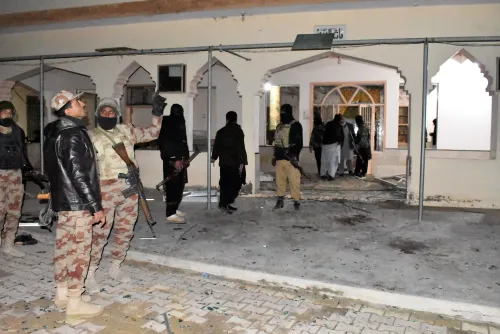
Quetta, Dec 5 (NationPress) The Baloch Yakjehti Committee (BYC) has vehemently denounced the recent extrajudicial killing of another young individual by Pakistani forces in Balochistan.
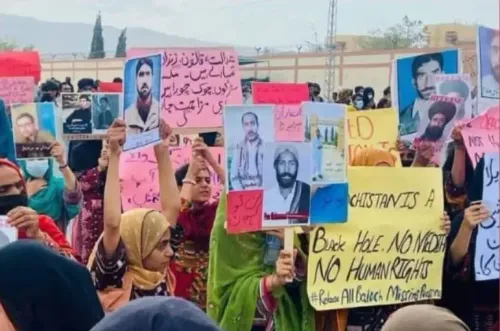
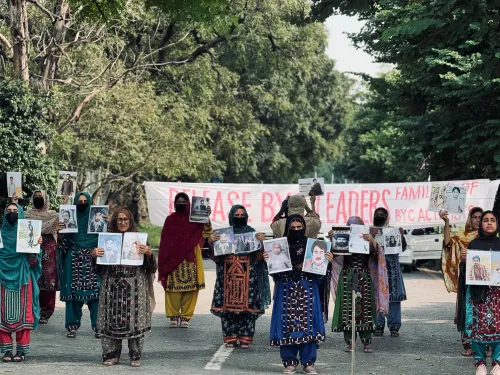
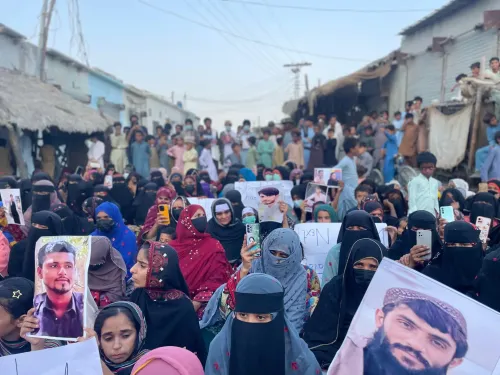
This latest act of violence occurs amid a persistent cycle of oppression characterized by a rise in extrajudicial killings, enforced disappearances, and torture throughout the region.
The BYC reported that the lifeless body of Abdul Wahab, aged 33, was found in the Pull Abad area of the Panjgur district on December 4, following his enforced disappearance nearly a month ago by state-backed death squads.
According to local sources cited by the rights organization, Wahab came from a financially challenged family and worked as a driver to sustain his household.
“The ongoing instances of extrajudicial killings and enforced disappearances highlight the alarming trend of the ‘kill and dump’ strategy and the intensifying state violence perpetrated by Pakistani intelligence agencies and their affiliated militias,” the BYC stated.
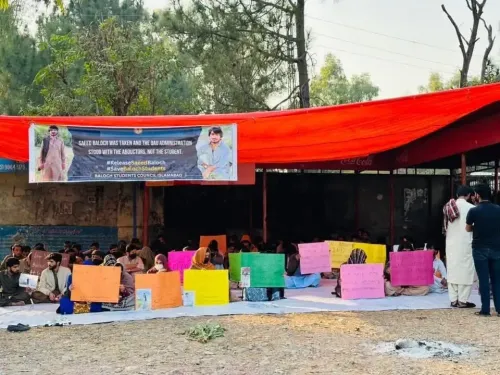
On the previous day, the Baloch Women Forum (BWF) condemned the “unlawful detention” of Balach Khan Bali, a lecturer at the University of Turbat, characterizing it as an effort to silence Baloch academia and the digitalization movement.
The BWF demanded the immediate and unconditional release of Balach Bali, asserting, “Balochistan has devolved into a battleground where local populations are routinely harassed and interrogated regarding their societal connections.”
“Enforced disappearances, extrajudicial killings, intimidation, and threats have become the norm employed by security forces to stifle not only indigenous voices but also academics, writers, journalists, students, and legal practitioners,” they added.
Furthermore, the BWF remarked that Balochistan, despite its territorial significance, continues to endure a scarcity of resources. They criticized Pakistan’s notorious institutions for working against the interests of the indigenous populace by diminishing available resources in education.
“The disappearance of Balach Bali is merely a continuation of the systematic practices endorsed by state institutions. We urge the state to cease targeting national assets who are diligently working to promote and digitalize the indigenous language,” the BWF stated.
“A classroom can only serve its purpose when both teachers and students are assured safety and security... We demand Balach Bali’s immediate and unconditional release,” they concluded.
Point of View
The ongoing human rights situation in Balochistan raises serious concerns about accountability and the need for reform within state institutions. This incident serves as a reminder of the broader issues of governance and civil rights that must be addressed to ensure peace and justice for marginalized communities.
NationPress
17 Sept 2026
Frequently Asked Questions
What happened to Abdul Wahab?
Abdul Wahab was found dead in Balochistan after being missing for nearly a month, allegedly due to enforced disappearance by state-backed forces.
What is the Baloch Yakjehti Committee?
The Baloch Yakjehti Committee (BYC) is a human rights organization that advocates for the rights of the Baloch people and raises awareness about abuses in Balochistan.
What are extrajudicial killings?
Extrajudicial killings refer to the unlawful killing of individuals by state or non-state actors without due process.
How are enforced disappearances defined?
Enforced disappearances occur when individuals are abducted or imprisoned by state authorities or affiliated groups, with their fate or whereabouts concealed.
What does the Baloch Women Forum advocate for?
The Baloch Women Forum advocates for the rights of women and marginalized groups in Balochistan, aiming to raise awareness about issues such as unlawful detentions and violence.