Are Madrasas in Pakistan Fueling Extremism and Militancy?
Synopsis
A recent report unveils alarming trends in Pakistan's madrasas, linking them to the promotion of extremism and militancy. As religious seminaries resist reform, the implications for society become increasingly dire. Dive into the findings that reveal how the education system is failing to integrate these institutions and curb radical ideologies.
Key Takeaways
Madrasas play a vital role in Pakistan's social and religious life.
They are increasingly accused of promoting extremism and militancy .
Clerical resistance hampers reform efforts.
Financial oversight is a significant challenge in madrasa administration.
Inconsistent government approaches hinder long-term change.
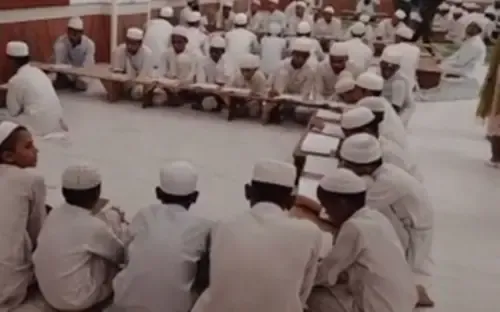
Islamabad, Dec 5 (NationPress) Although madrasas, or Islamic seminaries, play a crucial role in Pakistan's religious and social landscape, they are increasingly under scrutiny for their alleged role in nurturing extremism and militancy, as highlighted in a recent report.
The report notes that the resistance from clerics and a lack of political commitment have left madrasas outside the mainstream educational framework, creating graduates who remain disconnected from modern society and susceptible to radical ideologies.
According to the findings published by Pakistan Observer, efforts since 1947 by various governments to reform madrassa education and integrate it into the broader educational system, while curbing its potential for radicalization, have consistently faced strong opposition from clerics, thwarting progress.
The report indicates that extremist narratives were intentionally infused into madrassa curricula, motivating students to become fighters and turning religious education into a political instrument. They were taught that apostasy and polytheism were punishable by death globally, instilling a false sense of religious authority to impose such penalties. Furthermore, students were indoctrinated with the belief that only Muslims had the right to govern, rendering non-Muslim governments illegitimate.
Additionally, madrasas promoted the idea of a united Islamic caliphate, deeming independent Muslim nation-states unacceptable. The modern nation-state was portrayed as a form of polytheism, incompatible with Islam. Such ideologies fostered an inflexible mindset that encouraged militancy and intolerance toward diverse political systems.
The report underscores that one of the significant hurdles in reforming madrasas is financial oversight. Madrasas operate under administrators (Muntazims) who enjoy nearly complete autonomy, lacking external audits, with all expenditures sanctioned by madrassa heads.
“The ongoing failure of reform initiatives is deeply rooted in complex social, political, and institutional issues. Clerical resistance is a fundamental challenge, as religious leaders perceive reform as a threat to their authority and identity. Political considerations further complicate matters, as successive governments have depended on clerics for legitimacy, making them reluctant to confront religious institutions directly,” the report stated.
“Moreover, the government’s approach has been inconsistent. Reform initiatives gain traction during crises, such as terrorist incidents or international pressure, but are often abandoned once the immediate urgency subsides. This inconsistent strategy has hindered long-term change, leaving the madrassa sector open to radical influences,” it concluded.
Point of View
I maintain that while madrasas hold a significant place within Pakistan's educational landscape, we must confront the reality of their potential role in fostering extremism. The resistance to reform poses a serious challenge that we cannot ignore. It is crucial to recognize the need for change while respecting the cultural significance of these institutions.
NationPress
1 Oct 2026
Frequently Asked Questions
What role do madrasas play in Pakistan?
Madrasas are Islamic seminaries that provide religious education and play a central role in the religious and social landscape of Pakistan.
Why are madrasas criticized?
Madrasas have been criticized for allegedly fostering extremism and militancy, producing graduates who are disconnected from modern society.
What challenges do reform efforts face?
Reform efforts struggle against clerical resistance, lack of political will, and the autonomy of madrasa administrators.
How have governments attempted to reform madrasas?
Since 1947, various governments have tried to integrate madrasa education into the mainstream system but have faced strong opposition.
What impact do madrasas have on students?
Students at madrasas may be indoctrinated with radical ideologies, leading to a sense of religious authority and intolerance toward other political systems.