Is Pakistan's Pursuit of Integrated Education Truly Realized?
Synopsis
As Pakistan grapples with the challenge of integrating religious teachings with modern education, questions loom about the effectiveness of current initiatives. Are our scholars prepared to tackle contemporary issues, or are reforms merely superficial? This article delves into the critical need for a holistic educational framework in Pakistan.
Key Takeaways
Integration of religious and modern education is essential for holistic development.
Superficial reforms in madrasas limit genuine progress.
Successful models from history provide valuable lessons.
Engagement with contemporary philosophy is critical.
Institutional support is needed to cultivate balanced scholars.
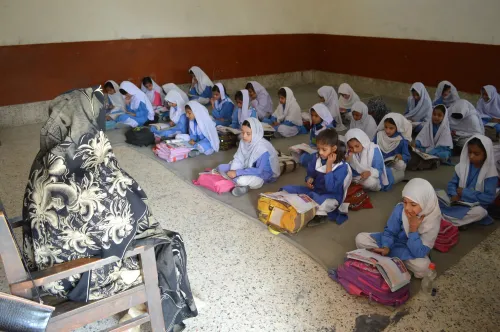
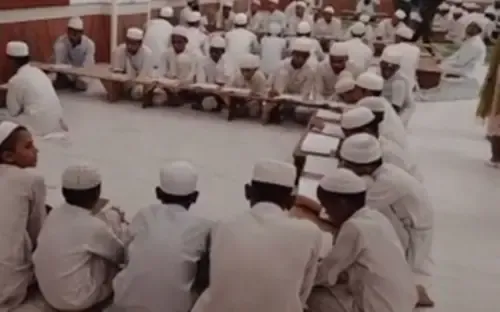
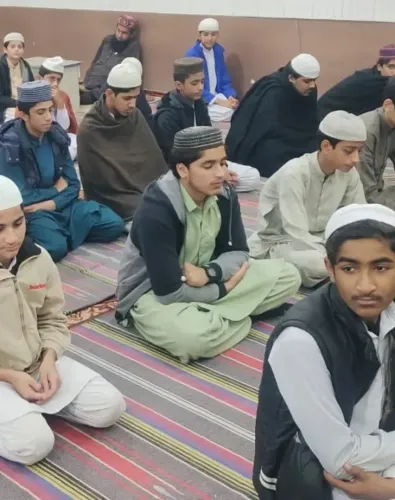
New Delhi, Jan 25 (NationPress) Throughout the religious seminaries, madrasas, and emerging Islamic universities in Pakistan, the commitment to integrate religious teachings with modern education is consistently emphasized. These institutions assert their role in developing well-rounded Muslims capable of navigating both faith and contemporary existence, effectively merging deen (religion) with duniya (worldly matters).
However, as discussions unfolded leading up to the International Day for Education on January 24, a critical question emerged: Are these efforts genuinely cultivating scholars who can engage meaningfully with modern philosophy, science, and global ideological dilemmas, or do they merely result in superficial enhancements like English language classes and basic computer training?
Muslim Network TV Pakistan highlighted the pressing need for real integration, especially in the face of increasing secularism, atheism, and technological advancements that challenge Muslim communities.
Conversations with academics, Islamic scholars, and policymakers reveal a widespread agreement on the need for integration, yet Pakistan lacks a coherent and respected model that truly unites traditional Islamic education with contemporary subjects.
Historically, classical Muslim scholarship did not sharply differentiate between religious and secular knowledge. Jurists, theologians, philosophers, and scientists often emerged from a shared intellectual backdrop.
In South Asia, pioneering institutions like Aligarh Muslim University and Nadwatul Ulama in Lucknow have made thoughtful attempts to respond to Western modernity by re-envisioning Muslim education.
Shamsuddin Shigri, an Islamic scholar, underscores Nadwa as one of the most sincere endeavors to nurture scholars ready to tackle modern philosophy, science, and cultural critiques of Islam. The institution produced significant literature addressing modernism and current challenges, succeeding not through mere language or tech skills but through profound intellectual engagement.
In contrast, Shigri notes that many of Pakistan's madrasas often limit reforms to superficial tools like media training, failing to create robust conceptual frameworks to address contemporary objections.
Several institutions have sought to innovate. For instance, Jamiatur Rasheed in Karachi has expanded its curriculum to include degree programs, English education, computer courses, and digital outreach.
The Alimia Foundation once held promise for merging traditional studies with broader exposure, though its trajectory has changed over time, reflecting inconsistencies in broader reform initiatives.
Former Federal Minister for Religious Affairs Aneeq Ahmed acknowledges these steps but cautions against overstating their impact. He describes progress as in its infancy, pointing out the lack of serious engagement with secular philosophy or fields such as ethics, political theory, and economics.
According to Ahmed, the core challenge is epistemological; no knowledge is neutral, and tawhid (monotheism) should be the foundation of all learning. He advocates for applying the Prophetic seerah to modern social, political, and economic issues, alongside practical philosophy, lamenting that few in Pakistan truly excel in these domains.
Ahmed highlights exceptional individuals like Mufti Irshad, chairman of the State Bank of Pakistan's Sharia Board, and Mufti Afnan, who exemplify deep religious knowledge coupled with modern expertise.
When such leaders emerge, religion becomes the framework rather than a supplementary aspect of education. Yet, institutions have struggled to institutionalize this methodology.
Even prominent figures like Mufti Taqi Usmani, who integrated modern law with Islamic jurisprudence, did not create replicable models.
Major movements such as Jamaat-e-Islami and initiatives by Dr. Tahir-ul-Qadri have produced literature and educational institutions but have yet to establish a transformative integrated framework.
Economist Khurram Ilahi from the Pakistan Institute of Development Economics critiques the situation, viewing it as systemic across Pakistan's educational landscape. The integration of religious, ancient, and modern scientific knowledge has seen virtually no serious attempts. Education has become narrowed to market-driven metrics, sidelining ethics, the history of ideas, political thought, and economic philosophy.
Ilahi argues against the idea that modern science is inherently secular, referencing figures like Newton, Einstein, and Schrödinger, who engaged with metaphysical inquiries. He dismisses superficial enhancements—such as English or computer skills in madrasas, or Islamic studies in secular institutions—as inadequate. Ancient wisdom, he asserts, should guide scientific inquiry rather than merely coexist with technical competencies.
Ilahi critiques newer institutions like Al-Ghazali University or Minhaj-ul-Quran for lacking depth in philosophy. He contrasts Pakistan's approach with India's global promotion of its intellectual heritage through thinkers like Jiddu Krishnamurti and Sadhguru, noting figures like Ahmad Javed as rare instances of integrated thought.
Internationally recognized institutions, such as Egypt's Al-Azhar University, once commanded respect for their classical Islamic sciences alongside modern subjects, though their influence has diminished. Despite its resources, Pakistan has yet to develop comparable credible institutions.
A consensus is forming around the idea that integration is crucial but widely misunderstood. Current reforms tend to prioritize employability over the necessary intellectual synthesis to address contemporary ideologies. The challenge is civilizational, necessitating scholars who are rooted in tradition yet proficient in philosophy, history, and sciences, supported by dedicated institutions.
Until this is achieved, the vision of balanced Muslim personalities remains largely aspirational, leaving Pakistan's pursuit of unified education ongoing and unresolved.
Point of View
It is essential to recognize that while there are strides towards integrating religious and modern education in Pakistan, significant gaps remain. The focus must shift from superficial reforms to a comprehensive educational framework that engages with contemporary challenges.
NationPress
7 Oct 2026
Frequently Asked Questions
What is integrated education?
Integrated education aims to blend traditional religious teachings with modern knowledge to create a comprehensive learning experience.
Why is integration important in Pakistan's education system?
Integration is vital to equip students with the skills needed to navigate both contemporary issues and their cultural/religious identity.
What challenges does Pakistan face in education integration?
Challenges include a lack of coherent models, superficial reforms, and insufficient engagement with secular philosophy and modern sciences.
Are there successful examples of integrated education in Pakistan?
Some institutions, like Jamiatur Rasheed, have made strides in offering integrated programs, but widespread success has yet to be achieved.
How can Pakistan improve its educational framework?
By fostering a deeper engagement with philosophy, ethics, and sciences, alongside religious studies, Pakistan can enhance its educational outcomes.