Pakistan's Education System: A Struggle with Outdated Practices and Political Interference
Synopsis
A recent report unveils the myriad challenges crippling Pakistan's education system, from outdated curricula and political meddling to budget constraints and fragmented infrastructure. Discover how these factors collectively hinder the nation's educational progress.
Key Takeaways
Outdated curricula hinder educational progress.
Political interference distorts educational policies.
Pakistan allocates only 0.8% of GDP to education.
Three distinct educational systems operate, leading to social divides .
Emphasis on quantity over quality impacts educational outcomes.
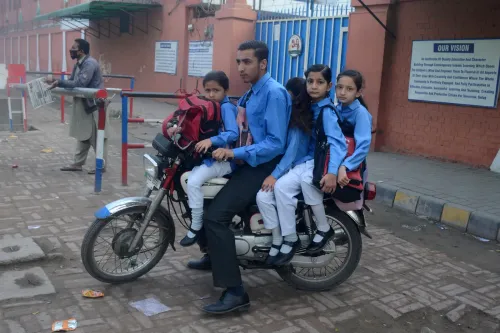
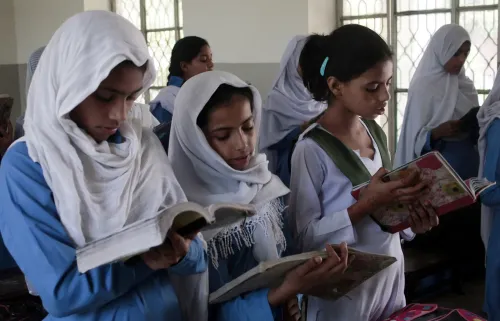
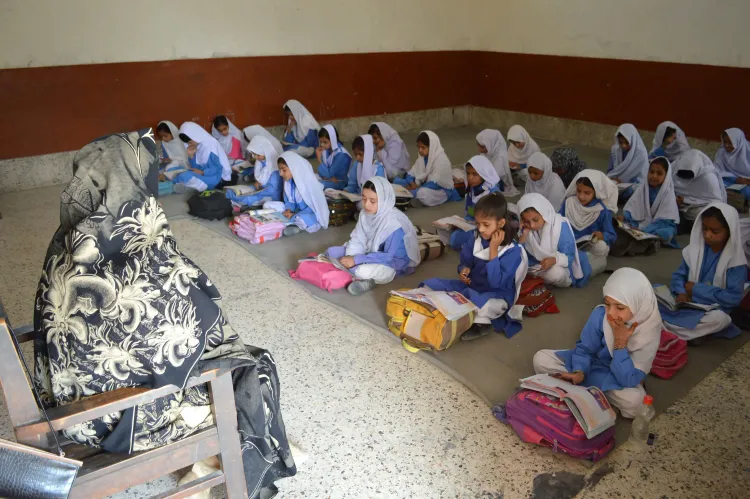
Islamabad, April 2 (NationPress) The education system in Pakistan is currently plagued by numerous shortcomings, ranging from curriculum issues to teacher training, budget constraints, and political meddling, as highlighted in a recent report.
Key reasons identified include a disproportionate focus on quantity rather than quality, political interference, insufficient budget allocation, multiple education systems operating in parallel, an outdated curriculum, and fragmented infrastructure, as noted in an article by 'Pakistan Observer.'
According to Gulsher Ali, the most significant failure of the Pakistani state regarding education lies in its emphasis on quantity over quality. Although the state has constructed grand buildings and increased the number of universities, programs, and degrees, it has shown little interest in the actual quality of education. Quality should imply that the skills acquired through education align with contemporary needs. Furthermore, the Higher Education Commission (HEC) provides more funding to institutions that generate a high volume of research papers, articles, and journals, often neglecting the quality of these outputs.
Education specialists argue that such research has minimal impact on society, technology, and the economy of Pakistan. Additionally, political interference has a direct effect on the educational landscape, as lawmakers dictate educational policies. For instance, the history and social sciences curricula are often tailored to promote the state’s narrative, distorting the truth.
Moreover, the article highlights that the educational administration is excessively centralized and heavily influenced by government officials, with examples of top positions, such as Vice Chancellors and Rectors, being filled by individuals lacking the necessary capabilities, leading to ineffective outcomes.
Furthermore, the article points out that three distinct educational systems coexist in Pakistan—government, private, and madrassah systems—each functioning independently and producing different outcomes. They also utilize various mediums of instruction, causing social divides in knowledge, perspectives, and skills.
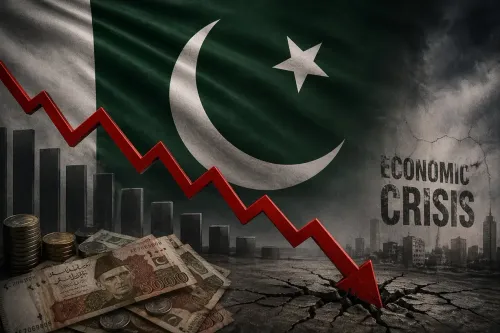
Lastly, according to the Economic Survey of Pakistan (2024-2025), the country allocates only 0.8% of its Gross Domestic Product (GDP) to education, falling significantly short of the international recommendation of 4-6%. This low investment in education is alarming given the rapidly increasing population.
Finally, the curriculum currently in use is outdated, hindering timely access to information, critical thinking, and essential skills, while promoting rote learning and dogmatism. In today's world, practical applications and skills are crucial for prosperity and development. While developed nations continuously update their curricula to reflect modern needs, Pakistan remains stagnant, clinging to a century-old education system.
Point of View
It's evident that Pakistan's educational challenges require immediate attention. The emphasis on quantity over quality needs to be addressed to ensure our youth are equipped with the necessary skills for a competitive world. A collaborative effort from all stakeholders, including government, educators, and society, is essential to drive meaningful change.
NationPress
15 Oct 2026
Frequently Asked Questions
What are the main issues facing Pakistan's education system?
Pakistan's education system struggles with outdated curricula, political interference, low budget allocation, and multiple parallel systems, resulting in a lack of quality education.
How much of GDP does Pakistan spend on education?
Pakistan spends only 0.8% of its GDP on education, significantly below the recommended international standard of 4-6%.
What impact does political interference have on education?
Political interference distorts educational policies and curricula, often promoting a state narrative instead of providing a balanced educational perspective.
Why is the quality of education important?
Quality education ensures that skills and knowledge align with modern needs, preparing students for the challenges of today's world.
What are the different educational systems in Pakistan?
Pakistan has three main educational systems: government, private, and madrassah, each operating independently and contributing to social divisions.