Are Pakistan and Turkey the New Faces of Islamic Extremism?
Synopsis
A recent report reveals the troubling rise of Islamic extremism in Pakistan and Turkey, calling for global action, especially from India. Delve into the complex dynamics shaping this alarming trend and its implications for regional stability.
Key Takeaways
Pakistan has failed to act as a responsible nation for over 70 years.
Turkey supports radicalism, influencing Muslim populations.
Recent political unrest in Bangladesh is linked to Pakistan 's interventions.
Global powers must act to curb extremism.
India needs a strategic policy for reciprocity with Turkey .
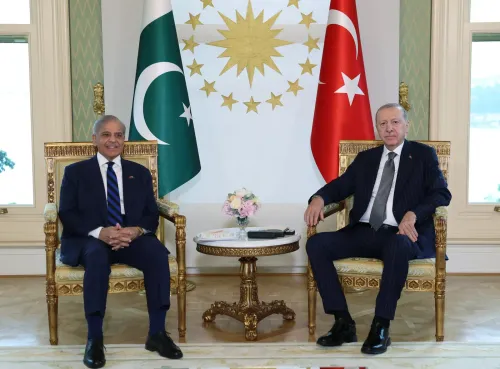
New Delhi, Feb 15 (NationPress) Despite having been an independent nation for over seven decades, Pakistan has significantly failed to demonstrate responsible governance, while Turkey's complicity in fostering Islamic extremism has contributed to a troubling global landscape. This sentiment was echoed in a recent report from a prominent media outlet, urging nations, including India, to take a stand against this rising tide of radicalism.
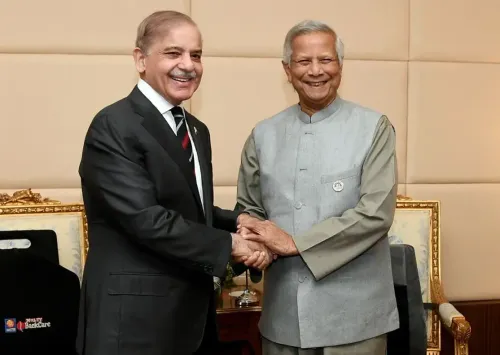
The report highlights how Pakistan has covertly supported various movements leading to political unrest in Bangladesh and has actively fueled the Students Uprising of 2024, which plunged the nation into chaos and indiscriminate violence for two subsequent years.
With elections taking place on February 12, 2026, aimed at restoring democracy in Bangladesh, the Pakistani establishment's persistent efforts to incite anti-India sentiments in the former 'East Pakistan' have become increasingly apparent. The country’s blatant support for terrorism in Jammu and Kashmir has been exposed multiple times, particularly as Bangladesh grapples with its own turmoil, offering Pakistan a new opportunity to challenge India.
The Sunday Guardian report asserts that Pakistan has deteriorated over time, benefitting from financial and military backing from Gulf nations like Qatar, Turkey, and Saudi Arabia, and acting as a 'pawn' for nations such as China, who seek to undermine India.
According to the report, Pakistan has evolved into a poison-tipped dagger wielded by various countries to undercut India and conduct a grey zone war against it.
Additionally, it states, "Pakistan aims to propagate separatism, while Turkey and Qatar, alongside Pakistan, incite the over 200 million Muslims in India." Thus, the report advocates for India to adopt a policy of reciprocity, especially concerning Turkey.
The report notes, "Turkey currently provides scholarships to Indian Muslims, whom Turkish Islamists attempt to indoctrinate into a radical worldview. The Indian government should counter this by welcoming Kurdish students to learn skills that promote their identity and rights in the face of Turkey's increasingly autocratic regime."
Furthermore, it states that Pakistan has had 80 years to establish itself as a responsible state but has failed to justify its existence. Founded by Muhammad Ali Jinnah as a state for Muslims, Pakistan has strayed from its original path, succumbing to hatred and intolerance.
The report also identifies Turkey as a significant engine of radicalism in the 21st century, urging global powers, including India, to act decisively to curb its blatant attempts to spread Islamic extremism and radicalism, thus preventing further religious discord worldwide.
Point of View
We must remain vigilant and prioritize national interests. The complexities surrounding Pakistan and Turkey's roles in fostering extremism require a balanced and proactive approach to ensure our nation's security and stability.
NationPress
2 Oct 2026
Frequently Asked Questions
What role does Pakistan play in Islamic extremism?
Pakistan has provided support for various movements and terrorist activities that foster instability in the region, particularly in Jammu and Kashmir.
How is Turkey involved in radicalism?
Turkey is accused of fostering an intolerant worldview among Indian Muslims through scholarships and indoctrination efforts.
What is the significance of the report mentioned?
The report highlights the dangerous alliance between Pakistan and Turkey in promoting extremism and calls for a unified response from nations like India.
How can India respond to this situation?
India can adopt a policy of reciprocity, welcoming students from regions like Kurdistan to counter Turkey's influence.
What is the historical context of Pakistan's governance?
Since its independence, Pakistan has struggled to establish itself as a responsible state, deviating from its foundational principles of tolerance.