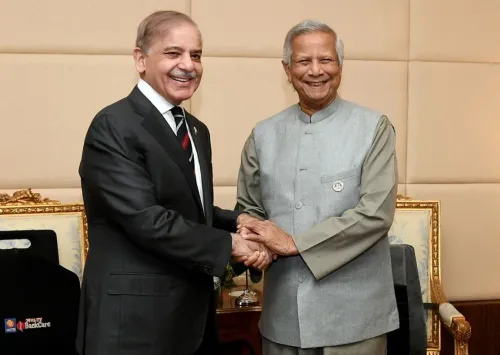
Could Growing Bangladesh-Pakistan Relations Fuel Extremism and Instability?
Synopsis
A recent report reveals that the increasing military cooperation between Bangladesh and Pakistan might lead to the rise of radicalism in both countries, heightening security challenges. As political instability continues, the implications for regional security are profound and troubling.
Key Takeaways
Bangladesh and Pakistan are intensifying military cooperation.
Growing radicalism poses significant security risks.
Transnational extremist groups are exploiting Bangladesh’s security vacuum.
The relationship raises concerns for India regarding regional stability.
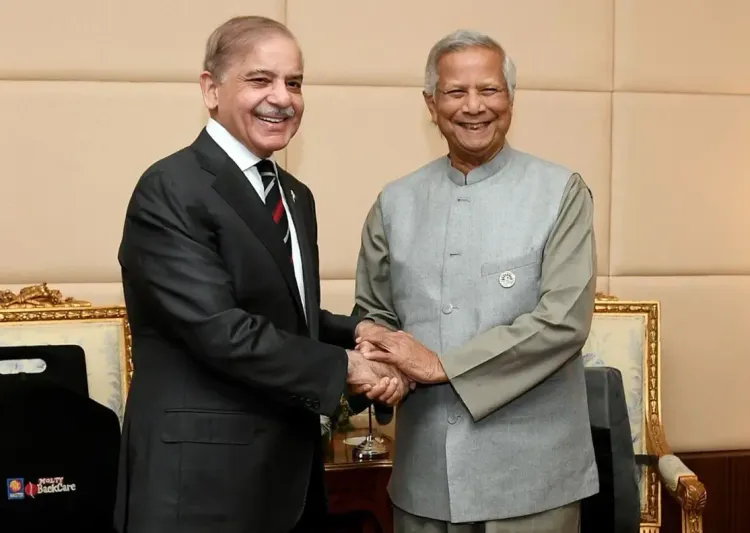
Bangladesh's foreign policy is shifting towards Pakistan .
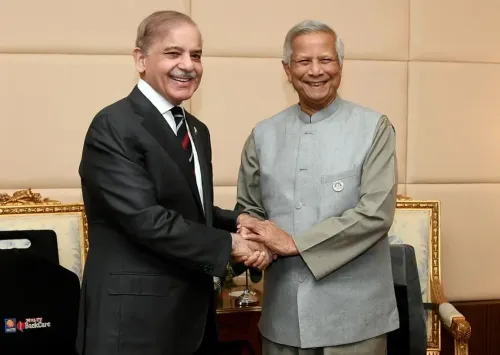
Naypyidaw, Dec 11 (NationPress) The escalating military and strategic cooperation between Bangladesh and Pakistan could potentially lead to an uptick in radical ideologies within both nations, thereby exacerbating ongoing security issues, according to a report released on Thursday.
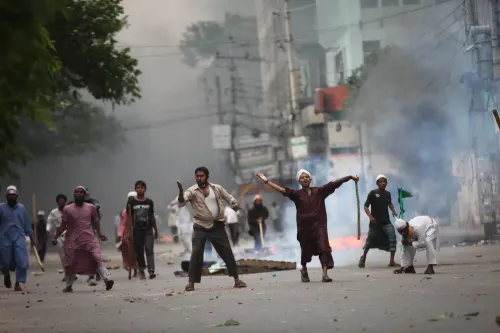
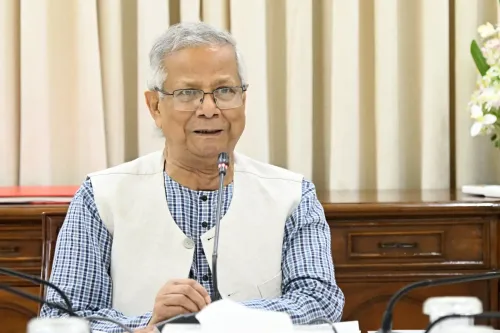
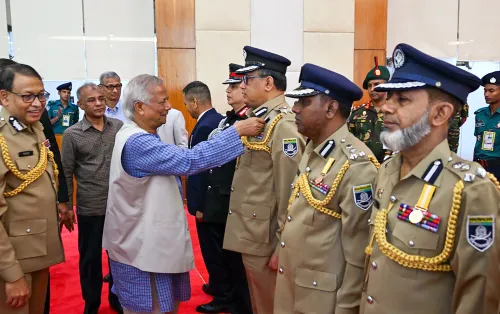
The report further indicated that amidst the rise of religious extremism and the political turbulence under the interim government led by Muhammad Yunus, Bangladesh is facing increased risks due to the growing influence of Pakistan.
As reported by Mekong News Myanmar, transnational extremist factions, including Pakistan-based groups like Tehreek-e-Taliban Pakistan (TTP), Al-Qaeda in the Indian Subcontinent (AQIS), and Lashkar-e-Taiba (LeT), are exploiting the current security void in Bangladesh to disseminate radical ideologies and recruit youth.
The renewed ties between the two countries have provided these groups with a conducive environment to broaden their networks, spread extremist messages, and coordinate militant actions across borders.
“The recent surge in military cooperation between Bangladesh and Pakistan reflects a significant yet troubling development in the strategic landscape of South Asia. Under the interim administration in Dhaka and following the removal of the Sheikh Hasina government in August 2024, Bangladesh seems to be reorienting its foreign and defense strategies, gradually leaning toward Pakistan. This shift raises critical concerns regarding Dhaka’s strategic independence, with fears that Bangladesh may unwittingly become a pawn in Islamabad’s broader geopolitical ambitions,” the report elaborated.
“The context of these developments includes increased defense discussions, high-level military delegations, and collaborations that starkly contrast with Bangladesh’s historically India-centric security focus. Adding a further layer of concern is the reported visit of an associate of Hafiz Saeed to the sensitive Indo-Bangladesh border, raising alarms about the regional security implications,” it continued.
According to the report, the revived relationship between Bangladesh and Pakistan is provoking anxiety in New Delhi, where the Indian government perceives this development as destabilizing. India views Pakistan’s involvement in Bangladesh as an attempt to undermine the traditional Indo-Bangladesh alliance and disrupt strategic stability.
The report underscored that the increasing military interactions between Bangladesh and Pakistan extend beyond mere diplomatic shifts, reflecting changing strategic currents that could redefine regional security dynamics.
“While Bangladesh seeks to diversify its partnerships and assert a more autonomous foreign policy after Hasina, it risks becoming an unintentional tool of Pakistan’s expansive geopolitical objectives. The visit of Hafiz Saeed’s associate to the Indo-Bangladesh border adds a foreboding aspect, underscoring the security vulnerabilities that Bangladesh might inadvertently expose itself to through closer ties with Pakistan,” the report concluded.
Point of View
It's crucial to recognize the delicate balance of regional security. The evolving relationship between Bangladesh and Pakistan raises important questions about strategic autonomy and the potential for increased extremism. Our approach must remain focused on safeguarding national interests while promoting stability within the region.
NationPress
13 Oct 2026
Frequently Asked Questions
What impact does the Bangladesh-Pakistan relationship have on regional security?
The increasing ties may lead to enhanced radicalism and security challenges in both countries, raising alarms about stability in South Asia.
Who are the extremist groups mentioned in the report?
The report cites groups like Tehreek-e-Taliban Pakistan (TTP), Al-Qaeda in the Indian Subcontinent (AQIS), and Lashkar-e-Taiba (LeT) as exploiting Bangladesh's security vacuum.
What are the concerns of the Indian government regarding this relationship?
India views the strengthening of ties as a destabilizing factor that could undermine the traditional Indo-Bangladesh partnership.