Is Bangladesh Moving Closer to Pakistan Under Yunus?
Synopsis
The complex ties between Bangladesh and Pakistan are on the rise under Muhammad Yunus' interim leadership, risking the secular foundations of Bangladesh as radical groups gain strength. This article dives deep into the political maneuvers, economic implications, and potential geopolitical shifts that could alter the region's stability.
Key Takeaways
Bangladesh-Pakistan relations are becoming increasingly complex under Muhammad Yunus.
Economic growth in Bangladesh contrasts with Pakistan's instability.
Radical Islamists are re-emerging, threatening national secularism.
Financial claims from Bangladesh highlight unresolved historical issues.
Strategic military visits indicate potential covert arrangements.
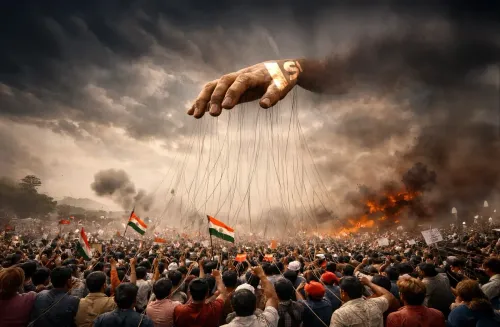
Dhaka: A thorough analysis of the evolving Bangladesh-Pakistan relationship is essential. The current dynamics of bilateral relations have accelerated due to internal political shifts in both nations, alongside shared animosity towards India. Pakistan, characterized as a praetorian ideological Islamic state, has deep connections with Al-Qaeda's jihadi networks. Following the tenure of Sheikh Hasina, Bangladesh under the interim leadership of Muhammad Yunus witnesses a resurgence of jihadi factions and radical Islamists, fueled by declining governance and rampant lawlessness, which threatens the secular essence of the nation born from the 'hasa Aandolan', the Bengali Language Movement that sparked Bengali nationalism. This nationalism unified the people of East Pakistan in their quest to establish Bangladesh.
Over the years, Bangladesh has outperformed Pakistan in terms of economic growth and indicators. In contrast, political upheaval, terrorism, chaos, violence, and corruption have stunted Pakistan's economic and industrial progress. Alarmingly, the present condition of Bangladesh mirrors that of Pakistan in concerning ways. The current interim administration led by Yunus is undermining the once-flourishing garment industry of Bangladesh, which is currently the world's second-largest garment exporter, following only China. The combination of sluggish growth and escalating political challenges has disrupted this vital sector.
Dhaka's financial claims from Islamabad amount to USD $4.32 billion, representing its rightful share from the assets of undivided Pakistan before 1971. Additionally, Bangladesh has requested USD $200 million in foreign aid received by East Pakistan during the catastrophic November 1970 Bhola cyclone. These issues were addressed during the sixth round of bilateral consultations held in Dhaka on April 17, after a 15-year pause. Given that Bangladesh was a 56% partner and accounted for 54% of foreign exchange earnings, if equity principles are considered, Bangladesh could assert a claim of at least 50%. Dhaka has also sought a formal apology from Pakistan for the atrocities committed during the Liberation War, but Islamabad has shown no inclination to comply.
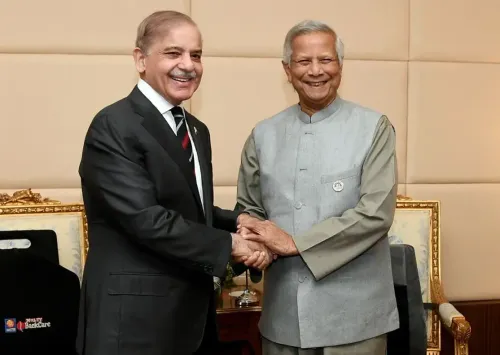
The anticipated visit of Pakistan's Deputy Prime Minister and Foreign Minister Ishaq Dar to Dhaka was postponed due to Pakistan's involvement in the tragic killings of tourists in Pahalgam, Jammu and Kashmir. Rescheduled for later this month, Dhaka is preparing to host a Pakistani Foreign Minister for the first time in 13 years, accompanied by a significant Pakistani delegation.
A Joint Working Group consisting of officials from the Bangladesh foreign ministry and the Pakistan High Commission has been established as both nations aim to sign various MoUs during Dar's visit, particularly in the realms of trade, investment, agriculture, digital economy, environmental protection, marine sciences, green infrastructure, culture, education, and enhancing people-to-people exchanges.
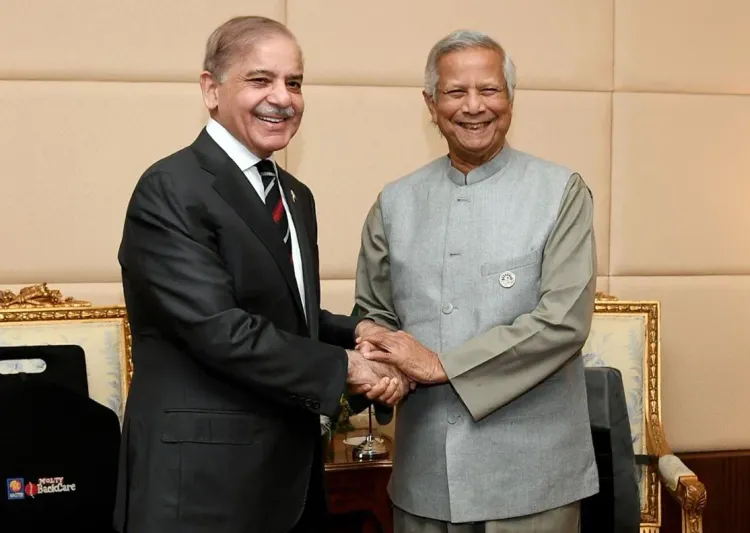
Both Bangladesh and Pakistan have also reestablished direct air connectivity after nearly a decade and have signed an MoU for granting on-arrival visas to diplomatic and official passport holders. This decision was made on July 23 during the visit of Pakistan's Interior Minister Mohsin Naqvi to Dhaka, where he met with Bangladesh's Home Affairs Advisor Jahangir Alam Chowdhury.
Bangladesh is intent on resolving outstanding financial claims and historically unaddressed issues with Pakistan. Earlier this year, Bangladesh notably procured white rice from Pakistan through a government-to-government agreement, establishing direct maritime links between the two nations.
The Yunus administration is eager to 'reset' relations with the authoritarian regime of Pakistan, which has previously undermined democracy in East Pakistan, suppressed civil rights with force, and undermined the local economy while promoting the superiority of the Urdu language over Bengali. Alarmingly, Yunus seems to be aligning with jihadist elements and radical Islamists in shaping Bangladesh's foreign policy.
It is anticipated that Bangladesh may discuss issues regarding the Rakhine region or a Humanitarian Corridor with Pakistan. This proposed corridor might serve as a guise for geopolitical restructuring. Recently, three officials from the Pakistan Army Medical Corps visited Bangladesh. Notably, these officials possessed newly-issued passports devoid of stamps or markings, suggesting a specific agenda. Their visit to Ramu Cantonment, the headquarters of Bangladesh Army’s 10th Infantry Division, raises further questions. This division is one of three in the Chattogram Division and was established as part of the Bangladesh Armed Forces’ Goal 2030 development initiative.
There is a possibility of Pakistani involvement in activities related to the Arakan Army at Ramu within a broader regional context, where the influence of the Arakan Army and the strategic presence of China must not be overlooked. The Arakan Army receives funding and armaments from China to safeguard its economic interests in Rakhine State, particularly concerning the China-Myanmar Economic Corridor. The timing, nature of travel documents, and selection of a sensitive military area like Ramu indicate a potential covert military collaboration between Bangladesh and Pakistan.
Considering Pakistan's hostile actions, it is crucial to recognize that Pakistan may exploit the situation by embedding non-state actors within Bangladesh, integrating them with Rohingya refugees and collaborating with radical Islamist groups to foster anti-India sentiments.
(The author is a specialist in South Asian and Eurasian affairs. He previously worked with the Manohar Parrikar Institute for Defence Studies and Analyses. The views expressed herein reflect personal opinions.)
Point of View
We remain steadfast in our commitment to national integrity and stability. The evolving relationship between Bangladesh and Pakistan under the Yunus administration raises significant concerns regarding governance, economic stability, and the resurgence of radical elements. It is imperative for policymakers to prioritize the nation's secular values and uphold democratic principles to ensure a secure and prosperous future.
NationPress
20 Sept 2026
Frequently Asked Questions
What are the implications of the Bangladesh-Pakistan relationship?
The relationship's evolution could destabilize Bangladesh's secular foundations and empower radical groups, potentially threatening regional security.
How has Bangladesh's economy fared compared to Pakistan's?
Bangladesh has consistently outperformed Pakistan economically, becoming the world's second-largest garment exporter, while Pakistan struggles with instability and corruption.
What demands has Bangladesh made from Pakistan?
Bangladesh has claimed $4.32 billion from Pakistan and requested an apology for past atrocities, highlighting unresolved financial entitlements.
What is the significance of the recent visits between the two nations?
Recent visits indicate a potential thaw in relations, with discussions on various MoUs that may impact trade, investment, and more.
What role do radical elements play in Bangladesh's current political landscape?
Radical groups are reportedly regrouping, threatening the secular fabric of Bangladesh as the interim government navigates complex political challenges.