Is the Relationship Between Jamaat and the US Dangerous?
Synopsis
In a thought-provoking discussion, Bangladeshi thinker Farhad Mazhar raises alarms about the ties between Jamaat-e-Islami and the United States. His insights reveal potential dangers and implications for the nation as he explores the political landscape shaped by these connections.
Key Takeaways
Farhad Mazhar warns about the implications of Jamaat-e-Islami’s ties with the United States .
The discussion reflects on the need for transparency in political relationships.
The drinking water crisis stems from mismanagement and exploitation.
Real politics should focus on basic survival needs.
Mazhar emphasizes the importance of public awareness regarding international influences.
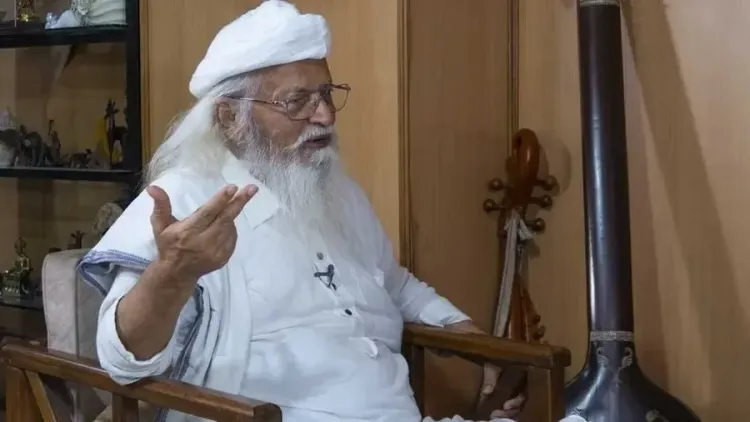
Dhaka, Jan 24 (NationPress) Prominent Bangladeshi poet, writer, and political thinker Farhad Mazhar has expressed serious concerns regarding the ties between the nation’s radical Islamist party, Jamaat-e-Islami, and the United States, labeling it a “dangerous and ominous” situation, as reported by local media on Saturday.
Mazhar's comments came during a discussion titled 'Nationwide crisis of gas, electricity, and safe water: what society should do', which took place at the National Press Club in Dhaka on Friday afternoon.
In light of a report from a major US daily on Thursday, suggesting that the United States was pursuing “friendship” with Jamaat, he remarked, “I believe that every political party in our country is connected to the United States in one way or another, some directly, some indirectly.”
He emphasized that the events following the large protests in August 2024 have been characterized internationally as a “constitutional counter-revolution” benefiting the United States, as reported by the Bangladeshi daily Prothom Alo.
Mazhar noted that while he has been raising this issue for quite some time, it has not garnered adequate attention from the media.
He asserted that removing former Prime Minister Sheikh Hasina from power post-demonstration was not a concern, stating, “the United States would remove her anyway. Our task was to think about how we would build a new Bangladeshi state. This is because the United States is a geopolitical power, and there is no such thing as international law in the world.”
“You have seen Donald Trump's behaviour. In this harsh reality, in this dangerous situation, my concern is simple: how do I survive with 170 million people? My question is very simple. I want to live with 170 million people with three square meals. I do not want to be dragged into any war,” he stated, according to Prothom Alo.
He further questioned why there is little discussion surrounding “American imperialism”.
“Jamaat has not said that it objects to the so-called stabilisation force (ISF) going to Gaza (Palestine). This makes it clear that Jamaat certainly has a policy alignment and a relationship with the United States. That is why the United States is already making such statements. I see this as a very dangerous warning sign,” he elaborated.
During the event, Mazhar also pointed out that the drinking water crisis in Bangladesh is a result of governmental mismanagement, river encroachment, and commercial exploitation.
“Real politics is about establishing people’s control over the basic conditions of life — food, water, energy, and land. Elections have now turned into a politics of sharing the spoils of plunder. Pro-people politics means ensuring the right to survive,” he concluded.
Point of View
It is essential to recognize the complexities surrounding the relationship between Jamaat-e-Islami and the US. While these connections raise valid concerns, it's crucial to approach the narrative with a balanced perspective, focusing on the implications for Bangladesh's sovereignty and future.
NationPress
3 Oct 2026
Frequently Asked Questions
What concerns did Farhad Mazhar raise regarding Jamaat-e-Islami?
Farhad Mazhar expressed concerns about the relationship between Jamaat-e-Islami and the United States, calling it 'dangerous and ominous'.
What was the context of Mazhar's remarks?
His comments were made during a discussion on the nationwide crisis of gas, electricity, and safe drinking water in Bangladesh.
How does Mazhar perceive the political landscape in Bangladesh?
Mazhar emphasizes the need for political parties to prioritize people's control over essential resources and criticizes the current political climate as one of exploitation.
What does Mazhar suggest about international relations?
He argues that the United States' role in Bangladeshi politics indicates a lack of adherence to international law and calls for awareness of American imperialism.