How is Pakistan's ISI Exploiting Political Changes in Bangladesh?

Synopsis
A recent report reveals how Pakistan's ISI is tactically navigating Bangladesh's political shifts and radical networks to undermine India's stability. The findings raise significant concerns over regional security dynamics, emphasizing the complexities of ongoing defense relations between Dhaka and Islamabad.
Key Takeaways
ISI is reestablishing networks in Bangladesh.
Porous borders facilitate illegal activities.
Training camps have been set up for militants.
Rohingya refugees are being radicalized.
The situation poses a threat to regional stability.
Dhaka, Oct 31 (NationPress) Pakistan's Inter-Services Intelligence (ISI) has been capitalizing on the evolving political and security environment in Bangladesh to advance its regional agenda against India, as highlighted in a recent report.
According to intelligence sources, Pakistani agents are reestablishing connections with Islamist militant factions, reviving ties from the pre-1971 era with sympathizers within Bangladesh's Directorate General of Forces Intelligence (DGFI) and the radical group Jamaat-e-Islami, which opposed the nation's 1971 Liberation War against Pakistan.
"The ISI is quietly reemerging in Bangladesh, taking advantage of the changing political climate, open borders, and extremist networks to reassert its influence on India's eastern border. Recent reports suggest a revival of ISI-related activities aimed at destabilizing both Bangladesh and India, under the pretense of increased 'defense cooperation' between Dhaka and Islamabad," the report from Eurasia Review elaborated.
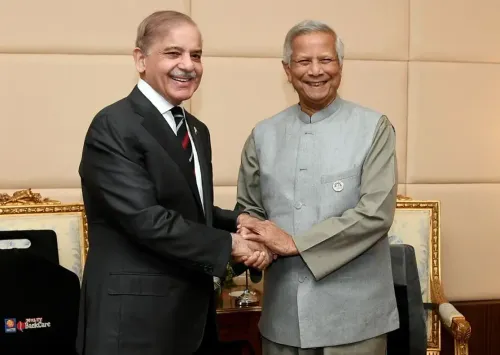
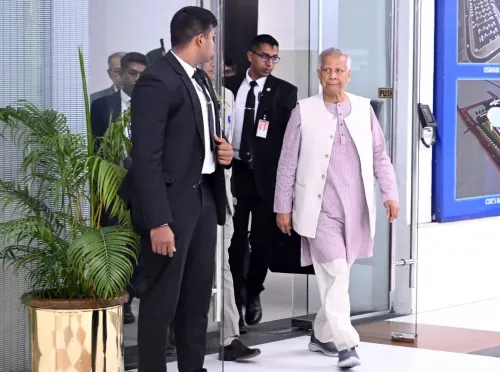
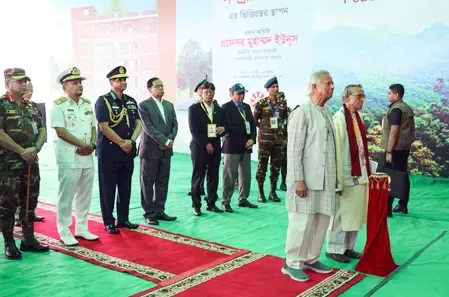
"The latest indication came when General Sahir Shamshad Mirza, Pakistan’s Chairman Joint Chiefs of Staff Committee (CJCSC), met with Bangladesh’s Chief Advisor Muhammad Yunus. The meeting, publicized by Pakistan's Inter-Services Public Relations (ISPR), stressed the need for enhanced bilateral defense and security cooperation — a diplomatic term that conceals Islamabad’s hidden agenda," it noted.
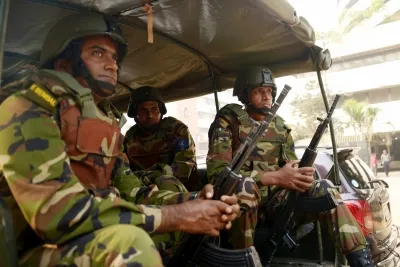
The report also highlighted that Bangladesh's porous border with India has historically been a liability, evolving into a route for smuggling, arms trafficking, and the movement of militants. The ISI and its local allies reportedly utilize these pathways to facilitate anti-India operations and maintain covert communication channels across the frontier.
"Sources indicate that ISI-supported elements have established training and indoctrination facilities in Cox's Bazar and northern Bangladesh, regions with minimal governmental oversight. These camps are allegedly managed by former Pakistani Special Service Group (SSG) operatives, catering to both Bangladeshi recruits and Rohingya refugees — creating a perilous mix of radicalized individuals under the guise of humanitarian aid," the report emphasized.
"The camps fulfill two functions: fortifying local extremist groups such as Jamaat-ul-Mujahideen Bangladesh (JMB) and preparing operatives for infiltration into India’s Northeast. The involvement of Rohingya recruits further complicates the security landscape, transforming a humanitarian dilemma into a geopolitical tool," it remarked.
The resurgence of ISI networks in Bangladesh, according to the report, signifies a renewed strategic aspect in Pakistan's enduring proxy struggle against India.
"The combination of ideological indoctrination, clandestine financing, and covert training represents a formidable hybrid threat to both Dhaka and New Delhi. For Bangladesh, it risks undermining internal stability, exacerbating Islamist radicalism, and straining ties with critical allies. For India, it presents a vulnerable eastern flank already challenged by insurgencies and cross-border infiltration," it concluded.
Point of View
It's imperative to highlight the importance of vigilance in the face of evolving geopolitical dynamics. The information presented emphasizes the need for Bangladesh to bolster its security measures and navigate its diplomatic relations carefully. While acknowledging the complexities of international relations, we must remain steadfast in our commitment to national integrity and stability.
NationPress
10 Oct 2026
Frequently Asked Questions
What are the implications of ISI's activities in Bangladesh?
The implications include potential destabilization of Bangladesh, increased Islamist radicalism, and strained relations with India and other allies.
How does the ISI leverage Bangladesh's political landscape?
The ISI exploits the shifting political winds, porous borders, and existing radical networks to reestablish its influence and carry out covert operations.
What role do Rohingya refugees play in this situation?
Rohingya refugees are reportedly being recruited and trained by ISI-backed elements, complicating the security situation in the region.
What are the historical ties between Pakistan and Bangladesh's radical groups?
Historical ties date back to the pre-1971 era, with sympathizers among various groups like Jamaat-e-Islami, which opposed Bangladesh's independence.
Why is the border between Bangladesh and India significant?
The border has been a vulnerability, facilitating smuggling, arms trafficking, and the movement of militants, which the ISI exploits for anti-India operations.