Qatar, Turkey, Pakistan accused of enabling global Islamic terrorism: Report
Synopsis
A report by analyst Uzay Bulut in the Jerusalem News Syndicate accuses Qatar, Turkey, and Pakistan of collectively enabling global Islamic terrorism — through Brotherhood financing, Hamas sheltering, and cross-border attacks on India. Most striking: a former Pakistani high commissioner is cited as having called nuclear strikes on New Delhi and Mumbai Islamabad's 'default move' in a confrontation with the US.
Key Takeaways
A Jerusalem News Syndicate (JNS) report by analyst Uzay Bulut accuses Qatar , Turkey , and Pakistan of enabling Islamic terrorism globally.
Qatar is described as a major financial patron of the Muslim Brotherhood , using Al Jazeera as a platform for Brotherhood ideologues.
Turkey under President Recep Tayyip Erdogan is accused of sheltering Hamas and assisting HTS in capturing Damascus in December 2024 .
Pakistan is linked to Lashkar-e-Taiba , The Resistance Front (TRF) , and the Pahalgam massacre in Jammu and Kashmir .
Former Pakistani diplomat Abdul Basit is cited as having advocated nuclear strikes on New Delhi and Mumbai as a 'default move.'
A report published by the Jerusalem News Syndicate (JNS) on 2 August has accused the governments of Qatar, Turkey, and Pakistan of enabling Islamic terrorism on a global scale, arguing that this axis poses a strategic threat to Israel, regional stability, and world peace. The report, authored by analyst Uzay Bulut, contends that the three nations collectively amplify extremist ideologies and provide financial, logistical, and political cover for designated terrorist organisations.
Qatar's Role as a Brotherhood Hub
According to the report, Qatar functions as a major financial patron and political nerve centre for the Muslim Brotherhood. The report cites postdoctoral researcher Claudia De Martino, who noted that Doha has 'largely adopted the Muslim Brotherhood's policy approach in the region, disseminating its ideas through the popular Al Jazeera network, made available as an international platform for renowned Brotherhood thinkers such as Youssef al-Qaradawi.' According to De Martino, this arrangement has allowed a relatively small country like Qatar to project soft power well beyond its limited geopolitical footprint.
Turkey's Support for Hamas and Al-Qaeda-Linked Forces
The report describes Turkey, under President Recep Tayyip Erdogan, as a major backer of the Brotherhood and a safe haven for Hamas — designated a Foreign Terrorist Organisation by the United States. It references a 2021 report by the Jerusalem Centre for Public Affairs that reportedly documented Turkey's contribution to Hamas's military empowerment.
The report further alleges that Turkey assisted Hayat Tahrir al-Sham (HTS) — a UN-designated terrorist group with Al-Qaeda affiliations — in capturing Damascus in December 2024. According to the report, this support involved Turkey's long-term territorial occupation of northern Syria, tactical intelligence, advanced equipment, and military manoeuvres by Turkish-backed proxy forces including the Syrian National Army (SNA).
Pakistan's Terror Links and Nuclear Threats
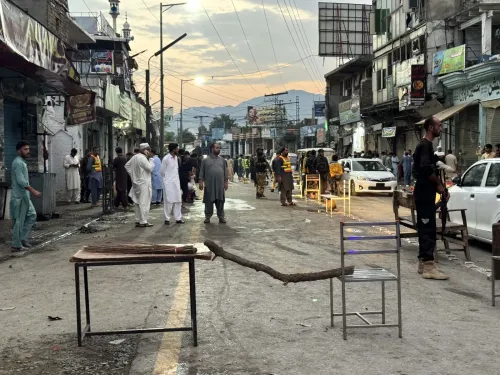
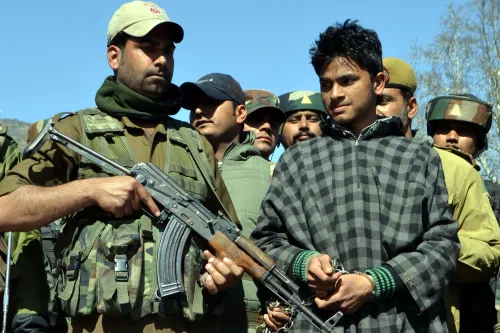
Pakistan, the report states, has historically leveraged UN-designated terrorist outfits such as Lashkar-e-Taiba (LeT) and its splinter group The Resistance Front (TRF) to carry out cross-border attacks. Bulut's report specifically references the Pahalgam massacre in Jammu and Kashmir, describing it as an attack engineered from across the border that 'deliberately targeted civilians based on religion.'
The report also highlights statements by former Pakistani diplomats and military strategists who have reportedly advocated for nuclear strikes against India. It cites Abdul Basit, Pakistan's former high commissioner to India, as having said that striking Indian cities including New Delhi and Mumbai should be Islamabad's 'default move' if it comes under attack from the United States.
The Broader Strategic Concern
Taken together, the report argues that the three governments — through the ideologies they amplify and the actions they enable — 'threaten the safety of all freedom-loving nations and individuals.' It frames the Qatar-Turkey-Pakistan axis as a coordinated strategic concern for Israel and for global security more broadly.
The findings are likely to intensify scrutiny of these governments' relationships with internationally proscribed groups, particularly as geopolitical tensions in the Middle East and South Asia remain elevated. How the international community responds to these allegations — especially at multilateral forums such as the UN — will be closely watched in the weeks ahead.
Point of View
Not a government finding or independent investigation — a distinction mainstream coverage often blurs. That said, the specific allegations it marshals — Turkey's documented presence in northern Syria, Pakistan's long-established links to LeT, Qatar's Al Jazeera platform for Brotherhood figures — are individually corroborated by prior reporting and official designations. What the report does that is genuinely notable is frame these three actors as a coordinated axis, a claim that carries significant geopolitical weight if taken seriously by Western policymakers. The citation of a former Pakistani diplomat advocating nuclear strikes on Indian cities is the single most alarming data point and deserves independent verification before being treated as policy-representative. The broader risk is that framing diverse actors as a monolithic terror axis can obscure the distinct motivations and leverage points each government responds to — a nuance that matters enormously for diplomatic strategy.
NationPress
17 Sept 2026
Frequently Asked Questions
What does the JNS report say about Qatar, Turkey, and Pakistan?
The Jerusalem News Syndicate report, authored by analyst Uzay Bulut, accuses the governments of Qatar, Turkey, and Pakistan of enabling Islamic terrorism on a global scale. It argues the three form a strategic axis that threatens Israel, regional stability, and world peace through financial sponsorship, safe havens, and cross-border attacks.
How is Qatar linked to the Muslim Brotherhood according to the report?
The report claims Qatar is a major financial patron and political hub for the Muslim Brotherhood, using the Al Jazeera network as a platform for Brotherhood thinkers such as Youssef al-Qaradawi. It cites postdoctoral researcher Claudia De Martino's analysis that this arrangement allows Qatar to project soft power beyond its geopolitical size.
What role does Turkey allegedly play in supporting terrorist groups?
According to the report, Turkey under President Recep Tayyip Erdogan shelters Hamas and reportedly helped the UN-designated group Hayat Tahrir al-Sham (HTS) capture Damascus in December 2024 through territorial occupation of northern Syria, tactical intelligence, and support for proxy forces including the Syrian National Army.
What is Pakistan accused of in the report?
The report accuses Pakistan of historically leveraging UN-designated groups such as Lashkar-e-Taiba and The Resistance Front to conduct cross-border attacks, including the Pahalgam massacre in Jammu and Kashmir. It also cites former Pakistani diplomat Abdul Basit as having advocated nuclear strikes on New Delhi and Mumbai as a 'default move.'
Is this report an official government finding?
No. The report is an analytical piece published by the Jerusalem News Syndicate, authored by analyst Uzay Bulut. It is not an official government document or the finding of an international body, and its conclusions should be read in that context.