Concerns Rise Over Pakistan's Involvement in Iran Conflict
Synopsis
Reports indicate that Pakistan's cooperation with the US in drone strikes against Iran raises serious concerns about its commitment to regional stability and Islamic unity. This evolving alliance may have far-reaching implications for the Middle East.
Key Takeaways
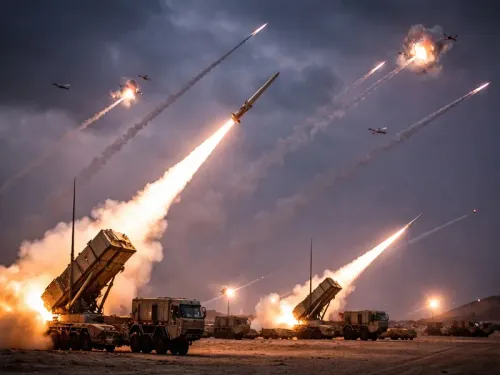
Pakistan has allowed the US to use its bases for drone strikes against Iran .
Historical collaboration between Islamabad and Washington raises concerns about regional peace.
Pakistan's involvement in the Gaza Board of Peace is questioned for its sincerity.
Strategic interests are driving alliances against Iran .
The report warns of a moral void in the Islamic world.
Islamabad, March 6 (NationPress) The involvement of Pakistan in the intensifying conflict in the Middle East raises alarm, as recent reports suggest that the nation has allowed the United States to utilize its bases for drone strikes targeting Iran. This act is not new; historically, Islamabad has been known to collaborate with Washington, reportedly providing intelligence for US operations aimed at Iranian nuclear sites, as noted in a recent report.
According to the International Business Times (IBT), such maneuvers place Pakistan in an emerging alliance that prioritizes immediate advantages over long-term regional peace.
“Moreover, Pakistan's recent involvement in the so-called Gaza Board of Peace alongside Saudi Arabia and Qatar appears to be a humanitarian gesture. However, it risks becoming a diplomatic facade that expresses concern for Gaza while aligning with nations that do not hold Israel accountable for its actions. This kind of symbolic action deepens the cynicism among ordinary Muslims who perceive selective outrage as betrayal,” the report elaborated.
The report further described a calculated assessment of strategic interests driving the alignment of Pakistan, Saudi Arabia, Israel, and the United States against Iran amidst rising tensions.
“From Saudi Arabia's perspective, Iran poses a significant regional threat, from Yemen to Iraq to Lebanon. Undermining Tehran aligns with Riyadh's strategic ambitions, even if it involves foreign military action. Pakistan, grappling with ongoing economic challenges and diplomatic isolation, is pursuing economic support, defense collaborations, and political backing from Washington and its Gulf allies. Meanwhile, the United States is focused on its longstanding aim of containing Iran, while Israel sees a unique chance to neutralize its most formidable adversary,” the IBT report stated.
In light of these recent developments, the report argues that the core principles these nations profess are being compromised—Islamic unity is conditional, sovereignty is selectively defended, and civilian suffering is only condemned when it aligns with a favored narrative. This creates a “moral void” that undermines credibility not just on a global scale but also among their own citizens.
Stressing the need for serious introspection, the report poses the question of whether Muslim-majority nations are “prepared to forfeit unity, stability, and ethical consistency for short-term advantages” or if they will “acknowledge that temporary victories gained through foreign interference frequently lead to lasting disorder.”
“What we are witnessing today transcends mere military or diplomatic incidents. It is a crucial test of whether the Islamic world stands for anything more than mere expediency. Thus far, the silence and the underlying alignments present a troubling outlook,” it concluded.
Point of View
It's crucial to address the multifaceted implications of Pakistan's cooperation with the US in military operations against Iran. This alignment poses significant risks for regional stability and Islamic unity, demanding careful scrutiny and accountability from all involved nations.
NationPress
26 Sept 2026
Frequently Asked Questions
What role is Pakistan playing in the Iran conflict?
Pakistan has reportedly provided bases to the US for drone strikes against Iran, raising concerns about its alignment with US interests over regional stability.
How has Pakistan's historical relationship with the US influenced its current actions?
Historically, Pakistan has closely collaborated with Washington, often providing intelligence support for operations targeting Iranian nuclear facilities.
What is the Gaza Board of Peace and Pakistan's involvement?
The Gaza Board of Peace is a diplomatic initiative involving Pakistan, Saudi Arabia, and Qatar, which aims to address humanitarian concerns but may also serve as a facade for political alignment.
What are the implications of Pakistan's actions for Islamic unity?
Pakistan's recent actions may compromise Islamic unity and regional stability, as they show a preference for short-term tactical gains over long-term solidarity.
What does the report suggest about the future of the Islamic world?
The report raises concerns that the Islamic world may sacrifice its principles for expediency, leading to lasting chaos rather than stability.