Is Pakistan's Growing Influence in the Middle East Causing US and Israel Concerns?
Synopsis
As Pakistan's influence in the Middle East expands, the U.S. and Israel grow increasingly concerned about nuclear threats. This report explores the implications of Pakistan's strategic partnership with Saudi Arabia, the potential for nuclear proliferation, and how these dynamics affect regional security.
Key Takeaways
Pakistan 's role in the Middle East is increasing.
A defense pact with Saudi Arabia raises concerns.
Nuclear proliferation worries are growing.
Pakistan is advocating for an Arab-Islamic task force.
The situation could lead to new regional tensions.
Islamabad, Oct 31 (NationPress) As Pakistan assumes a more prominent role in the Middle East, the United States is likely to grow increasingly uneasy regarding nuclear proliferation in this volatile region, prompting Israel to view Islamabad as a more significant threat to its security and existence, according to a report released on Friday.
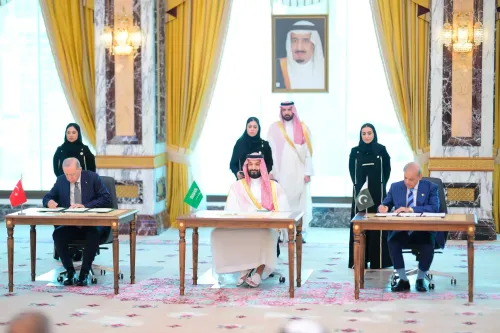
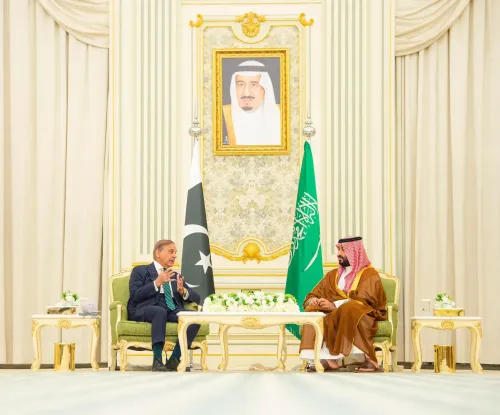
On September 17, 2025, Pakistan and Saudi Arabia formalized a ‘strategic mutual defence’ agreement, committing to support each other in the event of aggression from a third party. This pact indicates a substantial change in the strategic dynamics of the Middle East, as Saudi Arabia, a crucial US ally, is no longer solely reliant on Washington for its security assurances. While many details of the agreement remain undisclosed, it is evident that the decision was influenced by the ongoing conflict in Gaza, even before it reached its conclusion, as explained in a report by The Geopolitics.
Moreover, both Riyadh and Islamabad bring their regional tensions into the framework of this agreement, which could see it activated sooner rather than later. Significant uncertainties linger regarding the potential nuclear implications of the pact, with neither party eager to clarify that Pakistan's nuclear deterrent now extends into the Middle East. At a minimum, this arrangement raises serious concerns about nuclear proliferation in the area.
The report also highlights that since the onset of the Gaza conflict, Pakistan has taken a clear stance against Israel, openly condemning military actions by the Israel Defence Forces (IDF) in Gaza and beyond. Additionally, Pakistan has utilized its position at the United Nations to promote the establishment of an Arab-Islamic task force aimed at countering Israel.
For Islamabad, this initiative could significantly advance its long-term aspirations to play a larger role in the Middle East and the broader Islamic community. Establishing a mutual defence pact with Saudi Arabia may represent the initial step towards forming a wider defence alliance with other Muslim nations, the report emphasized.
While the Saudi-Pakistani defence agreement could create a new axis of collaboration, it also rekindles the nuclear debate that has long concerned the West and now threatens to spread to the Middle East. Despite Riyadh's strategic balancing efforts and Islamabad's quest for prestige, the implications for nuclear proliferation could be both profound and destabilizing.
Israel has repeatedly shown its willingness to act preemptively when confronted with perceived existential threats. There is little that could deter such actions if Israel believes Pakistan's nuclear capabilities are extending toward the Arabian Peninsula. The future will reveal whether this pact fosters stability or ignites a perilous new chapter of regional tensions.
Point of View
I believe that understanding Pakistan's growing role in the Middle East is essential. The strategic defense pact with Saudi Arabia poses both opportunities and challenges for regional stability. While it reflects a shift in alliances, we must carefully consider the implications of nuclear proliferation and how it could reshape the geopolitical landscape.
NationPress
13 Oct 2026
Frequently Asked Questions
What is the significance of the Pakistan-Saudi Arabia defense pact?
The defense pact signifies a shift in Middle Eastern alliances, with Saudi Arabia seeking security beyond the U.S. It raises concerns about nuclear proliferation.
How is Pakistan's stance on Israel affecting its international relations?
Pakistan's strong opposition to Israeli military actions is solidifying its role as a leader in the Muslim world, influencing its relationships with both allies and adversaries.
What are the potential risks of nuclear proliferation in the Middle East?
Nuclear proliferation in the Middle East could lead to increased tensions, arms races, and greater instability as nations seek to secure their interests.
How might Israel respond to Pakistan's nuclear capabilities?
Israel has a history of acting preemptively against perceived threats, and the extension of Pakistan's nuclear capabilities could provoke a similar response.
What does this mean for the future of Middle Eastern geopolitics?
The evolving dynamics could create a new axis of cooperation or exacerbate existing conflicts, significantly impacting regional stability.