Pakistan's Dilemma: Caught Between China and Saudi Arabia

Synopsis
Pakistan's strategic entanglement with China and Saudi Arabia has led to a precarious situation, jeopardizing its internal stability and international reputation. As it navigates these complex alliances, the nation faces rising challenges that threaten to unravel its unity.
Key Takeaways
Pakistan's international reputation is at risk due to its complex alliances.
China's opposition to regime change in Iran limits Pakistan's military options.
Saudi Arabia pressures Pakistan to align against Iran, invoking defense agreements.
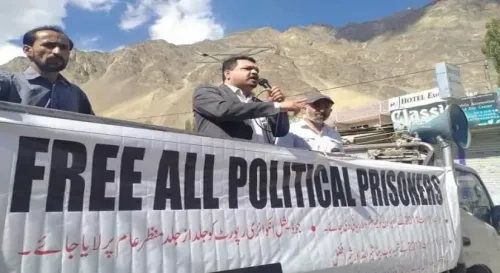
Internal dissent in Gilgit-Baltistan complicates Pakistan's foreign policy.
Human rights abuses against PoGB residents have increased amidst the conflict.
Islamabad, April 4 (NationPress) Pakistan's ongoing efforts to placate influential allies while capitalizing on their rivalries have severely tarnished its global standing. A report released on Saturday warns that unless Islamabad confronts its fundamental strategic challenges, the nation could face significant internal discord.
In an article for the US-based 'Global Strat View', Senge Sering, the founder of the Washington-based Gilgit Baltistan Studies, highlighted that Pakistan is encountering escalating strategic hurdles amid its increasing involvement in the Iran-Arab tensions.
"China, Pakistan's closest ally in both strategic and economic terms, staunchly opposes any regime change in Iran. Iranian factions advocating for regime change are likely to collaborate with the United States to curtail China's influence in the Middle East. In light of this, China has urged Pakistan to avoid engaging in any military actions against the Iranian government," Sering remarked.
“When examining Pakistan’s ties with Saudi Arabia, the situation becomes even more intricate. Saudi Arabia, Pakistan’s second most critical ally, perceives the Iranian regime as a fundamental threat to the Gulf nations and seeks its immediate eradication. Saudi Arabia is pressing Pakistan to support its stance against Iran, especially in light of the Strategic Mutual Defence Agreement between the two countries," he elaborated.
The expert noted that Riyadh invoked the bilateral defense agreement with Pakistan following missile and drone assaults from Iran on the Kingdom, with certain Saudi analysts interpreting the agreement as a potential nuclear shield against shared dangers.
Despite its proclaimed commitment to ensuring Saudi security, Sering pointed out that Pakistan has refrained from direct military actions against Iran due to pressures from China, internal sectarian conflicts, and border disputes.
“Pakistan finds itself in a quintessential catch-22, heavily reliant on both China and Saudi Arabia for its economic and geopolitical sustainability. Some analysts, however, argue that Pakistan’s current role as a mediator is merely a façade to counter Iran’s military and diplomatic maneuvers while simultaneously promoting Saudi interests,” he stated.
Sering emphasized that domestically, the inhabitants of Pakistan-occupied Gilgit-Baltistan oppose the nation’s involvement in the Iranian conflict.
He outlined four critical elements regarding the PoGB: “Firstly, it is predominantly Shia. Secondly, it shares a border with China and acts as the sole land link between these allied nations. Thirdly, most locals advocate for independence from Pakistan. Lastly, Gilgit Baltistan is constitutionally recognized as part of India, and a UN Security Council resolution has called for Pakistan’s withdrawal from the region. This situation indicates that neither China nor Pakistan truly owns this crucial land bridge essential for their economic and strategic dominance in Asia.”
Expressing serious concerns, Sering noted a threefold increase in incidents of torture, imprisonment, and killings of PoGB residents, including children, by Pakistani authorities since the onset of the conflict, particularly targeting those involved in pro-Iran protests.
“With no reprieve from state-sanctioned violence, local families are stepping forward to file complaints against the Pakistani military for the deaths of their relatives. Recently, the police department dismissed dozens of personnel suspected of being passive toward pro-Iran demonstrators. However, residents in Skardu believe these officers were discharged due to their Shia identity," he commented.
Point of View
It's vital to present an unbiased perspective on Pakistan's current geopolitical challenges. The nation's reliance on external powers for economic and strategic support raises serious questions about its sovereignty and internal cohesion. Understanding these dynamics is essential for grasping the future trajectory of Pakistan.
NationPress
8 Oct 2026
Frequently Asked Questions
What are the main challenges Pakistan faces in its foreign policy?
Pakistan is struggling with balancing its relationships with China and Saudi Arabia, which creates internal and external pressures that could lead to fragmentation.
How does the conflict between Iran and Saudi Arabia affect Pakistan?
Pakistan's involvement in the Iran-Arab conflict complicates its alliances, especially as it seeks to appease both China, which opposes regime change in Iran, and Saudi Arabia, which sees Iran as a direct threat.
What is the significance of Gilgit-Baltistan in this context?
Gilgit-Baltistan plays a crucial role due to its Shia majority, its geographical position as a land bridge to China, and the local calls for independence from Pakistan.
How has internal dissent affected Pakistan's foreign policy?
Growing opposition among residents in regions like Gilgit-Baltistan regarding Pakistan's involvement in foreign conflicts could undermine the nation's internal unity and influence its foreign policy decisions.
What steps is Pakistan taking in response to external pressures?
While Pakistan has publicly committed to supporting its allies, it has been cautious in taking direct military action against Iran, balancing pressures from both China and Saudi Arabia.