Pakistan's US-Iran mediation bid backfires, straining Saudi ties and exposing limits
Synopsis
Pakistan's high-profile bid to broker peace between the US and Iran has backfired in key ways — alienating Saudi Arabia, exposing Islamabad's dependence on China and Qatar, and leaving Army Chief Asim Munir's military-led diplomacy viewed with suspicion on multiple fronts. The balancing act is becoming structurally untenable.
Key Takeaways
Pakistan's mediation between the US and Iran has strained its strategic ties with Saudi Arabia , which expected Islamabad to stay firmly in the Gulf camp.
The 2025 Strategic Defence and Military Agreement (SDMA) between Pakistan and Saudi Arabia is now under stress, with Riyadh warning it will expect Pakistan's active defence support if Iranian attacks resume.
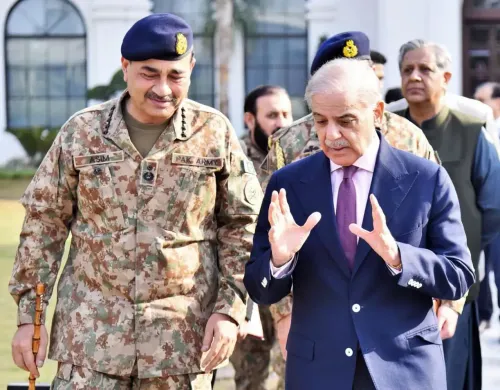
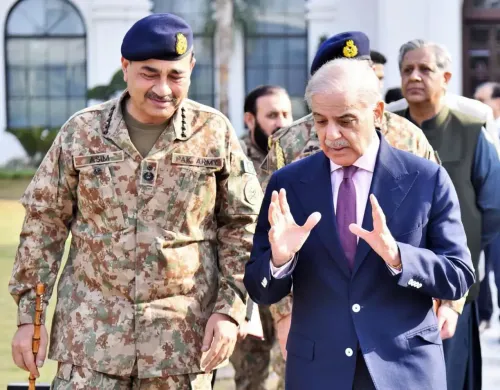
Pakistan Army Chief Asim Munir led negotiations with Iran's Revolutionary Guards , a military-heavy approach that deepened Saudi unease.
A joint Pakistan-China statement on 31 March and a five-point plan acknowledged Islamabad's limitations as a standalone mediator.
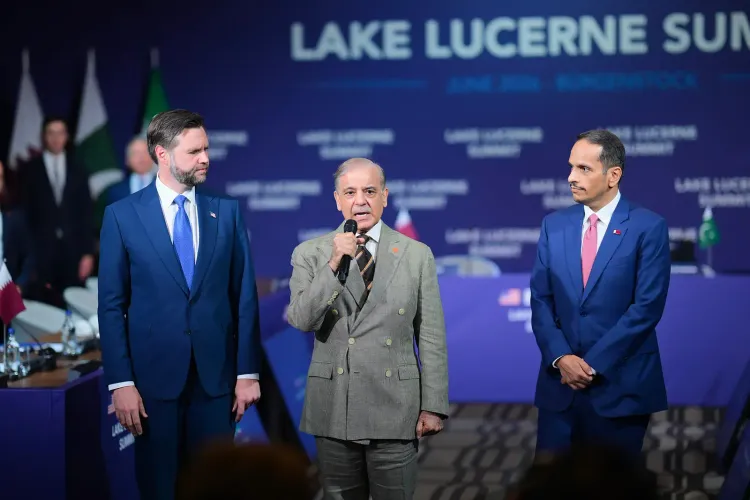
Qatar — not Pakistan — reportedly steered the latest ceasefire attempt in Switzerland , with Iranian media consistently crediting Qatar as the more effective broker.
The UAE has reportedly demanded repayment of a major loan, adding financial pressure to Pakistan's diplomatic exposure.
Pakistan's bid to position itself as a mediator between the United States and Iran has delivered a mixed diplomatic harvest — briefly elevating Islamabad's international profile while simultaneously exposing it to a set of compounding strategic risks. Chief among these: a cooling of relations with Saudi Arabia, growing suspicion in both Washington and Tehran, and an uncomfortable dependence on China and Qatar to actually drive the talks forward.
Saudi Arabia's Unease
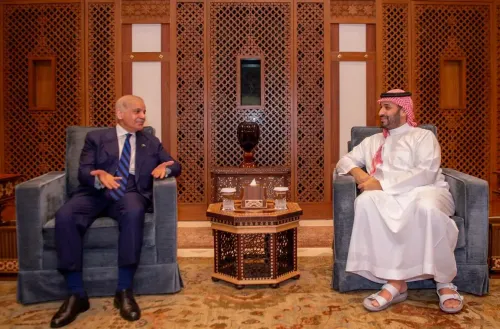
The mediation exercise has unsettled Riyadh, which has long regarded Pakistan as a strategic partner — a relationship reinforced by the 2025 Strategic Defence and Military Agreement (SDMA). Saudi Arabia expected Islamabad to remain firmly aligned with Gulf security priorities. Instead, Pakistan's visible embrace of Iran — including hosting Iranian delegations in Islamabad and giving Tehran's leadership a public platform — was read in Riyadh as legitimising Iran's position.
An article published in March on the website of the Stimson Center, a Washington-based think tank, warned that if Iranian attacks against Saudi Arabia resume, Riyadh will expect Pakistan to actively contribute to its defence under the terms of their security agreement. The same analysis cautioned that Pakistan's relationship with the United Arab Emirates has already been affected by the conflict, with the UAE demanding repayment of a major loan.
'If the fragile US-Iran ceasefire falters, Pakistan's balancing act among the U.S., Iran, and Saudi Arabia will likely become untenable,' the Stimson article warned.
The Military-Led Diplomacy Problem
Pakistan Army Chief Asim Munir projected himself as personally steering negotiations with Iran's Revolutionary Guards — a military-heavy approach that raised additional concerns in Riyadh that Islamabad was prioritising Iran's trust over Gulf sensitivities. Deputy Prime Minister and Foreign Minister Ishaq Dar also engaged in what reports described as 'shuttle communication' between Tehran and Riyadh, securing assurances that Saudi soil would not be used against Iran — a move that briefly constrained Iranian strikes.
An opinion piece in Al Jazeera — the Qatari-funded pan-Arab broadcaster — noted in March that the 2025 SDMA 'is being tested under conditions neither side anticipated.' It observed that when Iranian drones and missiles struck Gulf targets, Pakistan condemned both the US-Israel role in the killing of Ayatollah Khamenei and Iran's retaliatory strikes — an attempt to appear balanced that satisfied neither side fully.
The piece quoted analysts as saying that Islamabad 'likely never expected to find itself caught between Tehran and Riyadh, particularly after the China-brokered rapprochement between Saudi Arabia and Iran in 2023.'
Dependence on China and Qatar
Despite projecting itself as a primary negotiator, Pakistan has leaned heavily on other powers to provide the actual diplomatic architecture. A joint statement by Pakistan and China on 31 March, along with their five-point plan to end the conflict involving Iran, was seen as an acknowledgement of Pakistan's limitations as a standalone mediator, according to the Stimson Center analysis. The plan effectively required a major global actor — in this case, China — to underpin Islamabad's efforts.
More recently, the latest ceasefire attempt in Switzerland was reportedly steered quietly by Qatar, not Pakistan. Several reports indicate that Iranian state media has consistently downplayed Pakistan's mediation role in US-Iran talks while highlighting Qatar as the more credible and effective broker — a framing that undercuts Islamabad's claim to a central seat at the table.
The Structural Bind
Pakistan's neutral posture is now under severe strain from multiple directions. Its defence pact ties it institutionally to Saudi Arabia, while geography, economic necessity, and sectarian dynamics create unavoidable linkages with Iran. Analysts quoted in recent commentary suggest that if regional volatility is not contained soon, Islamabad will find it increasingly difficult to sustain this balancing act without paying a concrete cost on at least one front.
Whether Pakistan can convert its diplomatic visibility into durable influence — rather than accumulated liability — will depend largely on whether the US-Iran ceasefire holds and whether Riyadh ultimately views Islamabad's role as helpful or as a betrayal of Gulf solidarity.
Point of View
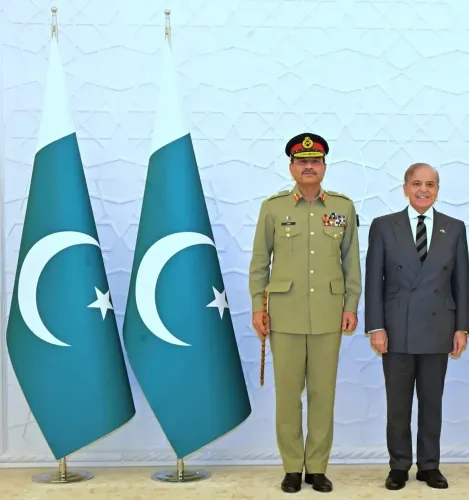
And at considerable cost to its Gulf relationships. The SDMA with Saudi Arabia was meant to be a security anchor; it has instead become a liability clause that could be called in at the worst possible moment. Islamabad's military-led diplomacy, driven visibly by Army Chief Munir, also muddies the civil-military signalling that both Washington and Riyadh prefer to read clearly.
NationPress
23 Sept 2026
Frequently Asked Questions
Why has Pakistan's mediation between the US and Iran strained its ties with Saudi Arabia?
Pakistan's visible embrace of Iran — including hosting Iranian delegations and having Army Chief Asim Munir personally engage Iran's Revolutionary Guards — was seen by Riyadh as tilting Islamabad toward Tehran. Saudi Arabia, bound to Pakistan by the 2025 Strategic Defence and Military Agreement, expected Islamabad to remain aligned with Gulf security priorities, not to appear to legitimise Iran's position.
What role did China and Qatar play in the US-Iran talks that Pakistan claimed to be mediating?
Despite Pakistan projecting itself as a central mediator, a joint Pakistan-China statement on 31 March and a five-point plan to end the conflict were seen as acknowledging Pakistan's limitations, requiring China's weight to underpin the effort. Separately, the latest ceasefire attempt in Switzerland was reportedly steered quietly by Qatar, with Iranian media consistently crediting Qatar — not Pakistan — as the more effective broker.
What is the 2025 Strategic Defence and Military Agreement between Pakistan and Saudi Arabia?
The SDMA is a bilateral security pact signed in 2025 that reinforced Pakistan's role as a strategic partner to Saudi Arabia. The Stimson Center has warned that if Iranian attacks against Saudi soil resume, Riyadh will expect Pakistan to actively contribute to its defence under the agreement's terms — a commitment that conflicts with Islamabad's current neutral posture toward Iran.
How has Pakistan's relationship with the UAE been affected?
According to the Stimson Center analysis, Pakistan's relationship with the United Arab Emirates has already been affected by the conflict, with the UAE demanding repayment of a major loan. This adds financial pressure on top of the diplomatic strain Islamabad is facing across the Gulf.
Can Pakistan sustain its balancing act between Saudi Arabia, Iran, and the US?
Analysts quoted in recent commentary are sceptical. Pakistan's defence pact ties it to Saudi Arabia, while geography and sectarian dynamics bind it to Iran. If the fragile US-Iran ceasefire falters, the Stimson Center has warned that Pakistan's three-way balancing act will likely become untenable.