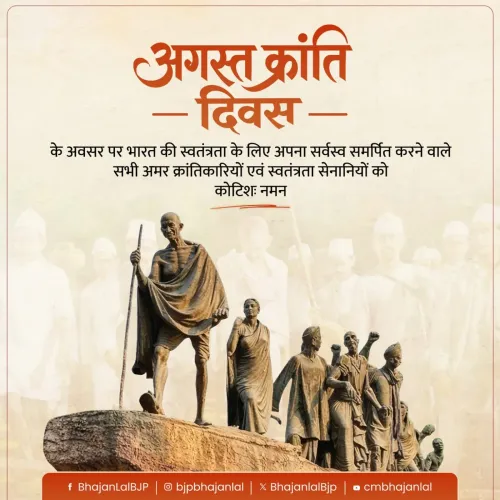
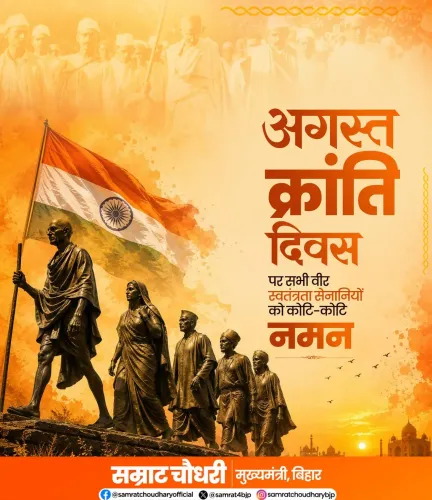
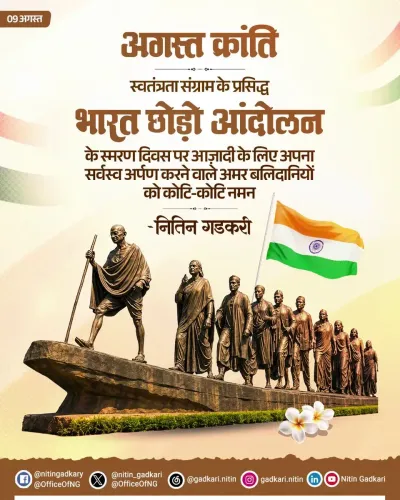
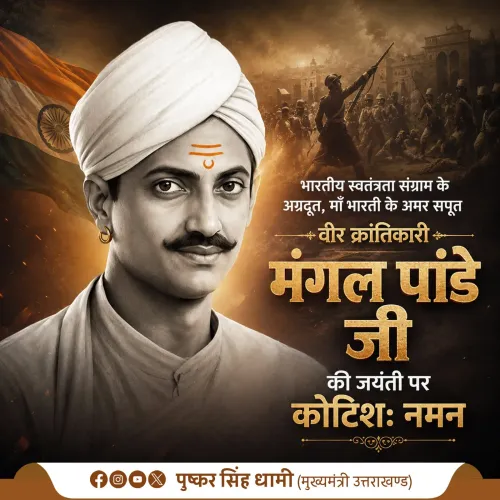
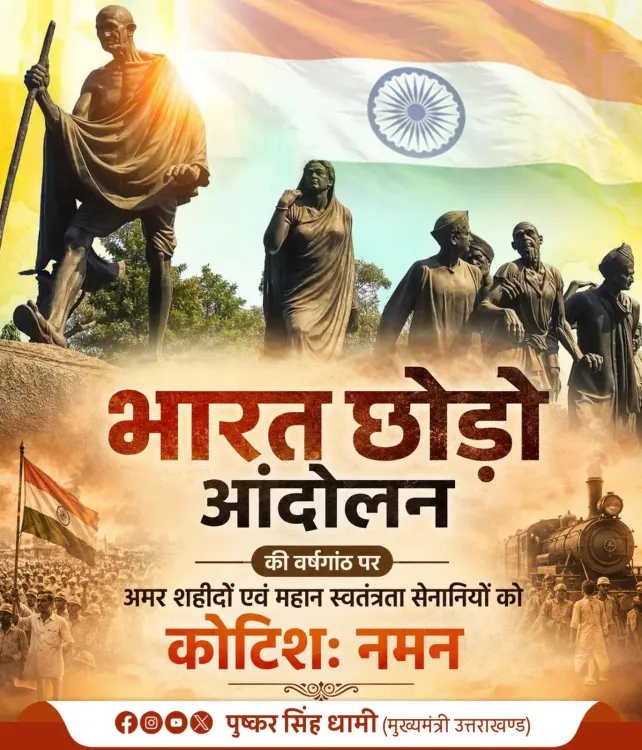
CM Dhami pays tribute on Quit India Movement anniversary
Synopsis
On the Quit India Movement anniversary, Uttarakhand CM Pushkar Singh Dhami saluted the martyrs and freedom fighters of the 1942 uprising, calling their courage and sacrifice an enduring inspiration for national service.
Key Takeaways
Uttarakhand CM Pushkar Singh Dhami posted a tribute on 9 August marking the anniversary of the Quit India Movement .
He offered kotishaha naman — a salute a million times over — to the immortal martyrs and freedom fighters of the movement.
The Quit India Movement was launched on 8 August 1942 by the Indian National Congress , demanding immediate British withdrawal from India.
Dhami described the movement as having given 'decisive direction to the final struggle for independence.' 9 August is observed nationally as Kranti Diwas (Revolution Day), with tributes issued by leaders across parties and states.
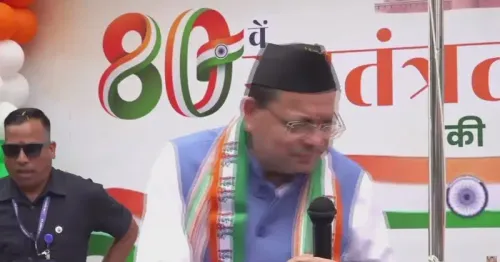
Eighty-four years after a nation roared 'Karo ya maro' — Do or Die — Uttarakhand Chief Minister Pushkar Singh Dhami on Sunday, 9 August bowed to the martyrs and freedom fighters who staked everything on India's independence, marking the anniversary of the Quit India Movement.
In a post in Hindi, CM Dhami offered 'kotishaha naman' — a salute a million times over — to the 'amar shaheedon' (immortal martyrs) and freedom fighters of the movement. He wrote that the Quit India Movement not only 'ignited the flame of freedom among the people of the country' but also gave 'decisive direction to the final struggle for independence.' The bravery and sacrifice of its fighters, he added, 'will always inspire us to serve the nation.'
The movement that broke an empire's nerve
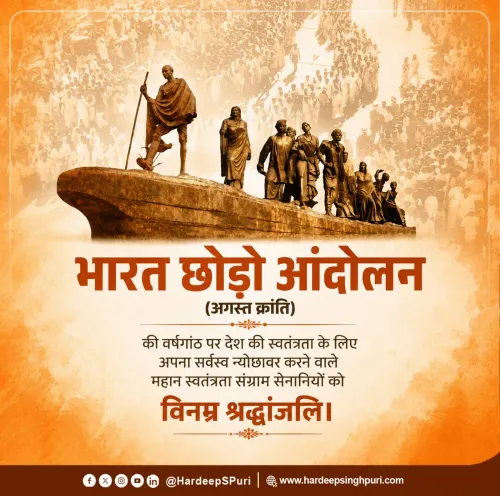
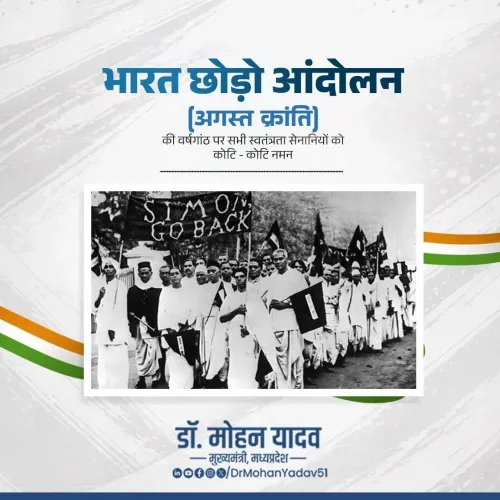
The Quit India Movement was launched on 8 August 1942 by the Indian National Congress under Mahatma Gandhi, demanding an immediate end to British rule. It was among the most sweeping mass uprisings of the independence era — triggering strikes, protests, and civil disobedience across the subcontinent at a moment when World War II had stretched British administrative capacity thin. The British response was swift and severe: mass arrests, including Gandhi and the entire Congress leadership, within hours of the Bombay resolution.
Yet the movement's significance endured. Historians credit it with fundamentally shifting the moral calculus of colonial rule, signalling to Britain — and the world — that Indian self-determination was no longer deferrable. The date, 9 August, is now observed nationally as Kranti Diwas (Revolution Day).
A ritual of remembrance that cuts across party lines
Annual tributes on 9 August are a fixture of Indian political life, issued by leaders across parties and states. CM Dhami's message follows that tradition — but the language he chose is worth noting. Framing the fighters' sacrifice as a perpetual call to 'nation service' connects historical memory to present-day governance, a rhetorical move common to leaders who seek to draw a moral line from the freedom struggle to contemporary public duty.
For Uttarakhand, a state with a strong martial tradition and significant representation in India's armed forces, such anniversaries carry particular resonance among citizens who see service and sacrifice as living values, not archival ones.
Point of View
But they also function as soft ideological signalling — different leaders emphasise different aspects of 1942 depending on their political lineage. Dhami's framing, stressing sacrifice as a call to ongoing 'nation service,' aligns with the BJP's broader narrative of translating freedom-movement memory into present-day nationalist purpose. The gesture is ceremonial in form but carries consistent messaging about the party's claim to the patriotic inheritance of the independence era. As such, it is less a news event than a data point in a long-running, cross-party competition over who best honours — and therefore embodies — India's founding struggle.
NationPress
23 Sept 2026
Frequently Asked Questions
When was the Quit India Movement launched?
The Quit India Movement was launched on 8 August 1942 by the Indian National Congress under Mahatma Gandhi, demanding an immediate end to British colonial rule in India.
Why is 9 August significant in India?
9 August is observed as Kranti Diwas (Revolution Day) in India, commemorating the anniversary of the Quit India Movement of 1942.
What did CM Dhami say about the Quit India Movement?
CM Pushkar Singh Dhami said the Quit India Movement 'ignited the flame of freedom among the people of the country' and gave 'decisive direction to the final struggle for independence,' and that the sacrifice of its fighters will always inspire national service.
Who is Pushkar Singh Dhami?
Pushkar Singh Dhami is the Chief Minister of Uttarakhand and a senior leader of the Bharatiya Janata Party (BJP).
What was the outcome of the Quit India Movement?
The British responded to the Quit India Movement with mass arrests of Congress leadership, including Gandhi, but the uprising fundamentally shifted the moral and political calculus of colonial rule, accelerating the path to Indian independence in 1947.