CM Dhami pays tribute to Mangal Pandey on birth anniversary
Synopsis
Uttarakhand Chief Minister Pushkar Singh Dhami on 19 July 2026 marked the birth anniversary of revolutionary martyr Mangal Pandey, saluting his 1857 defiance against British rule as the spark that ignited India's freedom movement and calling his sacrifice immortal in Indian history.
Key Takeaways
CM Pushkar Singh Dhami posted a tribute to Mangal Pandey on his birth anniversary on 19 July 2026 .
Mangal Pandey was a sepoy in the 34th Bengal Native Infantry who openly defied British officers at Barrackpore on 29 March 1857 .
Dhami described Pandey's courage as having 'ignited the flame of freedom' and 'sounded the bugle of independence across the entire country.' The Indian Rebellion of 1857 that followed Pandey's act spread across northern and central India before being suppressed by the East India Company .
BJP leaders regularly mark anniversaries of 1857 figures as part of a broader nationalist historiography aligned with the party's public messaging.
With Independence Day on 15 August 2026 approaching, further state-level commemorative events honouring freedom fighters are expected.
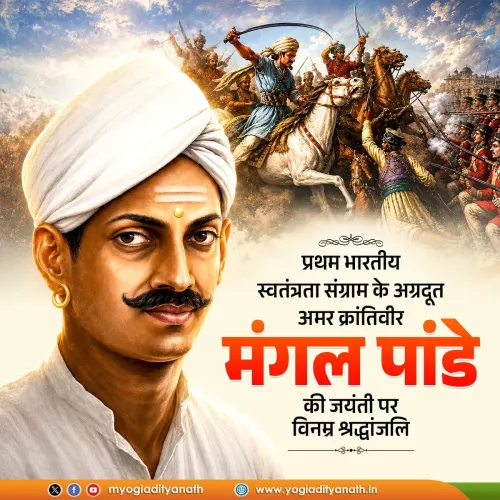
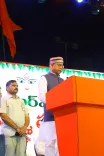
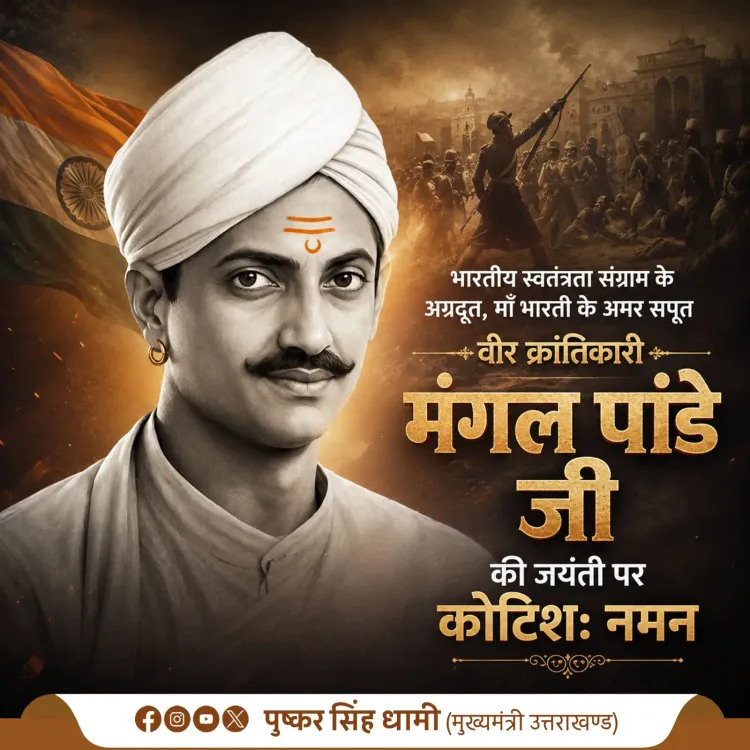
Uttarakhand Chief Minister Pushkar Singh Dhami on Sunday, 19 July 2026, paid homage to Mangal Pandey, the revolutionary sepoy whose 1857 defiance is widely regarded as the opening act of India's First War of Independence, marking his birth anniversary with a tribute post on X.
In his post, CM Dhami wrote — translated from Hindi — 'Krantiveer amar balidani Mangal Pandey ji ki jayanti par kotish: naman' (Countless salutations on the birth anniversary of the revolutionary, immortal martyr Mangal Pandey). He recalled that in 1857, Pandey's 'indomitable courage and sacrifice against foreign rule ignited the flame of freedom that sounded the bugle of independence across the entire country,' adding that 'his supreme dedication to the motherland will remain immortal in Indian history forever.'
Context
Mangal Pandey served as a sepoy in the 34th Bengal Native Infantry of the East India Company. On 29 March 1857, at Barrackpore in present-day West Bengal, he attacked British officers in an act of open defiance that preceded the wider Sepoy Mutiny by weeks. He was court-martialled and executed on 8 April 1857. Historians widely credit his revolt as one of the earliest sparks of the Indian Rebellion of 1857, the large-scale uprising that eventually spread across northern and central India before being suppressed by the East India Company.
Policy Backdrop
BJP leaders across the country have consistently observed birth and death anniversaries of figures associated with the 1857 rebellion, framing them within a broader nationalist historiography that emphasises indigenous resistance to colonial rule. Such commemorations are woven into the party's public messaging calendar, particularly in the weeks leading up to Independence Day on 15 August. The Uttarakhand government has previously incorporated 1857 martyrs into state-level educational and cultural programmes, though no specific new scheme tied to this 2026 tribute has been announced.
Stakeholders and Impact
The tribute is addressed broadly to Indian citizens and carries symbolic weight for communities that trace pride in the anti-colonial movement. For the BJP, such posts reinforce a consistent ideological thread connecting the party's governance narrative to India's pre-Independence resistance history. Students, educators, and historians engaged with 1857 studies are among those for whom such official acknowledgements carry public visibility.
What's Next
With Independence Day approaching on 15 August 2026, state governments, including Uttarakhand, are expected to step up commemorative events honouring freedom fighters. Observers will watch whether the Dhami government follows this tribute with concrete programme announcements — such as curriculum updates or cultural events — centred on 1857 martyrs. The frequency and prominence of such tributes in the coming weeks will signal the administration's broader commemorative agenda ahead of the national holiday.
Point of View
' the post connects a pre-Independence martyr to contemporary nationalist sentiment ahead of Independence Day. Such commemorations serve a dual function: they reinforce ideological continuity for the party's base while positioning state leadership as custodians of patriotic memory. The pattern suggests that as 15 August 2026 approaches, similar tributes to 1857 figures will intensify across BJP-governed states.
NationPress
18 Oct 2026
Frequently Asked Questions
Who was Mangal Pandey and why is he remembered?
Mangal Pandey was a sepoy in the 34th Bengal Native Infantry who attacked British officers at Barrackpore on 29 March 1857, an act widely seen as one of the earliest sparks of the Indian Rebellion of 1857. He was executed on 8 April 1857 and is celebrated as a pioneer of India's independence movement.
When is Mangal Pandey's birth anniversary?
Mangal Pandey's birth anniversary falls on 19 July. In 2026, Uttarakhand CM Pushkar Singh Dhami marked the occasion with a tribute post on X.
What did CM Dhami say about Mangal Pandey?
CM Dhami saluted Mangal Pandey as an 'immortal martyr' and said his indomitable courage in 1857 ignited the flame of freedom and sounded the bugle of independence across the entire country, adding that his supreme dedication to the motherland will remain immortal in Indian history.
What was the Indian Rebellion of 1857?
The Indian Rebellion of 1857 was a large-scale uprising against East India Company rule that began in Meerut and spread across northern and central India before being suppressed. Mangal Pandey's defiance at Barrackpore weeks earlier is considered one of its earliest triggers.
Why do BJP leaders frequently tribute 1857 freedom fighters?
BJP leaders regularly mark anniversaries of 1857 figures to underscore indigenous resistance to colonial rule, aligning with the party's emphasis on nationalist historiography in public messaging and state events, particularly ahead of Independence Day on 15 August.