CM Himanta Orders Expulsion of 28 Illegal Migrants in Assam

Synopsis
Assam Chief Minister Himanta Biswa Sarma declared that 28 illegal migrants detected by Sribhumi Police have been expelled, signalling an escalation in the state's border enforcement drive and invoking the Assam Accord and NRC framework as the legal basis for continued action.
Key Takeaways
28 illegal migrants detected by Sribhumi Police in Assam were expelled, as announced by CM Himanta Biswa Sarma on 7 November 2026 .
Sarma declared 'Assam's patience with illegal infiltration is over,' signalling a deliberate escalation in enforcement rhetoric.
Expulsions are grounded in the Assam Accord of 1985 , which fixes 24 March 1971 as the cut-off date for identifying illegal entrants.
The National Register of Citizens (NRC) , finalised in August 2019 , provides additional legal infrastructure for detection and removal proceedings.
Sarma, as convenor of the North-East Democratic Alliance (NEDA) , frames border security as a regional concern extending beyond Assam.
Future pace of Foreigners Tribunals orders and central-state coordination on border fencing will indicate whether this drive intensifies.
Assam's decades-long battle against illegal immigration has a new, sharper edge. Assam Chief Minister Himanta Biswa Sarma announced on Saturday, 7 November 2026, that 28 illegal migrants detected by Sribhumi Police had been expelled from the state, declaring that the administration's patience on the issue is exhausted.
Sribhumi Police Drive and What Triggered the Announcement
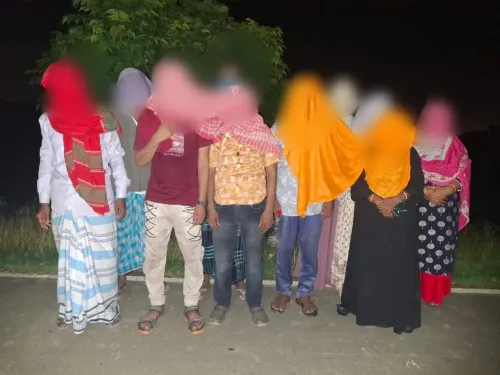
Sribhumi district — formerly known as Karimganj, situated in southern Assam along the Bangladesh border — has been a focal point in the state's immigration enforcement because of its geography and demographic sensitivity. The district police detected and processed the 28 individuals, and the expulsions were carried out before CM Sarma's public declaration. 'We will continue this mission with unwavering determination. No compromise on our borders. No compromise on the security and identity of Assam,' Sarma wrote, posting alongside three images from the operation.
The Assam Accord and the NRC: The Legal Architecture Behind the Drive
The legal backbone for these expulsions stretches back four decades. The Assam Accord of 1985 fixed 24 March 1971 as the cut-off date for identifying and deporting foreign nationals — anyone who entered Assam after that date without authorisation is classified as an illegal entrant. The state's Foreigners Tribunals adjudicate individual cases, and confirmed illegal migrants can be served deportation orders.
Layered on top of that framework is the National Register of Citizens (NRC), finalised in August 2019 under Supreme Court supervision. The NRC was designed to definitively identify Indian citizens in Assam and exclude those who entered after the 1971 cut-off. Those left out of the NRC are not automatically deported — they go through Foreigners Tribunals — but the register sharpened the state's enforcement machinery significantly. Successive Assam governments, especially since 2016, have used these instruments to conduct periodic detection and expulsion drives.
Sarma's Governance Record and the NEDA Dimension
Himanta Biswa Sarma, who has served as Chief Minister since 2021, has made border security and illegal immigration a central plank of his administration's identity politics. As convenor of the North-East Democratic Alliance (NEDA), Sarma's posture on immigration resonates well beyond Assam — it speaks to concerns shared by multiple northeastern states about demographic and cultural change. Each enforcement announcement reinforces that political positioning at both the state and regional level.
What makes this week's expulsion notable is not simply the number — 28 — but the explicit public framing: 'Assam's patience is over.' That language signals a deliberate escalation in rhetoric, suggesting that the administration intends to accelerate the pace and visibility of such drives.
What Comes After the 28 Expulsions
The scale of subsequent detection operations, the pace of Foreigners Tribunals orders, and the degree of coordination with central agencies on border fencing along Assam's roughly 263-kilometre boundary with Bangladesh will determine whether this is a one-week headline or the opening of a sustained enforcement surge. Indigenous Assamese communities and civil-society groups that have long demanded stricter enforcement will watch closely. So will rights observers who argue that deportation processes must be legally watertight to avoid statelessness.
One expulsion drive rarely settles a decades-old crisis — but every one of them sharpens the question of where, exactly, Assam's demographic and security story ends.
Point of View
The CM is signalling ground-level accountability alongside political intent. The sharp 'patience is over' framing also sets up future escalations: once a government declares a threshold crossed, backing down from subsequent drives carries a political cost. Regionally, the move reinforces Sarma's leverage within NEDA, where illegal immigration anxieties cut across party lines in several northeastern states.
NationPress
7 Nov 2026
Frequently Asked Questions
Who are the 28 illegal migrants expelled from Assam?
The 28 individuals were detected by Sribhumi Police in Assam's southern border district and classified as illegal migrants under the Assam Accord's 1971 cut-off framework. CM Himanta Biswa Sarma confirmed their expulsion on 7 November 2026 ; individual identities have not been made public.
What is the legal basis for deporting illegal migrants from Assam?
The Assam Accord of 1985 mandates detection and deportation of anyone who entered Assam after 24 March 1971 without authorisation. Foreigners Tribunals adjudicate individual cases, and the NRC finalised in 2019 provides a citizenship registry that supports identification of illegal entrants.
What is Sribhumi district and why is it significant?
Sribhumi , formerly Karimganj , is a district in southern Assam that shares a border with Bangladesh. Its geography makes it a sensitive zone for illegal immigration enforcement, and its police force has been active in detection drives under CM Sarma's administration.
What is the NRC and how does it relate to illegal immigration in Assam?
The National Register of Citizens (NRC) is an Assam-specific citizenship registry finalised in August 2019 under Supreme Court supervision. It identified Indian citizens in Assam and excluded those who could not prove residency before the 1971 cut-off , strengthening the legal framework for identifying and acting against illegal entrants.
What has Himanta Biswa Sarma's government done on illegal immigration since 2021?
Since taking office in 2021 , CM Himanta Biswa Sarma has conducted periodic detection and expulsion drives, pushed for faster Foreigners Tribunals proceedings, advocated for complete border fencing, and made enforcement of the Assam Accord a central policy priority of his administration.