CM Himanta: Assam Police, BSF stop 21 infiltrators
Synopsis
Assam Chief Minister Himanta Biswa Sarma announced on 14 June 2026 that a joint Assam Police–BSF operation intercepted 21 infiltrators at the India–Bangladesh border, underscoring the state government's sustained multi-pronged border security strategy.
Key Takeaways
21 infiltrators were identified and prevented from entering India in a joint Assam Police and BSF operation announced on 14 June 2026 .
CM Himanta Biswa Sarma described the action as part of a continuing 'multi-pronged approach' to border security.
The Assam–Bangladesh frontier spans roughly 263 kilometres and has historically been a pressure point for undocumented migration.
The operation reflects sustained state–centre coordination, combining Assam Police ground intelligence with BSF border patrolling.
Policy context includes the Assam Accord (1985) cutoff date and the NRC finalised in 2019 as foundational frameworks for immigration enforcement.
Further updates on deportation proceedings and expanded border-fencing progress are expected from state and central agencies.
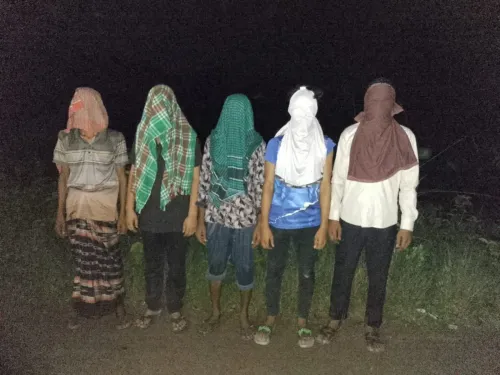
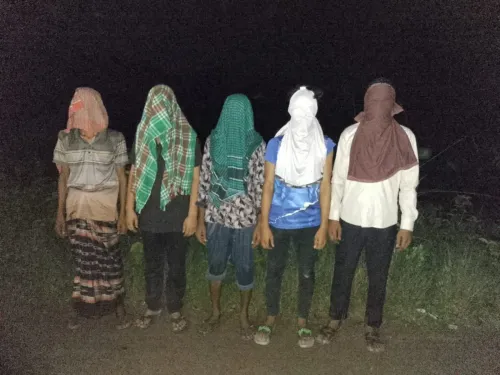
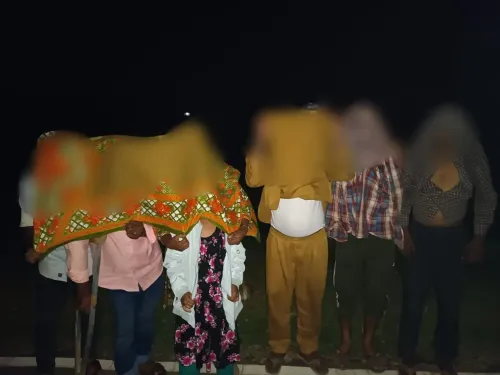
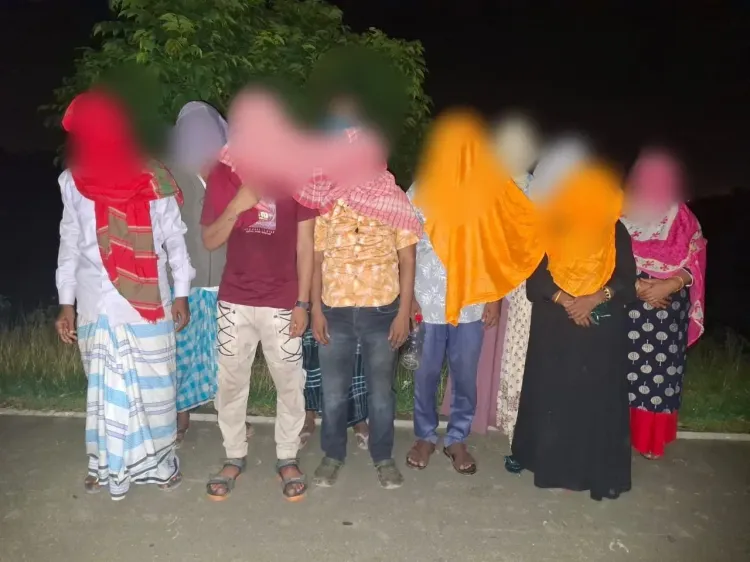
Assam Chief Minister Himanta Biswa Sarma on Sunday, 14 June 2026, announced that a joint operation by Assam Police and the Border Security Force (BSF) had identified and intercepted 21 infiltrators before they could enter India. The Chief Minister described the operation as 'an excellent joint effort' and said the state's 'multi-pronged approach of safeguarding our border continues.'
Context
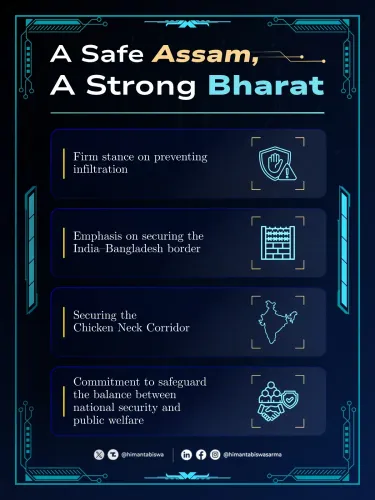
The interception was disclosed by CM Sarma directly on social media, accompanied by three images from the operation. In his post, he framed the action under the twin goals of 'safeguarding borders' and 'strengthening security' — language that mirrors the BJP-led state government's long-standing political emphasis on curbing illegal immigration into Assam.
The Assam–Bangladesh frontier is among the most sensitive stretches of India's international border, running for roughly 263 kilometres through difficult terrain. Porous stretches have historically been entry points for undocumented migrants, making joint policing operations a recurring feature of state–centre security coordination.
Policy Backdrop
Assam's border security architecture rests on several interlocking layers of policy. The Assam Accord of 1985 established 24 March 1971 as the legal cutoff date for identifying and deporting illegal immigrants — a benchmark that has shaped every subsequent anti-infiltration drive in the state. The National Register of Citizens (NRC), finalised in 2019, was the most comprehensive attempt to distinguish citizens from undocumented entrants.
Alongside documentation exercises, the central government has pursued accelerated border fencing along the Indo-Bangladesh frontier since the early 2000s. The BSF operates as the primary federal force along this frontier, and its coordination with Assam Police on ground-level interceptions has intensified under the current state administration. CM Sarma, who also serves as convenor of the North-East Democratic Alliance (NEDA), has consistently positioned border security as a pillar of governance in the region.
Stakeholders and Impact
The most immediate stakeholders are border-area residents in districts abutting Bangladesh, communities that have historically borne the social and economic pressures associated with large-scale undocumented migration. For them, visible joint operations signal active enforcement rather than passive surveillance.
For the BSF and Assam Police, the operation reinforces an institutional model of state–centre jointness that the BJP government has championed. The 21 individuals intercepted will be subject to legal proceedings under applicable immigration and border-security statutes; their precise status and nationality had not been officially detailed beyond the Chief Minister's post at the time of publication.
What's Next
The Assam government has signalled that such operations are not isolated events but part of a continuing, phased strategy. Watchers of northeastern border policy will look for updates on the status of the 21 intercepted individuals, potential deportation proceedings, and any formal briefing by Assam Police or the BSF on operational details.
Broader indicators to track include the pace of residual border fencing along unfenced stretches of the Assam–Bangladesh frontier and the possible deployment of surveillance technology — drones, sensors, and smart-fence systems — that both the state and central governments have discussed as force-multipliers for physical patrolling.
Point of View
Not passively, managing its porous international border. By crediting both Assam Police and the BSF in the same breath, he also signals a functional state–centre partnership — politically useful given that the BSF is a Union government force. The timing, coming years after the contentious NRC process, suggests the administration is pivoting toward operational enforcement as the dominant mode of immigration control, rather than documentation exercises. For analysts, the key question is whether these interceptions are part of a data-tracked, intelligence-led grid or remain episodic shows of force.
NationPress
19 Sept 2026
Frequently Asked Questions
What happened at the Assam border on 14 June 2026?
Assam Police and the BSF jointly intercepted 21 infiltrators who were attempting to enter India, as announced by Chief Minister Himanta Biswa Sarma on 14 June 2026.
Who are the infiltrators caught at the Assam border?
The 21 individuals were described as infiltrators attempting to cross into India from the Assam–Bangladesh frontier. Their precise nationalities and further legal proceedings had not been officially detailed beyond the Chief Minister's announcement.
What is Assam's border security strategy?
Assam follows a 'multi-pronged approach' combining joint operations between Assam Police and the BSF , accelerated border fencing along the Indo-Bangladesh frontier, and legal frameworks such as the Assam Accord cutoff date and the NRC .
What is the BSF's role in Assam border security?
The Border Security Force (BSF) is the central paramilitary force responsible for guarding India's international borders, including the roughly 263-kilometre Assam–Bangladesh frontier, and it routinely conducts joint operations with Assam Police .
What is the Assam NRC and how does it relate to infiltration?
The National Register of Citizens (NRC) , finalised in 2019 , was a state-wide exercise to distinguish Indian citizens from undocumented immigrants in Assam. It forms one layer of the broader immigration-enforcement framework alongside physical border operations.