CM Himanta: Assam Police busts infiltration network, 12 arrested

Synopsis
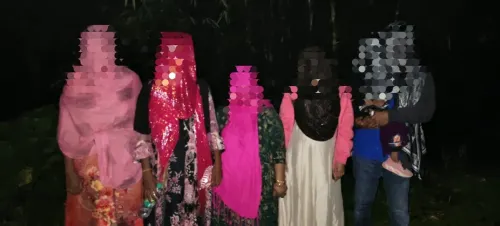
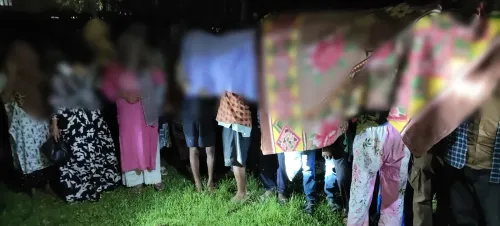
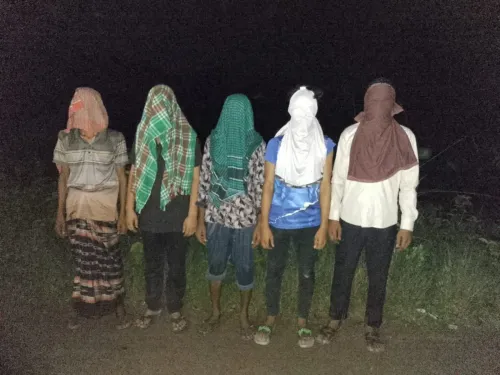
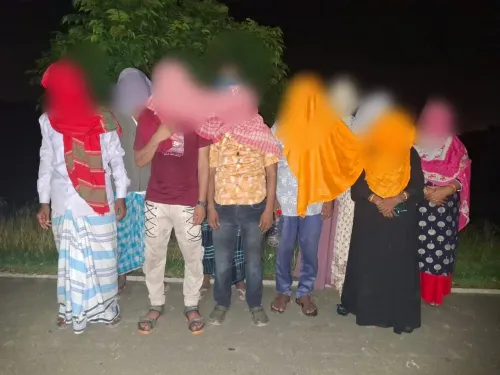
Assam CM Himanta Biswa Sarma announced that Assam Police, acting on specific intelligence, busted an illegal infiltration network and arrested 12 undocumented migrants, while warning that local facilitators sheltering them will also face Indian law.
Key Takeaways
12 illegal migrants were arrested by Assam Police in an intelligence-based operation announced on 10 October 2026 .
Police unearthed the complete route and procedure of illegal entry used by the network.
CM Sarma explicitly warned that local 'hosts' — those sheltering or facilitating illegal migrants inside Assam — will be prosecuted under Indian law.
The operation was framed by Sarma within the Devi Paksha religious period, invoking demographic protection as a stated goal.
The crackdown reflects Assam's sustained enforcement posture along its Bangladesh border corridor.
As the auspicious Devi Paksha period began on Saturday, 10 October 2026, Assam Chief Minister Himanta Biswa Sarma announced a sharp crackdown — Assam Police, acting on specific intelligence, dismantled an infiltration network and arrested 12 illegal migrants, unearthing what he described as the complete route and procedure of illegal entry into the state.
The bust: what Assam Police uncovered
According to CM Sarma, the operation was intelligence-driven, not incidental. Police did not merely intercept individuals — they mapped the entire pipeline: the entry corridors, the logistics, and the procedural chain that moves people across Assam's borders without authorisation. The arrest of 12 individuals is presented as the visible tip; the network itself is the real target.
Sarma's post made clear that the crackdown would not stop at those caught crossing. 'We will hunt down their hosts here and treat them with the right provisions of Indian law,' he wrote — a direct warning aimed at local facilitators and shelter providers operating inside Assam.
The 'hosts' warning: local facilitators in the crosshairs
The distinction Sarma draws is deliberate and legally significant. Under Indian law, facilitating illegal entry or providing shelter to undocumented migrants can attract provisions of the Foreigners Act, 1946 and the Passport Entry into India Act, 1920, among other statutes. By signalling that 'hosts' — those who house or enable illegal migrants within Assam — will face prosecution, the government is expanding the scope of accountability beyond the migrants themselves.
This two-pronged approach — intercept at the border, prosecute the support network within — reflects a pattern of enforcement that Assam's administration has pursued with increasing intensity over recent years, particularly in districts along the Bangladesh border.
Devi Paksha framing and the demographic argument
Sarma's choice to frame the operation within the religious calendar of Devi Paksha — the fortnight leading up to Durga Puja, considered sacred across Assam and Bengal — is pointed. He invoked the imagery of 'slaying demonic forces' threatening to 'alter Assam's demography,' language that places the enforcement action within a long-running political and cultural narrative about illegal immigration changing the ethnic and religious composition of the state.
Assam's demographic anxieties have deep historical roots, stretching from the Assam Agitation of 1979–1985 through the Assam Accord and the contentious National Register of Citizens (NRC) process. The Chief Minister's framing keeps that anxiety politically alive while anchoring it to a concrete law-enforcement action.
With the festive season underway and border surveillance at a declared high, Assam's administration has served notice that the hunt for infiltration networks — and the people who sustain them from within — is far from over.
Point of View
The administration signals it is treating illegal immigration as a supply-chain problem, targeting enablers as much as migrants themselves. The Devi Paksha timing is not incidental; it anchors a security action to a moment of high public attention and religious sentiment, amplifying its political resonance. This pattern — operational specificity plus civilisational framing — has become a signature tool in Assam's governance playbook under Sarma.
NationPress
10 Oct 2026
Frequently Asked Questions
How many illegal migrants were arrested in the Assam Police operation announced by CM Himanta?
12 illegal migrants were arrested. Assam Police, acting on specific intelligence, also unearthed the full route and procedure of the infiltration network.
What does CM Sarma mean by 'hosts' in his warning about illegal migrants in Assam?
'Hosts' refers to individuals inside Assam who shelter, facilitate, or support undocumented migrants. CM Sarma warned they will be prosecuted under the relevant provisions of Indian law, including statutes governing the sheltering of illegal entrants.
What is Devi Paksha and why did CM Himanta mention it in the context of this operation?
Devi Paksha is the sacred fortnight preceding Durga Puja. CM Sarma invoked it to frame the crackdown as a symbolic battle against forces threatening Assam's demography , connecting a law-enforcement action to a culturally resonant moment.
What laws can be used against those who shelter illegal migrants in Assam?
Facilitating illegal entry or sheltering undocumented migrants can attract provisions of the Foreigners Act, 1946 and the Passport Entry into India Act, 1920 , among other applicable Indian statutes.
What is Assam's history with illegal immigration concerns?
Assam's concerns about illegal immigration date to the Assam Agitation of 1979–1985 , which led to the Assam Accord . More recently, the state conducted a contentious National Register of Citizens (NRC) process aimed at identifying undocumented residents.