Is Pakistan Losing Its Strategic Value as a Security Partner for Saudi Arabia?
Synopsis
Pakistan's response to the West Asia conflict has raised doubts about the Saudi-Pakistan Strategic Military Defence Agreement. What do recent developments reveal about the reliability of this alliance?
Key Takeaways
The Saudi-Pakistan alliance faces scrutiny due to Pakistan's lack of military support in recent conflicts.
Expectations of mutual defense are challenged by current realities.
Saudi Arabia may seek new alliances to fill the gaps left by Pakistan's cautious approach.
The credibility of Pakistan in regional diplomacy is at risk due to perceived inaction.
This situation calls for a reevaluation of international military commitments.
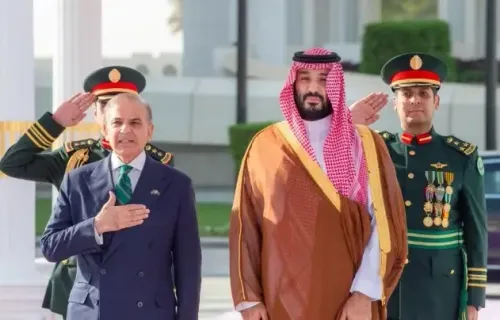
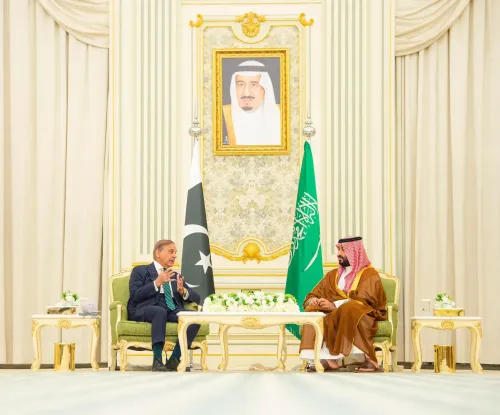
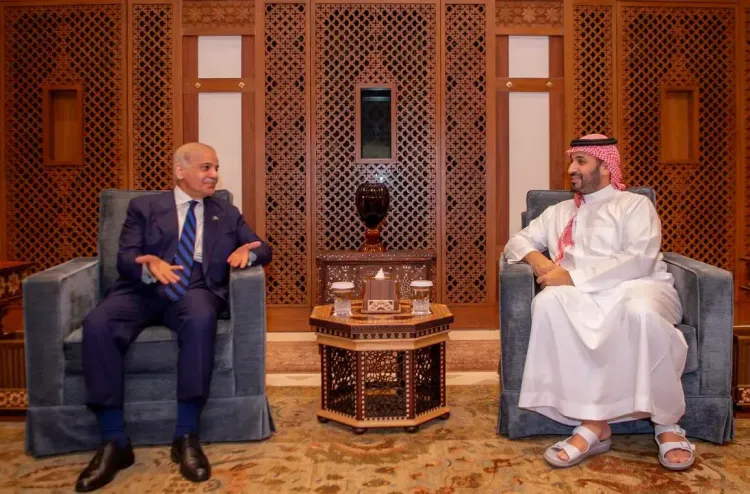
Islamabad, March 19 (NationPress) The recent actions of Pakistan concerning the conflict in West Asia have raised alarms regarding the integrity and reliability of the Saudi-Pakistan Strategic Military Defence Agreement. Developments involving Iran, Saudi Arabia, and Pakistan have exposed vulnerabilities in what was long thought to be a robust strategic alliance.
"Initially, the agreement was celebrated as a partnership where both nations would back each other against external threats. Analysts compared it to a NATO-like alliance, asserting that an attack on one would be seen as an attack on both. This pact was heralded as a testament to the camaraderie and strategic alignment between a prosperous Gulf nation and its South Asian counterpart, with Pakistan positioning itself as a trustworthy security ally," noted a report from South Africa's 'The Star.'
Fast forward to February 28, 2026, when coordinated attacks attributed to the United States and Israel targeted Iranian military and political sites. Tehran retaliated with strikes aimed at Gulf nations, including Saudi Arabia. This situation was supposed to test Pakistan’s commitment under the defence pact. However, the absence of any significant military action from Pakistan has led analysts to question its reliability as a security partner, the report indicated.
Rather than projecting military support for Saudi Arabia, Pakistan has prioritized its ongoing conflict with Afghanistan. The heightened tensions have allowed Pakistan to avoid addressing the immediate responsibilities suggested by its agreement with Saudi Arabia. Observers argue that Pakistan's cautious approach reflects domestic limitations and a reevaluation of its commitments within international military alliances.
The current scenario highlights a gap between rhetoric and action. For years, Pakistan has portrayed itself as a strategic cornerstone for Saudi Arabia's security; however, when the moment of truth arrived, the alliance appears weaker than previously asserted. This discrepancy is likely troubling for Saudi Arabia, as emphasized by the report.
"The kingdom has invested considerable diplomatic and strategic efforts in establishing the SMDA as a serious commitment. Saudi officials have long cited this pact as evidence of Islamabad’s dependability and as a safeguard against regional threats. Yet, the present crisis reveals that Pakistan’s support may be more symbolic than practical. The ramifications of Pakistan’s reserved stance are multifaceted.
Firstly, it might alter Saudi Arabia's strategic calculations in West Asia, particularly concerning defence partnerships and reliance on regional allies. In light of observed gaps in Pakistan’s commitment, Saudi Arabia may seek alternative arrangements or deepen ties with other partners, including Western nations. Secondly, the credibility of Pakistan in regional diplomacy could be jeopardized. Other nations observing the enforcement of this agreement might hesitate to trust Pakistan in future crises, significantly affecting its strategic influence and status as a regional power," the report concluded.
Point of View
The evolving dynamics between Pakistan and Saudi Arabia highlight the complexities of international military partnerships. While historical ties have been strong, recent events suggest a need for reassessment of commitments and expectations.
NationPress
1 Oct 2026
Frequently Asked Questions
What is the Saudi-Pakistan Strategic Military Defence Agreement?
The agreement is a military pact aimed at mutual support between Saudi Arabia and Pakistan in the face of external threats, likened to a NATO-like alliance.
Why are there concerns about Pakistan's reliability?
Recent developments in West Asia, particularly regarding conflicts involving Iran, have shown that Pakistan has not provided the expected military support, raising questions about its commitment.
What could be the implications for Saudi Arabia?
Saudi Arabia may reconsider its reliance on Pakistan and explore alternative partnerships, affecting its strategic calculations in the region.