Pakistan's terrorism, IMF dependency mark failure as responsible nation: Report
Synopsis
A pointed analysis in The Global Kashmir catalogues Pakistan's decades of state-sponsored terrorism, military stranglehold on democracy, IMF dependency, and minority persecution — arguing the record, from Mumbai 2008 to Pahalgam 2025, is not India's allegation but an international verdict. The report frames India's suspension of the Indus Waters Treaty not as hostility but as a demand that trust be earned.
Key Takeaways
A report in The Global Kashmir by author AG Paul argues Pakistan has failed as a responsible nation across multiple dimensions for decades.
The report cites the 2008 Mumbai attacks , the 2025 Pahalgam attack , and Pakistan's grey-listing by global financial watchdogs for weak action on terror financing.
No elected Prime Minister in Pakistan's history has completed a full term, reflecting the Pakistani Army's dominance over civilian governance.
Minorities including Hindus , Christians , and Ahmadis have faced systematic discrimination, according to the report.
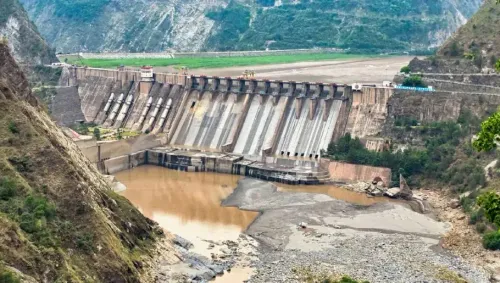
India's suspension of the Indus Waters Treaty is framed as a conditional demand for accountability on cross-border terrorism, not as an act of hostility.
The report calls on Pakistan to dismantle terror groups, try wanted individuals, restore civilian governance, and protect all citizens equally.
A media report has catalogued Pakistan's decades-long record of harbouring terrorists, military dominance over civilian governance, chronic loan dependency on the International Monetary Fund (IMF), and the systematic marginalisation of its own citizens as evidence of its failure to function as a responsible state. The analysis, published in The Global Kashmir and authored by AG Paul, argues that Pakistan's conduct — measured against any basic standard of national responsibility — has fallen short for generations.
The Terrorism Record
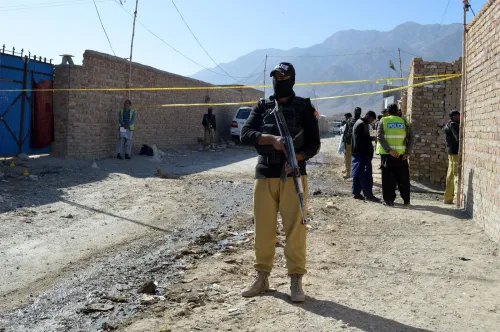
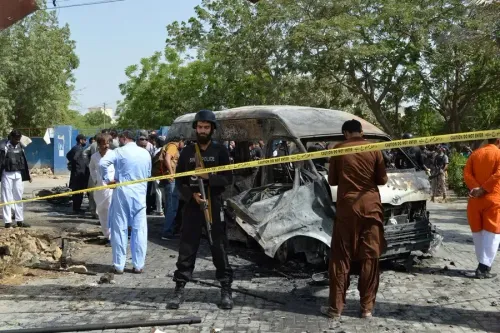
Paul's report draws on the international record rather than solely Indian government statements to make its case. The 2008 Mumbai attacks, the 2025 Pahalgam attack, the 2011 crackdown on Al Qaeda founder Osama bin Laden by American forces on Pakistani soil, and Islamabad's repeated listing on the global financial watchdog's grey list for weak action against terror financing are all cited as evidence that is, as Paul writes, 'not just India's claims.'
The author argues that using militants as a 'tool of policy' has generated severe blowback. 'Many of its own citizens have died at the hands of the same kind of groups the state once tolerated. Even its old friends have turned hostile,' the report noted, pointing to repeated armed skirmishes between Afghan Taliban forces and Pakistani troops along the border as a case in point.
Economy, Military Control, and Governance
On the economic front, the report highlights Pakistan's recurring dependence on IMF bailouts even as ordinary citizens struggle with high inflation and unreliable power supply. According to Paul, 'money and attention have gone into the army and into proxy games, not into schools, hospitals and jobs' — a structural misallocation that has compounded civilian hardship over decades.
The governance deficit is equally stark, the report argues. No elected Prime Minister in Pakistan's history has completed a full term in office, a pattern the author attributes to the military's firm grip over foreign and security policy. This, Paul contends, leaves the democratic voice of the Pakistani people too weak to demand a meaningful change of course.
Minorities and Internal Discrimination
The report also highlights the condition of religious minorities, noting that Hindus, Christians, and Ahmadis have faced prolonged discrimination. Paul argues that a nation unable to protect its smallest communities 'is not a safe home for anyone who thinks differently,' framing minority rights as an indicator of the broader health of the state.
India's Position and the Indus Waters Treaty
Drawing a contrast with India, the report recalls that New Delhi's repeated overtures — peace talks, trade initiatives, bus and train links — have consistently been met with cross-border terror attacks. Paul characterises India's decision to keep the Indus Waters Treaty in abeyance until Islamabad ends support for cross-border terrorism as a calibrated response rather than aggression, describing it as 'a country telling its neighbour that trust must be earned.'
The Path Forward
The report concludes with a set of prescriptions: Pakistan should dismantle terror groups operating on its soil, bring wanted individuals to trial, allow elected leaders to govern without military interference, and guarantee equal treatment for all citizens. Paul argues that peace across South Asia depends on these steps — and that Pakistan's own citizens are among those who most deserve the dividends of that peace.
Point of View
The FATF grey-listing, the Mumbai attacks — rather than relying on Indian government rhetoric alone, which gives it a credibility that bilateral polemics often lack. However, it is an opinion piece from a single outlet and should be read as analysis, not policy consensus. The more structurally significant observation is the one about resource misallocation: a nation that consistently funds proxy warfare over public services is making a choice, and that choice has compounding costs. The call for Pakistan to 'let elected leaders govern' is the most politically charged prescription — and also the one least likely to materialise without external pressure, given how deeply the security establishment is institutionally entrenched.
NationPress
25 Oct 2026
Frequently Asked Questions
What does the report say about Pakistan's failure as a responsible nation?
The report, published in The Global Kashmir and authored by AG Paul, argues that Pakistan has failed the basic test of responsible statehood by harbouring terrorists, allowing its military to dominate civilian governance, repeatedly depending on IMF bailouts, and discriminating against religious minorities. It draws on international incidents — from the 2008 Mumbai attacks to the 2025 Pahalgam attack — to support its case.
What is Pakistan's terrorism record cited in the report?
The report cites the 2008 Mumbai attacks, the 2025 Pahalgam attack, the 2011 killing of Al Qaeda founder Osama bin Laden on Pakistani soil by American forces, and Pakistan's placement on global financial watchdog grey lists for weak counter-terror financing measures. The author describes these as part of the international record, not solely India's allegations.
Why does the report say Pakistan's democracy is weak?
No elected Prime Minister in Pakistan's history has completed a full term in office, which the report attributes to the military's firm control over foreign and security policy. This, author AG Paul argues, leaves the civilian voice too weak to compel a genuine change in course.
How does the report frame India's suspension of the Indus Waters Treaty?
The report describes India keeping the Indus Waters Treaty in abeyance until Pakistan ends support for cross-border terrorism as a calibrated demand for accountability rather than an act of hostility. Paul characterises it as 'a country telling its neighbour that trust must be earned.'
What does the report recommend for Pakistan going forward?
The report recommends that Pakistan dismantle terror groups operating on its soil, bring wanted individuals to trial, allow elected leaders to govern without military interference, and ensure equal treatment for all citizens including minorities. It argues that peace in South Asia depends on Pakistan taking these steps.