Pakistan's terrorism crisis rooted in decades of strategic miscalculation: Report
Synopsis
A report in Global Kashmir makes a pointed argument: Pakistan's terrorism crisis is largely self-inflicted. Decades of cultivating militant proxies for strategic leverage — from the Soviet-Afghan War to post-9/11 reversals — created an armed ecosystem that has since turned on the state itself. The TTP is the most visible proof of that blowback.
Key Takeaways
A Global Kashmir report argues Pakistan's terrorism crisis stems primarily from its own historical strategic choices, not just external factors.
The Soviet-Afghan War created militant infrastructure — training camps, networks, armed groups — that persisted long after the conflict ended.
Tehreek-e-Taliban Pakistan (TTP) emerged as a direct blowback to Islamabad's post- 9/11 policy reversal, and has since attacked Pakistani military and civilian targets.
Years of sectarian polarisation and extremist propaganda have built an ideological infrastructure that sustains radical recruitment.
The Taliban's return to power in Afghanistan has heightened cross-border militancy concerns; Kabul denies providing safe havens to TTP.
Governance failures — economic distress, weak administration, uneven law enforcement — continue to fuel militant recruitment in underdeveloped regions.
Pakistan's deepening struggle with terrorism is the direct consequence of historical strategic choices, entrenched militant ecosystems, ideological radicalisation, chronic governance failures, and regional instability, according to an analysis published in Global Kashmir. The report argues that Islamabad's own decades-long policies — not merely external pressures — lie at the heart of the country's security crisis.
Origins: The Soviet-Afghan War and the Proxy Blueprint
The roots of Pakistan's militant infrastructure stretch back to the Soviet-Afghan War, during which Islamabad served as the primary logistical hub for Afghan resistance groups. The immediate objective — forcing a Soviet withdrawal — was achieved. However, the apparatus built to that end, comprising training camps, ideological networks, and armed organisations, did not dissolve once the conflict ended. That residual infrastructure became the seed of future instability.
'The use of militant proxies as instruments of strategic influence, combined with weak governance, ideological radicalization, and regional geopolitical rivalries, has created an environment in which terrorism has become deeply entrenched. Today, Pakistan is increasingly confronting the unintended consequences of these policies, with militant groups frequently turning against the very state that once viewed some of them as strategic assets,' wrote Syed Jahanzeeb in an opinion piece for Global Kashmir.
Post-9/11 Shift and the Rise of TTP
The attacks of 11 September 2001 forced a sharp recalibration of Pakistan's security posture. Under mounting international pressure, Islamabad joined the global counter-terrorism campaign and launched military operations against several extremist organisations. This pivot alienated factions that perceived Pakistan as having abandoned their cause.
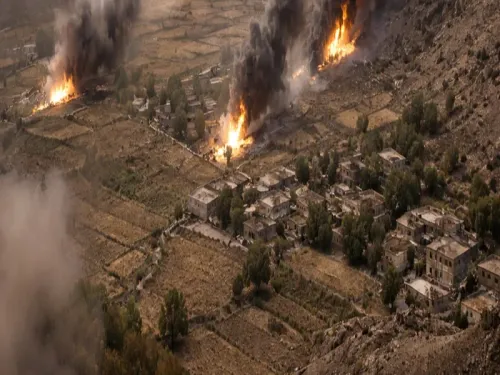
The emergence and rapid expansion of Tehreek-e-Taliban Pakistan (TTP) was the most visible manifestation of this blowback. Multiple TTP factions subsequently carried out violent attacks against Pakistani military installations, police forces, and civilians — targeting the very state apparatus that had once accommodated elements of the broader militant ecosystem.
Ideological Infrastructure and Sectarian Polarisation
Beyond tactical miscalculations, the report points to a deeper structural problem: an entrenched ideological infrastructure built over years of sectarian polarisation, extremist propaganda, and radical recruitment. This has produced social environments in which violent narratives continue to find receptive audiences, making counter-radicalisation efforts significantly harder to sustain.
Afghanistan Factor and Governance Deficits
The Taliban's return to power in Afghanistan has intensified cross-border militancy concerns. Pakistani authorities have accused Afghan authorities of providing safe havens to the TTP — a charge the Taliban administration has rejected.
Domestically, economic distress, political instability, weak local administration, and uneven enforcement of law have created conditions that extremist organisations have exploited to amplify public grievances. In underdeveloped regions, limited access to education, employment, and state services has further facilitated militant recruitment, according to the report.
The Path Forward
'Sustainable peace requires consistent action against all forms of violent extremism, strengthened democratic institutions, socio-economic development, and regional cooperation based on mutual security rather than proxy competition,' Jahanzeeb concluded. The analysis underscores that selective tolerance of militant groups — even when framed as strategic utility — carries compounding security costs that can outlast the original policy rationale by decades.
Point of View
The cycle is unlikely to break. Governance reform and socio-economic development are necessary but insufficient without a fundamental doctrinal shift in how Islamabad defines national security.
NationPress
14 Oct 2026
Frequently Asked Questions
Why is Pakistan struggling with terrorism according to the Global Kashmir report?
The report attributes Pakistan's terrorism crisis to decades of strategic choices, including the cultivation of militant proxies, ideological radicalisation, weak governance, and regional instability. It argues that many of the threats Pakistan faces today are unintended consequences of policies it pursued over several decades, rather than purely external pressures.
How did the Soviet-Afghan War contribute to Pakistan's current security problems?
During the Soviet-Afghan War, Pakistan served as the main logistical hub for Afghan resistance groups. While the Soviet withdrawal was achieved, the training camps, ideological networks, and militant organisations created during that period did not disband after the war, forming the foundation of a persistent militant ecosystem.
What is the Tehreek-e-Taliban Pakistan (TTP) and how did it emerge?
The TTP is a militant coalition that emerged as a blowback to Pakistan's post-9/11 decision to join the global counter-terrorism campaign, which alienated factions that felt Islamabad had abandoned their cause. The group has since conducted violent attacks against Pakistani military installations, police forces, and civilians.
What role does Afghanistan play in Pakistan's terrorism challenge?
Pakistani authorities have accused the Afghan Taliban administration of providing safe havens to the TTP, a claim the Taliban has rejected. The Taliban's return to power in Afghanistan has heightened concerns about cross-border militancy and complicated Pakistan's counter-terrorism efforts.
What does the report recommend for sustainable peace in Pakistan?
The report calls for consistent action against all forms of violent extremism, stronger democratic institutions, socio-economic development, and regional cooperation grounded in mutual security rather than proxy competition. It stresses that selective tolerance of militant groups produces compounding security costs that far outlast the original strategic rationale.