Understanding the Pakistan-Afghanistan Confrontation: A Strategic Paradox
Synopsis
The escalating tension between Pakistan and Afghanistan reveals a complex strategic paradox rooted in decades of policy. This article explores the intricate history and current realities shaping this critical security crisis in South Asia.
Key Takeaways
Pakistan and Afghanistan are engaged in a complex confrontation with deep historical roots.
Decades of Pakistani policy have fostered a militant ecosystem now threatening its own security.
Military actions in Afghanistan have sparked controversy and increased anti-Pakistan sentiment.
The political landscape in Pakistan, marked by civil rights issues, adds to the complexity.
International pressure on the Taliban may seem hypocritical given Pakistan's past support for militant groups.
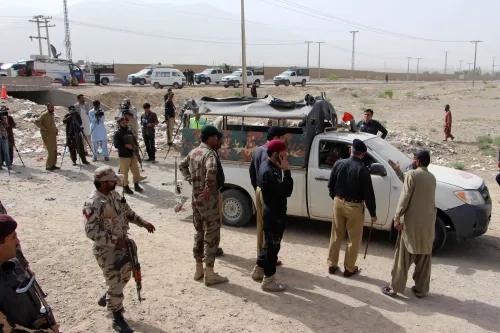
Islamabad, March 18 (NationPress) The current standoff between Pakistan and Afghanistan extends beyond mere border disputes or counter-terrorism issues; it reveals a profound strategic dilemma. The ongoing conflict is recognized as one of the most significant security challenges in South Asia. Cross-border airstrikes, artillery skirmishes, and militant assaults have escalated a previously manageable relationship into a highly volatile confrontation, as highlighted in a report by Homeland Security Today.
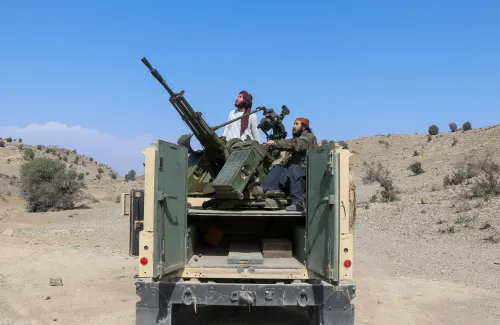
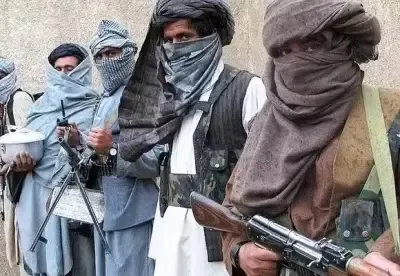
Pakistan has accused the Taliban of providing sanctuary to the Tehreek-e-Taliban Pakistan (TTP), the militant group responsible for numerous attacks within Pakistan. In retaliation, Pakistan has conducted airstrikes and cross-border missions into Afghanistan, asserting its right to target militants operating from Afghan territory.
However, viewing this crisis solely as a counterterrorism issue overlooks a more critical reality. The ongoing conflict is not merely the outcome of Taliban obstinacy or instability within Afghanistan. It represents the culmination of decades of Pakistani policy that has fostered, shielded, and legitimized the very militant network that now poses a threat to Pakistan itself, according to the report.
In many respects, Pakistan is now facing the repercussions of a strategy it has pursued for over three decades. This confrontation is, therefore, less an external crisis and more a paradox of its own creation—an embodiment of the Frankenstein's monster resulting from its longstanding support for militant proxies in Afghanistan.
Pakistan's association with the Taliban dates back to the mid-1990s when Islamabad viewed the Taliban as a means to exert influence in Afghanistan. During the Taliban's governance from 1996 to 2001, Pakistan was among the few nations to extend diplomatic recognition to the regime.
When the Taliban regained control in August 2021, Pakistan viewed this development positively, anticipating that the Taliban would align with its geostrategic interests and aid in suppressing anti-Pakistan militants like the TTP. Yet, for the Taliban, the TTP comprises not only militants but also tribal allies who have historically opposed state authority.
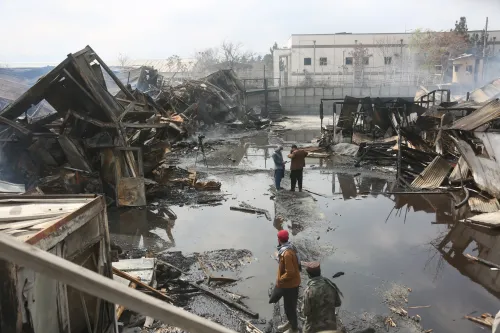
Following a rise in TTP attacks since 2021, Islamabad has resorted to military action. Pakistan has frequently executed airstrikes targeting suspected militant hideouts in eastern Afghanistan. These operations have sparked controversy due to civilian casualties and heightened anti-Pakistan sentiments within Afghanistan, as elaborated in the Homeland Security Today report.
The paradox confronting Pakistan is compounded by concerns regarding its domestic political landscape, particularly as civil liberties have declined. Former Prime Minister Imran Khan was ousted under contentious circumstances and currently remains incarcerated, illustrating the military's grip on the country's affairs.
Simultaneously, Pakistan faces criticism for maintaining affiliations with terrorist organizations such as Jaish-e-Mohammed (JeM) and Lashkar-e-Taiba (LeT), while allowing extremist groups like the Tehreek-e-Labbaik (TLP) to function within its borders.
Against this backdrop, Pakistan's plea to the international community to exert pressure on the Taliban appears somewhat disingenuous. While Pakistan warns of the threats posed by militant factions in Afghanistan, these warnings come from a nation that has spent years fostering relationships with many of the same groups.
The Taliban's rise to power was not an unforeseen event but rather the result of a prolonged conflict in which Pakistan played a pivotal role. To characterize the Taliban solely as an external threat disregards the historical context that facilitated their ascendance. The ongoing confrontation between Pakistan and Taliban-led Afghanistan is, therefore, more than just a border dispute or a counterterrorism crisis; it is a manifestation of a more profound strategic contradiction. In confronting the Taliban, Pakistan ultimately grapples with the long-lasting consequences of its own strategic choices, unable to escape the paradox that the instability it now seeks to manage is, in many ways, a byproduct of policies it once confidently pursued.
Point of View
It is crucial to present an unbiased analysis of the ongoing Pakistan-Afghanistan confrontation. This complex issue is deeply rooted in historical context and policy decisions, necessitating a nuanced understanding of both nations' perspectives.
NationPress
21 Sept 2026
Frequently Asked Questions
What is the main issue between Pakistan and Afghanistan?
The primary issue involves accusations of the Taliban harboring the Tehreek-e-Taliban Pakistan (TTP), leading to military confrontations and airstrikes.
How has Pakistan's past policy influenced the current situation?
Pakistan's long-term support for militant groups has contributed to the current instability, creating a paradox where it faces threats from the very proxies it once nurtured.
What are the implications of the current conflict?
The conflict poses significant security challenges in South Asia, affecting regional stability and international relations.
Why does Pakistan urge international pressure on the Taliban?
Pakistan seeks to mitigate threats from militant groups in Afghanistan, despite its historical ties to similar factions.
How does domestic politics in Pakistan affect this situation?
The decline of civil rights and political unrest, particularly the imprisonment of former Prime Minister Imran Khan, complicates Pakistan's internal and external challenges.