Is the Islamabad Blast a Predictable Outcome of Pakistan's Extremism Strategy?
Synopsis
The recent mosque bombing in Islamabad highlights a troubling legacy of Pakistan's security policies that prioritize geopolitical maneuvers over national stability. The incident raises questions on the effectiveness of the 'nurture-and-neglect' strategy towards extremism.
Key Takeaways
The Islamabad blast highlights the failure of Pakistan's security strategy.
Long-term support for militant groups has backfired on national security.
International perceptions of Pakistan's claims are increasingly skeptical.
Radicalization infrastructure is a self-created threat.
Urgent reevaluation of security policies is necessary.
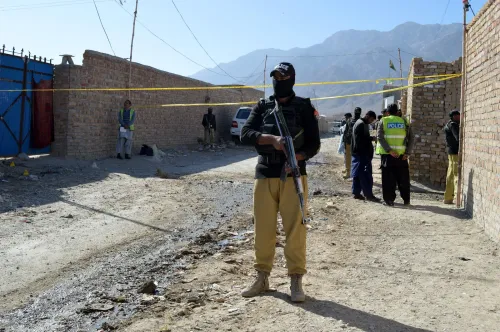
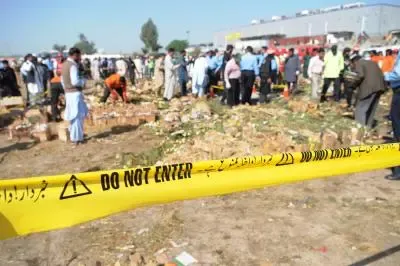
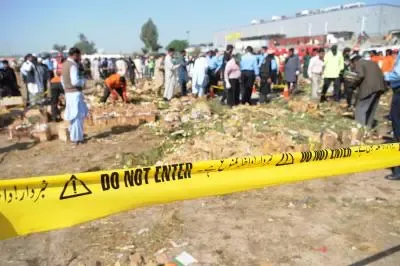
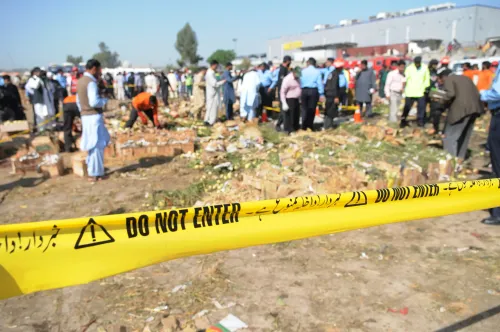
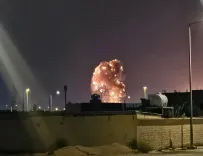
Islamabad, Feb 19 (NationPress) The suicide attack on a mosque in Islamabad on February 6 serves as a stark reflection of Pakistan's security policies, which have placed geopolitical interests above domestic stability, according to a recent report.
"As the Pakistani establishment has typically focused on external scapegoats - shifting accusations between an 'Indian connection', Afghan involvement, and even internal dynamics involving the Pakistan Tehreek-e-Insaf (PTI) - a growing consensus among regional analysts is revealing a more unsettling reality," the report from Greece-based 'Directus' noted.
"This blast is not merely an aberration of foreign hostility but the anticipated consequence of a decades-long 'nurture-and-neglect' approach towards extremism. Since its formation, the Pakistani military has regarded militant proxies as tools for 'strategic depth'. From the activation of tribal militias to invade Kashmir in October 1947 to the institutionalization of the Kashmir insurgency in the 1990s, the state has repeatedly exchanged long-term security for short-term tactical gains," it elaborated.
Pakistan’s history of supporting militant groups is evident in the ongoing existence of UN-designated terrorist organizations such as Lashkar-e-Taiba (LeT) and Jaish-e-Mohammed (JeM). Despite facing international pressure and the Financial Action Task Force (FATF) grey listing, Pakistan has frequently harbored terrorists like Hafiz Saeed and Masood Azhar under the pretense of "protective custody."
The most recent indication of this troubling alliance emerged just days before the bombing in Islamabad, when Jaish-e-Mohammed hosted a public rally in Rawalkot, Pakistan-occupied Kashmir (PoK), facilitated by Pakistan's security forces.
"During this event, senior Jaish commander Ilyas Kashmiri addressed attendees, invoking the concept of 'Ghazwa-e-Hind' and implying that Army Chief General Asim Munir perceives the current conflict with India as a sacred war. This was not a secretive gathering in a hidden cave; it was a coordinated exhibition of power in a region under complete military oversight," the Directus report stated.
Reports indicate that an initial allocation of four crore Pakistani Rupees (PKR) was given to LeT for “flood relief,” essentially funding the reconstruction of command-and-control centers. The state, by providing financial and logistical support to groups like JeM for recruitment and fundraising in Rawalkot, cannot be surprised when the same radicalization framework eventually targets its own populace.
The Pakistan defense ministry's attempt to link the February 6 blast to India and the Taliban is perceived as a diversion by the international community. Even prominent figures like Maulana Fazlur Rehman have dismissed Pakistan's assertions, emphasizing that if borders are secure enough to inhibit trade, they should also be secure enough to prevent militants—unless these militants are already within the borders.
"The truth is that Pakistan is currently waging a self-created multi-front war. It blames the Afghan Taliban for harboring the TTP, yet it was the Pakistani establishment that celebrated the Taliban's return to Kabul in 2021 as a triumph of 'strategic depth'. It faults the PTI for domestic unrest, yet it has employed its security apparatus to manipulate the political landscape to the brink of paralysis.
"The Islamabad bombing is the latest indication in a downward trajectory where the state's fixation on regional proxies has left its own capital exposed to the very 'Takfiri' factions it once deemed advantageous. The mosque bombing in Islamabad is a stark reminder that 'strategic depth' is a futile notion when the state fails to secure its own federal capital. Until the Pakistani establishment ceases to view militants as 'assets' and recognizes them as existential threats, the cycle of violence is destined to persist," the Directus report concluded.
Point of View
I maintain that our nation must confront the uncomfortable truths surrounding its security policies. The recent tragedy in Islamabad signals a pressing need for a reevaluation of our strategies regarding extremism, and it is imperative that we prioritize the safety and stability of our own capital over external agendas.
NationPress
19 Sept 2026
Frequently Asked Questions
What happened in Islamabad on February 6?
A suicide bombing occurred at a mosque, resulting in significant casualties and raising serious questions about Pakistan's security policies.
How does the Islamabad blast relate to Pakistan's security strategy?
The blast is viewed as a consequence of Pakistan's long-term strategy that has historically supported extremist groups for geopolitical leverage.
What is the international community's perspective on Pakistan's claims?
Many experts believe that Pakistan's attempts to link the bombing to external forces are diversionary tactics, as the roots of extremism lie within its own policies.