Is the World Losing Patience with Religious Extremism in Pakistan?
Synopsis
As Pakistan embraces a more theocratic identity under General Asim Munir, concerns about radicalism and violence are escalating. This report dives into the implications of Pakistan's shifting stance on global security and its impact on international relations.
Key Takeaways
Pakistan's military under Munir has embraced hardline religious positions.
Growing anti-Pakistan sentiment is evident in various global capitals.
Extremist incidents linked to Pakistan have raised international concerns.
Social media propaganda from Pakistan is fostering global discord.
International relations are strained due to rising radicalization.
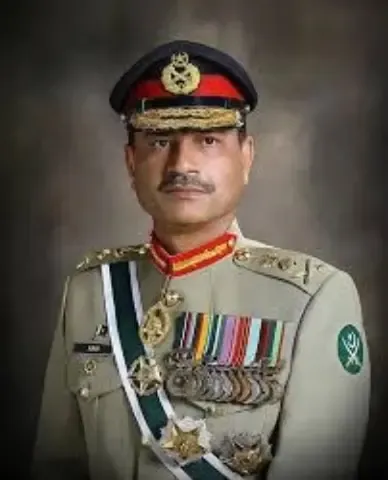
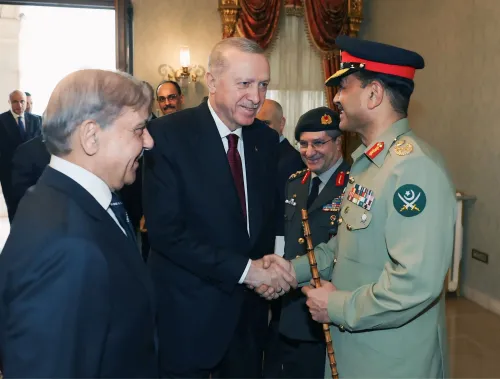
Islamabad, Dec 29 (NationPress) Under the leadership of Army Chief Field Marshal Asim Munir, Pakistan has undergone a significant shift towards a more theocratic and confrontational identity, advocating for Islamist ‘resistance’ internationally while neglecting to curb radical elements domestically. The repercussions are manifesting in violence and an emerging reality where not only militants and sex offenders but also Pakistani-origin social media propaganda are viewed as security threats in various global capitals, according to a report.
Anti-Pakistan sentiment is growing in Western and Middle Eastern countries, fueled by concerns regarding Pakistan’s dissemination of radical Islamist ideology and its lenient stance towards extremism and criminal behavior under the current military regime.
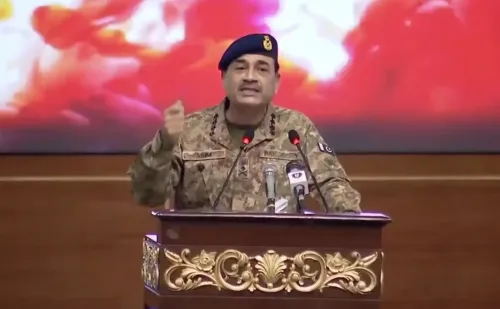
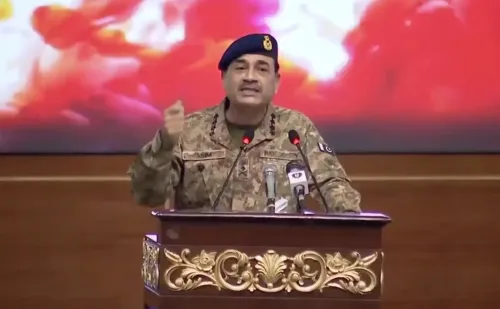
Since General Syed Asim Munir took command in late 2022, observers have noted a distinct movement towards religious conservatism in Islamabad’s approach. The government and military have publicly adopted hardline positions, with the parliament endorsing ‘armed resistance’ against Israel and military leaders expressing solidarity with terrorists in Gaza. Under Munir, a General known for his memorization of the Quran and incorporation of scripture into his speeches, Pakistan’s military doctrine has been reshaped around religious themes. This state-supported radicalization, targeting Israel, India, the West, and religious minorities, is intensifying backlash abroad, as highlighted in a report from Greek City Times.
Numerous extremist incidents linked to Pakistan have emerged in Western nations recently. This year, Spanish authorities dismantled a cell of 11 Pakistani individuals allegedly affiliated with the Pakistani Taliban, accused of promoting violent jihadist activities, including murders and beheadings. In 2024, a plot was thwarted in North America when a 20-year-old Pakistani resident in Canada was apprehended for planning a mass shooting at a synagogue in New York City, aiming to “slaughter as many Jewish individuals as possible” on the anniversary of Hamas' October 7 attack.
Moreover, the ongoing ‘grooming gangs’ scandal in the UK has led to global criticism of Pakistan. A disproportionate number of convicted offenders were of Pakistani descent, particularly in towns like Oxford, Rotherham, Rochdale, and Telford, targeting vulnerable white girls, as reported by Greek City Times. This issue is part of a broader discourse surrounding integration, imported patriarchal norms, and the impact of conservative religious and cultural values from Pakistan. These cases amplify Western fears regarding violent extremism and other criminal endeavors fostered in Pakistan.
Concerns are further heightened due to the anti-Western, antisemitic, and sectarian propaganda emanating from Pakistan's social media landscape. Numerous international analysts accuse Pakistan's military and Islamist groups of orchestrating sophisticated online disinformation campaigns against the West and other religious communities.
Western observers have cautioned that Pakistan’s digital disinformation efforts are sowing discord abroad, fostering animosity towards Hindus, Christians, Jews, and Americans, ultimately affecting Pakistan’s international relations. Even Muslim-majority nations in the Middle East have expressed apprehension about Pakistan's current trajectory. Recently, the United Arab Emirates implemented stringent visa restrictions on Pakistani nationals due to security and law enforcement concerns.
The report from Greek City Times concluded, “The world’s patience with Pakistan’s descent into religious extremism is diminishing. Under Munir’s command, Pakistan has sharply shifted towards a more theocratic and confrontational identity – glorifying Islamist ‘resistance’ abroad while neglecting to control radicals at home. From London to New York to Dubai, the fallout is evident in violence and backlash.”
“The new reality indicates that Pakistani-origin militants, sex offenders, and social media propaganda are perceived as significant security threats globally. The growing aversion to Pakistani travelers and the critiques from international observers reflect a broader realization: Pakistan’s unchecked radicalization is no longer an isolated issue, but a rising threat to global peace and multicultural coexistence,” it added.
Point of View
It is crucial to remain committed to presenting the facts while acknowledging the complexities of the situation. The rise of religious extremism poses a significant challenge not only for Pakistan but for global stability, requiring a nuanced approach to understand its implications. The nation must address these concerns while fostering dialogue and cooperation with the international community.
NationPress
28 Sept 2026
Frequently Asked Questions
What is the recent shift in Pakistan's identity?
Pakistan has shifted towards a more theocratic and combative identity under Army Chief General Asim Munir, promoting Islamist resistance abroad.
How is this affecting international relations?
Increasing anti-Pakistan sentiment is emerging in Western and Middle Eastern countries due to concerns over radical ideology and extremism.
What incidents are linked to Pakistani extremism?
Several extremist incidents, including plots in Spain and North America, have raised alarms about the export of radicalism from Pakistan.
What is the impact of social media on this situation?
Pakistan's social media is accused of spreading anti-Western and sectarian propaganda, contributing to global discord.
Why is the UAE imposing visa restrictions on Pakistanis?
Concerns about security and law enforcement have led the UAE to implement stringent visa restrictions on Pakistani nationals.