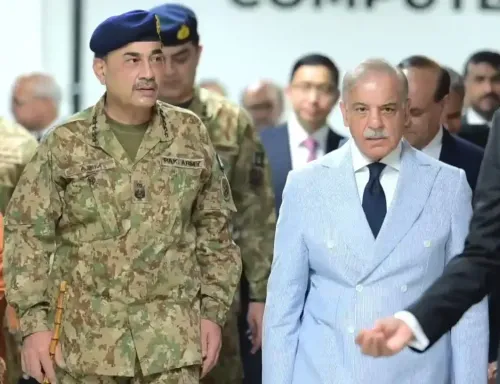
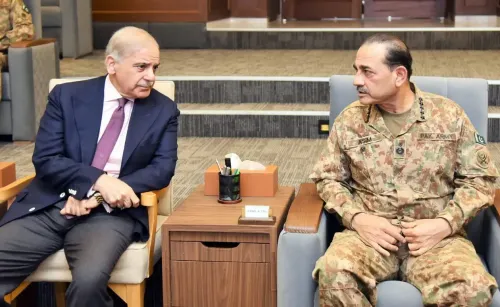
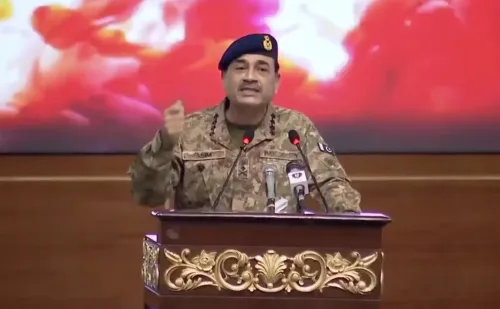
US must stop backing Asim Munir as Pakistan's democracy erodes: Report
Synopsis
A pointed analysis in the Times of Israel argues the US is repeating its Zia-ul-Haq mistake by backing Army Chief Asim Munir — even as Pakistan's democratic legitimacy collapses, its militant landscape expands, and its nuclear command structure faces plausible insider-threat risks. The report is a rare public call for Washington to attach hard conditions to its Pakistan engagement.
Key Takeaways
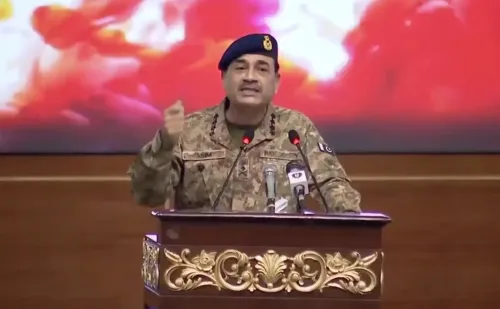
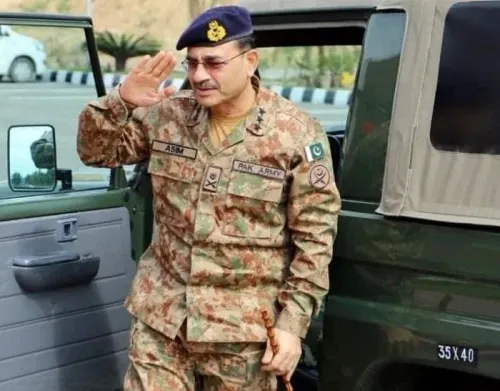
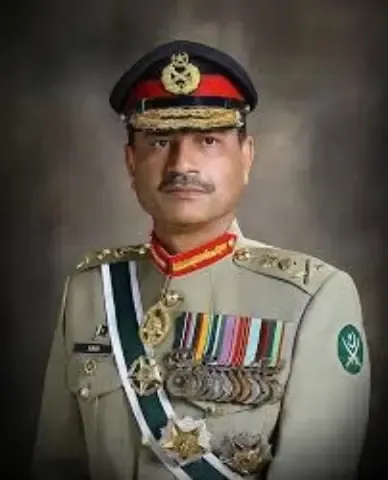
Political researcher Vas Shenoy , writing in the Times of Israel , argues the US must stop unconditionally backing Pakistani Army Chief Asim Munir .
Pakistan is described as a hybrid political system where the military overrides elected civilian authority.
The 2024 General Elections , the jailing of Imran Khan , media curbs, and judicial erosion have triggered a deep legitimacy crisis, according to the report.
Security threats from the Pakistani Taliban , Baloch separatists , and Islamic State–Khorasan are intensifying, particularly in Khyber Pakhtunkhwa .
The report warns that Pakistan's nuclear risks are not limited to extremist seizure — insider theft, infrastructure sabotage, and weakened authorisation procedures during a military split are described as more plausible dangers.
Shenoy recommends US assistance be tied to credible elections, civilian governance, and action against all terrorist organisations.
A political analysis published in the Times of Israel on 25 July has argued that the United States must cease its support for Pakistani Army Chief Asim Munir, warning that backing him echoes Washington's historically damaging relationship with former military dictator Zia-ul-Haq. The report, authored by political researcher Vas Shenoy, describes Pakistan as a hybrid political system in which the military remains the ultimate arbiter of national security — not the elected civilian cabinet.
A Legitimacy Crisis at the Heart of Pakistani Politics
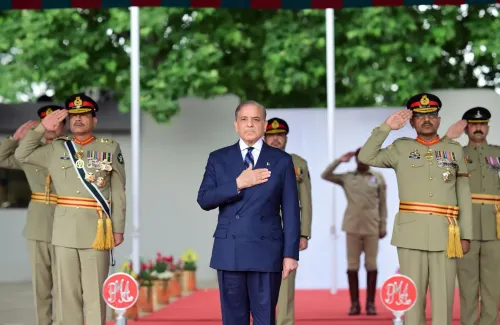
Shenoy's analysis contends that Pakistan's current civilian government, characterised as a 'cohort of the extended Sharif family,' is grappling with a severe legitimacy crisis. He cites multiple contributing factors: alleged irregularities surrounding the 2024 General Elections, the continued imprisonment and political exclusion of former Prime Minister Imran Khan and his supporters, restrictions on the media, the erosion of judicial independence, and documented violence against minority communities.
According to the report, these conditions have convinced millions of Pakistanis that the ballot box can no longer deliver a peaceful transfer of power. With constitutional politics losing credibility, public anger is increasingly being directed at the state itself — a development Shenoy describes as deeply destabilising.
Deteriorating Security and an Emboldened Militant Landscape
The security situation within Pakistan is also worsening, according to the analysis. The Pakistani Taliban has intensified its campaign, particularly in Khyber Pakhtunkhwa. Baloch separatists continue to challenge state authority in the southwest, while Islamic State–Khorasan and various sectarian organisations remain operationally active.
Shenoy noted that Afghanistan provides sanctuary and strategic depth to some of these networks. He argued that Pakistan's historically selective approach toward militant groups has blurred the line between organisations considered hostile and those once deemed strategically useful — a contradiction that continues to undermine regional stability.
Economic Fragility Beneath the Surface
'Pakistan's economic stabilisation should not be mistaken for structural health,' Shenoy wrote. While international assistance has eased the immediate threat of a balance-of-payments crisis, the country remains burdened by debt, a narrow tax base, energy-sector liabilities, and weak public services. He warned that poverty, rapid population growth, and severe exposure to floods, heat, and water stress have sharply reduced the state's capacity to absorb another major economic shock.
Washington's Policy Prescription: Conditions, Not Blank Cheques
Shenoy argued that the US should pursue a recalibrated Pakistan policy — one that combines economic and climate assistance with clear demands for credible elections, stronger civilian governance, and decisive action against every terrorist organisation, not merely those posing a direct threat to Pakistan. Above all, he said, Washington must stop unconditionally backing General Asim Munir, drawing a pointed parallel to US support for Zia-ul-Haq during the Cold War — a relationship widely regarded as having fuelled long-term instability.
The Nuclear Dimension: Plausible Risks Beyond the Worst-Case Scenario
Shenoy also underscored the nuclear dimension of Pakistan's fragility. He acknowledged that Pakistan possesses an operational nuclear arsenal with a specialised command-and-control system, and that the army retains custody of its strategic forces. An extremist group seizing the entire arsenal, he noted, 'remains a remote prospect under current conditions.'
However, he cautioned against focusing exclusively on that worst-case scenario. 'More plausible dangers include insider-assisted theft, sabotage of nuclear infrastructure, attacks on transport movements, the disappearance of material or components and the weakening of authorisation procedures during a military split,' he wrote. This nuanced framing shifts the nuclear risk debate from hypothetical catastrophe to credible, near-term vulnerabilities.
Point of View
Not dismissal. What mainstream coverage of Pakistan tends to miss is that the nuclear risk framing is almost always binary — full arsenal seizure or no risk. Shenoy's more granular scenario of insider-assisted theft or command fragmentation during a military split is analytically sharper and far harder for policymakers to game-plan against. The legitimacy crisis angle also matters for India: a Pakistan where the ballot box is discredited and public anger is redirected at the state is not a stable adversary — it is an unpredictable one.
NationPress
24 Oct 2026
Frequently Asked Questions
What does the Times of Israel report say about US policy toward Pakistan?
The report, authored by political researcher Vas Shenoy, argues that the US must stop unconditionally backing Pakistani Army Chief Asim Munir and instead tie economic and climate assistance to clear demands for credible elections, stronger civilian governance, and decisive action against all terrorist organisations — not just those threatening Pakistan directly.
Why is Pakistan's current government considered to lack legitimacy, according to the report?
Shenoy cites concerns over the 2024 General Elections, the imprisonment and political exclusion of former Prime Minister Imran Khan and his supporters, media restrictions, erosion of judicial independence, and violence against minorities as factors that have convinced many Pakistanis the ballot box can no longer deliver a peaceful transfer of power.
What security threats does the report identify inside Pakistan?
The report highlights an intensified campaign by the Pakistani Taliban, particularly in Khyber Pakhtunkhwa, ongoing Baloch separatist activity in the southwest, and continued operations by Islamic State–Khorasan and sectarian groups. Afghanistan is identified as providing sanctuary to some of these networks.
What nuclear risks does the report flag?
While noting that extremists seizing Pakistan's entire nuclear arsenal remains a remote prospect, Shenoy warns of more plausible risks: insider-assisted theft, sabotage of nuclear infrastructure, attacks on transport movements, disappearance of material or components, and weakened authorisation procedures during a potential military split.
How does the report compare US support for Asim Munir to past policy?
Shenoy draws a direct parallel between current US backing for Army Chief Asim Munir and Washington's historical support for military dictator Zia-ul-Haq — a relationship widely seen as having contributed to long-term instability in the region. He argues the US risks repeating that strategic error.