Kaziranga poaching bust: Three suspects held, arms seized in Assam
Synopsis
Three alleged rhino poachers have been arrested at Kaziranga National Park — India's seventh UNESCO World Heritage Site — with arms recovered from two separate districts. The bust comes just months after a .303 rifle and 13 rounds were seized nearby, pointing to persistent poaching networks targeting the park's iconic one-horned rhinoceros.
Key Takeaways
Three alleged poachers — Kiran Pegu , Riju Pegu alias Rijukanta , and Pulen Kaman — were arrested at Narayanpur, Lakhimpur district on 10 May 2025 .
A country-made rifle bolt and butt were recovered from Ukhal Chuk, Majuli district during the operation.
In March 2026 , a .303 rifle and 13 rounds of ammunition were separately seized from the Gopaljarani area near KNPTR.
The suspects were allegedly planning poaching inside the sixth addition area of Kaziranga National Park.
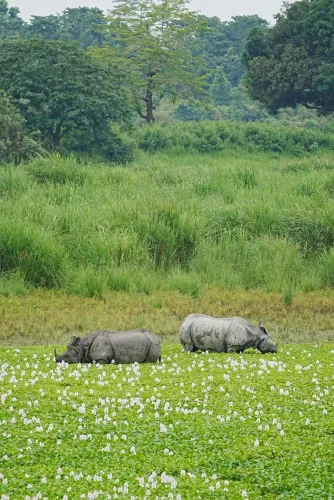
Kaziranga is India's seventh UNESCO World Heritage Site , home to the 'Big Five' including the greater one-horned rhinoceros.
Sustained anti-poaching operations have led to a sharp decline in poaching incidents over recent years, according to officials.
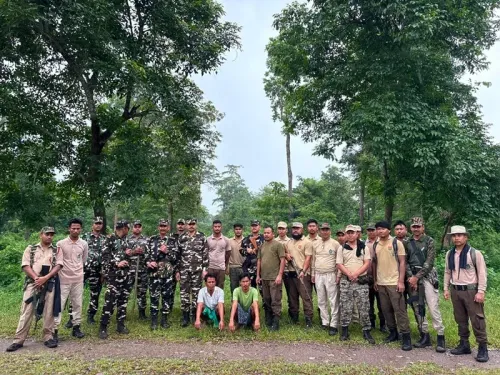
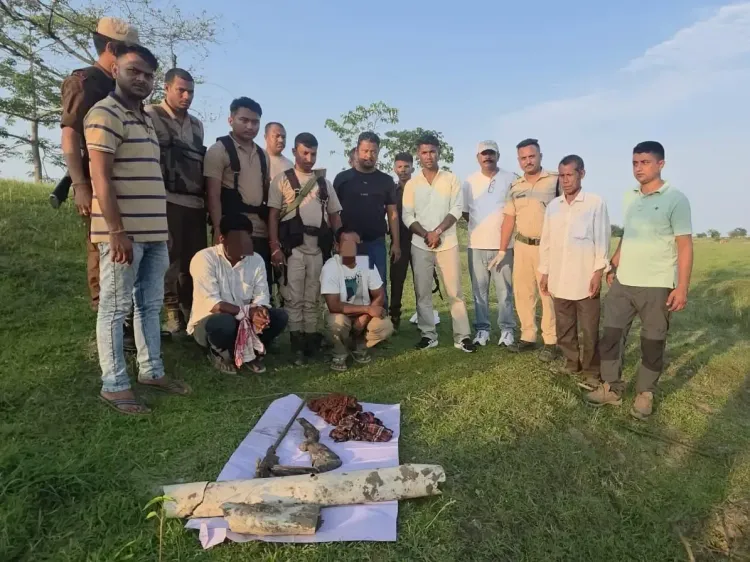
Security personnel at Kaziranga National Park and Tiger Reserve (KNPTR) in Assam have arrested three alleged rhino poachers and recovered arms and ammunition, officials said on Sunday, 10 May. The operation, conducted across multiple ranges, marks the latest in a sustained crackdown on wildlife crime in one of India's most protected ecosystems.
How the Operation Unfolded
Acting on specific intelligence inputs, teams from the Eastern Range, Gamiri, and the Crime Investigation Range of the Biswanath Wildlife Division apprehended the three suspects at Narayanpur in Lakhimpur district. The accused were allegedly planning rhino poaching activities inside the sixth addition area of Kaziranga National Park.
During the operation, forest personnel recovered and seized a country-made rifle bolt and butt — without a magazine — from Ukhal Chuk in Majuli district. The three arrested persons were identified as Kiran Pegu, Riju Pegu alias Rijukanta, and Pulen Kaman, residents of Majuli, Lakhimpur, and Biswanath districts respectively.
What KNPTR Director Said
KNPTR Director Sonali Ghosh confirmed the arrests, stating that the operation was carried out based on credible intelligence about wildlife-related offences. The swift action reflects the park's increasingly proactive approach to pre-empting poaching before it occurs, rather than responding after the fact.
A Pattern of Recent Recoveries
This is not an isolated incident. In March 2026, forest officials had recovered a .303 rifle along with 13 rounds of ammunition from the Gopaljarani area, located close to the national park. The back-to-back recoveries suggest continued attempts by poaching networks to target the reserve's wildlife, particularly its iconic greater one-horned rhinoceros.
Notably, several suspected poachers have been killed in separate encounters with forest guards inside KNPTR during previous anti-poaching operations, underscoring the high-stakes nature of wildlife protection in this region.
Kaziranga's Conservation Significance
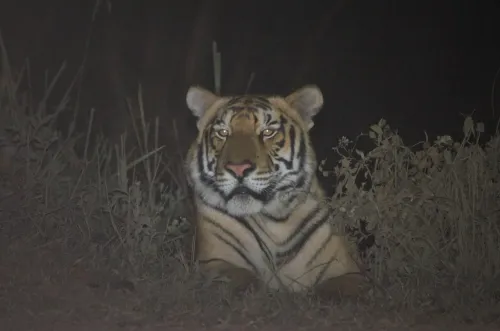
Spread across the districts of Golaghat, Nagaon, Sonitpur, and Biswanath, Kaziranga is recognised as India's seventh UNESCO World Heritage Site. It is globally renowned for its 'Big Five' wildlife species — the greater one-horned rhinoceros, Bengal tiger, Asian elephant, wild buffalo, and eastern swamp deer.
The park's frontline women forest personnel, known as 'Van Durga', have been playing a crucial role in biodiversity protection alongside regular security teams. According to officials, sustained anti-poaching action over the years has led to a sharp decline in poaching incidents inside the reserve. The latest arrests signal that authorities remain on high alert as threats to the park's wildlife persist.
Point of View
But the bigger story is what the continued weapons recoveries reveal: poaching networks are still attempting to penetrate India's most iconic wildlife reserve. The back-to-back seizures — a .303 rifle in March and a rifle assembly now — suggest supply chains for illegal arms remain active in the region. KNPTR's intelligence-led model is clearly working better than reactive patrolling, but the persistence of threats points to demand-side pressure on rhino horn that no amount of forest vigilance alone can fully neutralise. The 'Van Durga' initiative and community-linked intelligence deserve more national attention as scalable conservation models.
NationPress
25 Sept 2026
Frequently Asked Questions
Who were the three poachers arrested at Kaziranga National Park?
The three arrested persons were identified as Kiran Pegu, Riju Pegu alias Rijukanta, and Pulen Kaman, residents of Majuli, Lakhimpur, and Biswanath districts respectively. They were apprehended at Narayanpur in Lakhimpur district on 10 May 2025.
What arms and ammunition were recovered during the Kaziranga anti-poaching operation?
Forest personnel recovered a country-made rifle bolt and butt, without a magazine, from Ukhal Chuk in Majuli district. Separately, in March 2026, a .303 rifle and 13 rounds of ammunition had been seized from the Gopaljarani area near the park.
What were the suspects allegedly planning to do?
According to officials, the accused were allegedly planning rhino poaching activities inside the sixth addition area of Kaziranga National Park and Tiger Reserve at the time of their arrest.
Why is Kaziranga National Park significant for wildlife conservation?
Kaziranga is India's seventh UNESCO World Heritage Site and is globally renowned for its 'Big Five' species — the greater one-horned rhinoceros, Bengal tiger, Asian elephant, wild buffalo, and eastern swamp deer. It is one of the last strongholds for the greater one-horned rhino.
How has poaching trended at Kaziranga in recent years?
According to KNPTR officials, sustained anti-poaching operations and increased vigilance have led to a sharp decline in poaching incidents over the years. However, recent arms recoveries indicate that poaching networks continue to attempt to target the reserve.