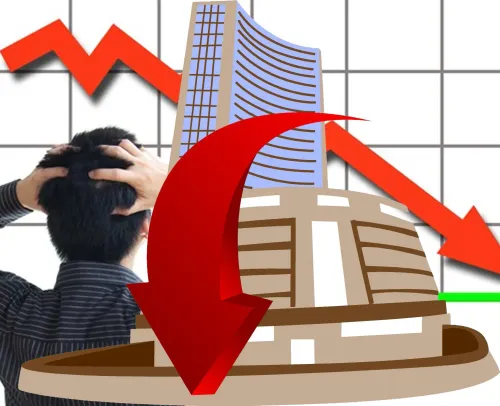
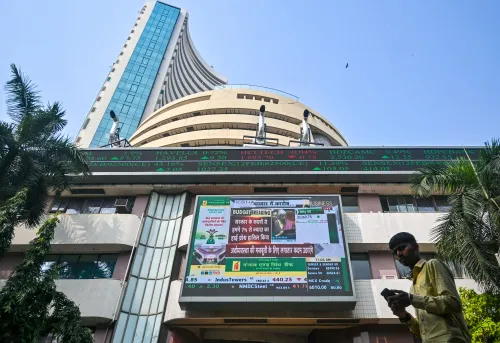
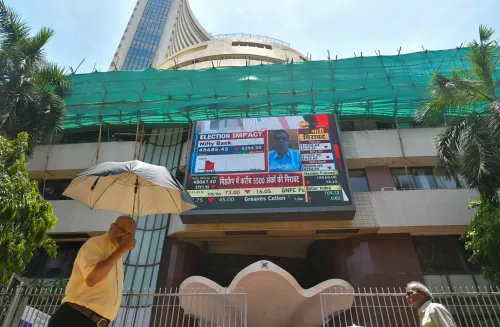
Indian Stock Markets Dive Over 2% Amid Middle East Crisis
Synopsis
The Indian stock market faced a sharp downturn on March 4, driven by global economic concerns and geopolitical tensions in the Middle East. With significant losses across major indices, analysts raise alarms over inflation and currency stability.
Key Takeaways
Indian stock markets opened sharply lower.
Sensex and Nifty both fell over 2%.
Geopolitical tensions in the Middle East are affecting market stability.
High crude oil prices are raising concerns over inflation and current account deficit.
Sectoral indices show widespread losses, with few exceptions.
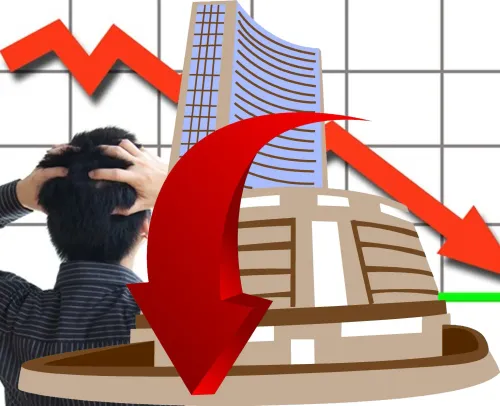
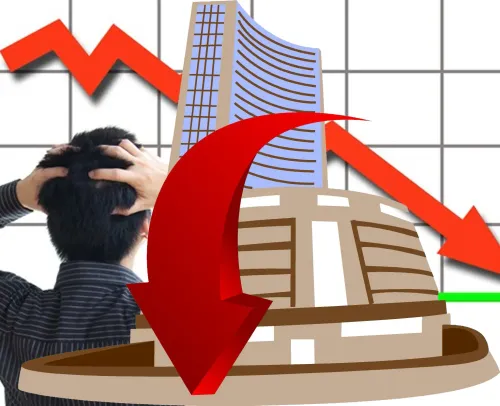
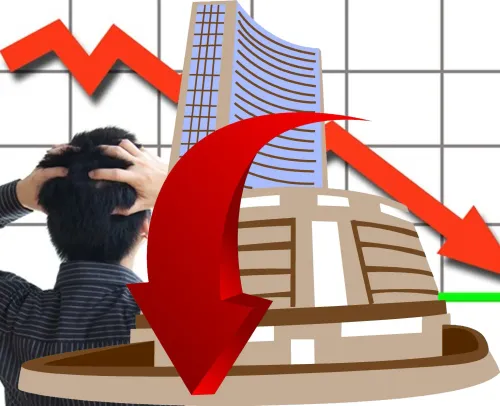
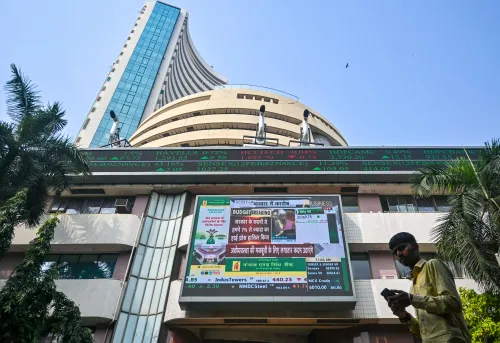
Mumbai, March 4 (NationPress) The Indian stock markets experienced a significant decline on Wednesday, opening sharply lower due to unfavorable global signals and aggressive foreign institutional investor (FII) short positions in index futures, amidst rising geopolitical tensions in the Middle East.
As of 9:28 AM, the Sensex plummeted by 1,773 points, or 2.21 percent, settling at 78,465, while the Nifty dropped 549 points, also down 2.21 percent, to reach 24,316.
The primary broad-cap indices mirrored the benchmark indices, with the Nifty Midcap 100 falling by 2.18 percent and the Nifty Smallcap 100 decreasing by 2.17 percent.
Every sectoral index was in the red, with the exception of Nifty IT, which rose by 0.27 percent. The Nifty metal and realty sectors led the downturn, falling by 3.18 percent and 3.04 percent, respectively. The Nifty auto sector saw a decline of 2.97 percent, while oil and gas stocks dropped by 2.86 percent.
The ongoing tensions involving the United States, Israel, and Iran are exerting pressure on India’s current account, inflation outlook, and currency stability.
High crude oil prices are likely to inflate the country's import costs, widen its current account deficit, weaken the rupee, increase inflation, and provoke foreign capital outflows, according to Devarsh Vakil, Head of Prime Research at HDFC Securities.
WTI crude surged past $75 a barrel, marking a two-day gain of around 11 percent. Brent crude hovered near $81 a barrel as the escalating conflict in the Middle East and shipping disruptions in the Strait of Hormuz raised supply concerns.
Analysts noted that major global indices have turned decidedly bearish, indicating a broad risk-off sentiment as conflict concerns escalate and crude oil prices rise.
On a sectoral level, stocks linked to defence, airlines, tourism, chemicals, and oil are expected to be in the spotlight, as these sectors are directly influenced by rising crude prices and disruptions from conflict, analysts stated.
Increased volatility is already apparent, with the India VIX at 17.13, warranting heightened caution, especially for options traders, market participants warned.
In Asian markets, China’s Shanghai index fell by 1.43 percent, while Shenzhen dipped by 0.98 percent. Japan’s Nikkei faced a decline of 4.17 percent, and Hong Kong’s Hang Seng Index eased by 2.9 percent. South Korea's Kospi plunged by 10.78 percent.
The Kospi had plunged over 12 percent in early trading on Wednesday, temporarily halting trading after experiencing its worst day in decades, following a similar sell-off from the previous session.
A circuit breaker was also activated on the Kosdaq, which saw a staggering drop of about 13 percent.
The US markets closed in the red overnight, with Nasdaq dropping by 1.02 percent. The S&P 500 lost 0.94 percent, and the Dow Jones declined by 0.83 percent.
aar/na
Point of View
It is essential to highlight that the recent volatility in the Indian stock markets reflects broader global concerns. With geopolitical tensions impacting investor sentiment, our focus must remain on understanding these dynamics and their implications for the economy at large.
NationPress
30 Sept 2026
Frequently Asked Questions
Why did the Indian stock market decline?
The Indian stock market declined due to weak global cues and aggressive short positioning by foreign institutional investors amid rising geopolitical tensions in the Middle East.
How much did the Sensex and Nifty drop?
As of 9:28 AM, the Sensex lost 1,773 points (2.21%) and the Nifty dropped 549 points (2.21%).
What sectors were most affected?
All sectoral indices were down, particularly the Nifty metal and realty sectors, which fell by 3.18% and 3.04%, respectively.
What impact do rising crude prices have on India?
Rising crude prices can increase India's import bill, widen its current account deficit, weaken the rupee, and contribute to inflation.
What is the current market volatility?
The India VIX is currently at 17.13, indicating heightened volatility and risk in the market.