Indian Stock Indices Fall Nearly 6% Amid Middle East Conflicts

Synopsis
The Indian stock market took a hit this week, with benchmarks falling nearly 6% due to escalating geopolitical tensions in the Middle East. Investors are concerned about rising oil prices and their impact on the economy. This decline resulted in significant losses in investor wealth.
Key Takeaways
Indian stock indices dropped nearly 6% this week.
Nifty index fell 5.31% and closed at 23,151 .
Sensex closed down 1,470 points at 74,563 .
Brent crude prices are impacting inflation and investor sentiment.
India VIX climbed above 22 , indicating increased market volatility.
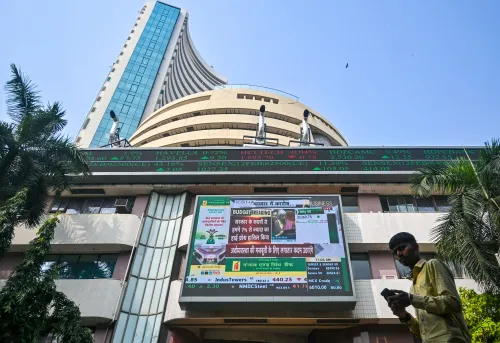
Mumbai, March 14 (NationPress) The Indian stock market indices experienced a significant decline of nearly 6 percent over the past week, attributed to ongoing selling pressure amidst rising geopolitical tensions in the Middle East.
The Nifty index fell by 5.31 percent throughout the week, with a 2.06 percent drop on the final trading day, settling at 23,151. Meanwhile, the Sensex closed down by 1,470 points, or 1.93 percent, at 74,563, despite an advance of 5.52 percent earlier in the week.
This sharp downturn has been largely driven by escalating crude oil prices and increasing macroeconomic concerns for energy-importing nations like India.
The Nifty Auto index faced a dramatic plunge of approximately 10–11 percent, marking its worst weekly performance since March 2020, with every stock in this index experiencing a significant sell-off.
Shortages of LNG and LPG are raising the potential for production interruptions, while possible limitations in CNG supply could shift consumer demand, particularly in urban areas where CNG vehicles are becoming more popular.
On the last trading day of the week, sectors such as banking, metals, and automobiles were the primary contributors to the decline.
This steep drop resulted in a loss of almost Rs 9.5 lakh crore in investor wealth in just one session.
Broader indices mirrored the benchmark trends, with the Nifty Midcap100 decreasing by 4.59 percent and the Nifty Smallcap100 falling 3.66 percent.
Rising crude prices not only escalate inflation risks but also weaken the currency, leading to further pressure on the Indian rupee, which has settled at a new record low of 92.45 against the US dollar for the second consecutive week.
Analysts indicate that immediate support for the Nifty is at 23,000, while resistance levels are at 23,300 and 23,500.
For Bank Nifty, immediate support is at 53,500, with further support at 53,000. On the upside, resistance is seen at 54,000 and 54,300.
The India VIX has risen above 22, indicating increased anxiety among market participants and expectations of larger price fluctuations in the near future.
aar/na
Point of View
It is imperative to recognize the significance of current geopolitical tensions on the Indian financial markets. The recent declines in stock indices highlight the interconnectedness of global events and local economies. Investors must remain vigilant and informed as these developments unfold, prioritizing strategic decision-making in these volatile times.
NationPress
29 Sept 2026
Frequently Asked Questions
What caused the decline in Indian stock indices?
The decline was primarily due to escalating geopolitical tensions in the Middle East and a surge in crude oil prices, impacting investor sentiment and economic outlook.
How much did the Nifty index drop this week?
The Nifty index fell by 5.31 percent during the week.
What are the immediate support and resistance levels for Nifty?
Immediate support for Nifty is seen at 23,000, with resistance levels at 23,300 and 23,500.
What impact did rising crude prices have on the Indian rupee?
Higher crude prices have contributed to inflation risks and weakened the Indian rupee, which has settled at a record low of 92.45 against the US dollar.
Which sectors were most affected by the market decline?
The banking, metal, and auto sectors were among the biggest contributors to the market decline.