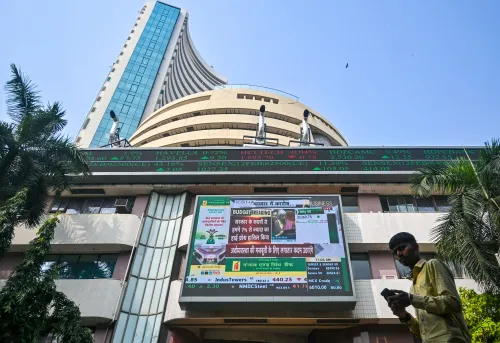
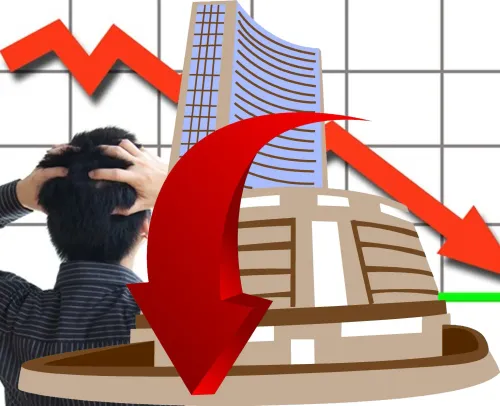
Indian Stock Markets Plunge: Sensex Loses 2500 Points Amid Rising Middle East Tensions
Synopsis
The Indian stock market faced a dramatic drop on Thursday, with the Sensex losing nearly 2500 points due to escalating tensions in the Middle East and soaring oil prices. This development raises concerns about the economic implications of ongoing geopolitical conflicts.
Key Takeaways
Indian stock markets faced a severe downturn, with Sensex dropping 2500 points.
Global tensions and rising oil prices are significant contributing factors.
Market volatility increased significantly, impacting investor confidence.
Midcap and smallcap stocks also experienced notable declines.
Sector-wise, the automotive industry was the worst affected.
Mumbai, March 19 (NationPress) The Indian stock market experienced a significant downturn on Thursday due to escalating global tensions and a sharp increase in oil prices. This turmoil, stemming from the ongoing conflict involving the US, Iran, and Israel, has severely affected crucial energy infrastructure.
The benchmark indices, Nifty and Sensex, concluded the trading day with considerable losses, marking their most substantial single-day drop in almost two years.
The Nifty index fell by 775.65 points, equating to a 3.26 percent decrease, closing at 23,002.15. Meanwhile, the Sensex plunged by 2,496.89 points, also reflecting a 3.26 percent decline, settling at 74,207.24.
This sell-off was exacerbated by a sharp rise in crude oil prices, raising concerns over potential supply disruptions.
Brent crude oil surged nearly 11 percent, reaching $119.5 per barrel, following reports that Saudi Arabia had ceased oil loading at the Yanbu port due to damage incurred at key refineries.
Drone attacks were reported to have targeted Samref’s facilities, while several Aramco refineries caught fire amid the intensification of the US-Iran conflict.
Market volatility also saw a notable increase throughout the day, with the India VIX climbing over 22 percent, signaling heightened uncertainty among investors.
It ultimately closed nearly 22 percent higher, suggesting that investor anxiety may persist in the near future.
The broader market trends mirrored the downturn of the main indices, with midcap and smallcap stocks experiencing significant declines, both dropping around 3 percent.
Sector-wise, the automotive industry faced the most severe impact, followed closely by financial services and IT stocks, which also endured substantial selling pressure.
The sudden escalation in oil prices typically affects auto manufacturers adversely due to increased fuel costs, while financial and IT sectors often respond sensitively to global uncertainties.
Analysts noted that the overall market sentiment remained cautious as investors reacted to geopolitical developments, concerned about the potential economic effects of a prolonged conflict and surging energy costs.
Point of View
It is crucial to acknowledge the serious implications of the recent downturn in the Indian stock market. The dramatic fall in both the Sensex and Nifty reflects not only market volatility but also the broader concerns about geopolitical tensions affecting economic stability. Investors must navigate this uncertain landscape with caution.
NationPress
22 Sept 2026
Frequently Asked Questions
What caused the recent decline in the Indian stock market?
The decline was primarily driven by escalating tensions in the Middle East, particularly involving the US, Iran, and Israel, which led to a sharp increase in oil prices and market volatility.
How much did the Sensex and Nifty drop?
The Sensex dropped by 2,496.89 points, while the Nifty fell by 775.65 points, both reflecting a 3.26 percent decrease.
What impact do rising oil prices have on the stock market?
Rising oil prices can lead to increased costs for businesses, particularly in the automotive sector, and create uncertainty in financial markets, impacting investor sentiment.
What sectors were most affected by the market decline?
The automotive sector was the hardest hit, followed by financial services and IT stocks, all facing significant selling pressure.
What should investors consider during this volatile period?
Investors should remain cautious, keeping an eye on geopolitical developments and the potential economic impacts of rising energy costs.