Global Tensions and Oil Prices to Influence D-Street Next Week
Synopsis
As the Indian stock market closes the week cautiously, rising crude oil prices and geopolitical tensions are set to impact investor sentiment. Analysts urge vigilance amid volatility.
Key Takeaways
Market ends cautiously amid global tensions.
Crude oil prices show volatility, influencing market trends.
Nifty's resistance and support levels are critical to watch.
Geopolitical developments are key external drivers.
Traders must practice strict risk management.
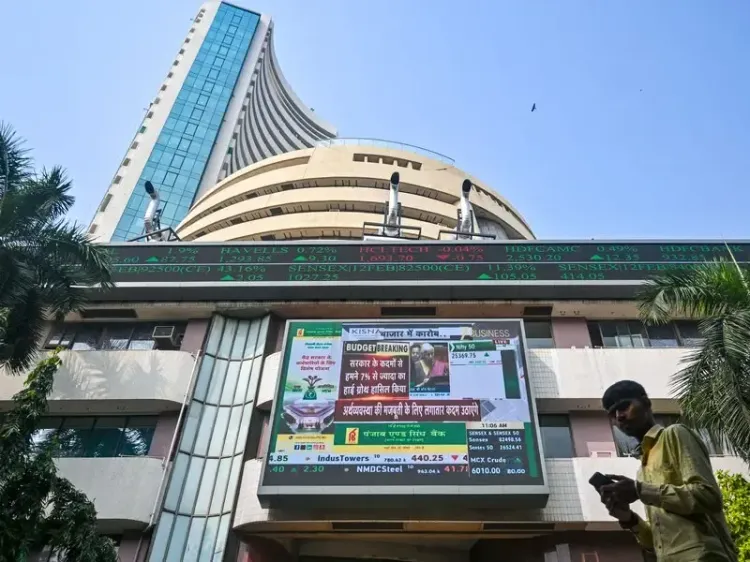
Mumbai, March 22 (NationPress) The Indian equity market concluded the week with a sense of caution, as analysts suggest that escalating global tensions, increasing crude oil prices, currency fluctuations, and trends in precious metals will significantly influence investor mood in the upcoming days.
The key indices, Nifty and Sensex, wrapped up the week mostly unchanged, showing a slight downward trend.
While the initial three trading sessions were positive, a sudden sell-off on Thursday wiped out most of the gains, leading to a turbulent session on Friday.
The Nifty dropped by 0.16 percent, finishing at 23,114.50, whereas the Sensex closed down 0.04 percent at 74,532.96.
“From a technical standpoint, 23,850 stands as the immediate resistance level, succeeded by 24,000 and 24,150,” an analyst noted while discussing Nifty’s technical projections.
“On the downside, crucial support levels are at 22,950 and 22,700, with a breach below 22,700 potentially resulting in heightened negative movement,” a market expert indicated.
Investors are now paying close attention to rising geopolitical tensions in the Middle East, especially the ongoing conflict involving the US, Israel, and Iran.
The situation escalated after Donald Trump issued new warnings to Iran regarding the Strait of Hormuz, a vital global oil supply channel.
Crude oil prices also remain a major factor influencing the market. Despite a decline on Friday, with Brent crude falling to approximately $105 per barrel and WTI crude dropping below $93, prices had surged close to $119 earlier in the week due to the rising tensions.
Market analysts predict that the forthcoming week will be data-sensitive amidst ongoing global uncertainties.
“Developments in the West Asia conflict and fluctuations in crude oil prices will continue to serve as key external catalysts and are expected to dictate the short-term market trajectory,” an analyst remarked.
“Traders are urged to exercise caution and implement strict risk management strategies in light of the prevailing volatility,” an analyst added.
Point of View
The Indian stock market is at a pivotal moment. As geopolitical tensions rise and oil prices fluctuate, investors must navigate a complex landscape. The focus on risk management and awareness of external factors is crucial for market participants.
NationPress
21 Sept 2026
Frequently Asked Questions
What are the key factors affecting the Indian stock market this week?
Global tensions, rising crude oil prices, and currency fluctuations are expected to shape investor sentiment in the coming days.
What are the resistance and support levels for Nifty?
The immediate resistance for Nifty is at 23,850, with support levels at 22,950 and 22,700.
How did crude oil prices affect the market this week?
Crude oil prices surged earlier in the week but eased towards the end, which influences market trends.
What should traders do amid market volatility?
Traders are advised to remain cautious and adhere to strict risk management practices.
What geopolitical tensions are impacting the market?
The conflict involving the US, Israel, and Iran, especially regarding the Strait of Hormuz, is a significant concern.