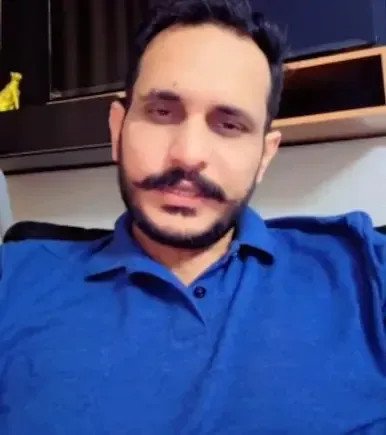
Shahzad Bhatti: India pushes extradition of Pak gangster behind 16-country terror network

Synopsis
A Lahore-based gangster operating out of Dubai, Shahzad Bhatti has been linked to grenade attacks, the murder of NCP leader Baba Siddique, and a recruitment network spanning 16 countries and nearly 200 operatives. Indian agencies are now racing to dismantle his social-media-driven recruitment machine while simultaneously pushing for his extradition — a process complicated by his Pakistani nationality and alleged ISI protection.
Key Takeaways
Shahzad Bhatti , a Lahore-based gangster operating from Dubai , faces more than a dozen cases in India linked to terror recruitment, radicalisation, and espionage.
His network has been linked to the October 2024 murder of NCP leader Baba Siddique in Mumbai and a March 2024 grenade attack in Jalandhar .
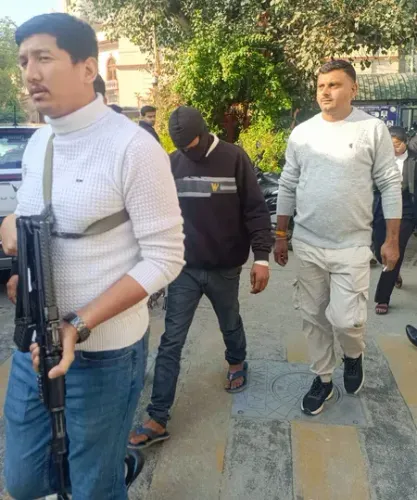
Nine persons were arrested by the Delhi Police Special Cell from five states for allegedly plotting attacks on a Delhi temple, a Haryana military camp, and a Delhi-Sonipat highway eatery.
Bhatti reportedly claims networks in 16 countries and command over nearly 200 operatives , recruited largely via social media.
Indian agencies believe he enjoys ISI protection ; his Pakistani nationality and lack of travel to India complicate extradition proceedings.
Agencies are coordinating across states and with foreign governments to dismantle his recruitment network and secure his extradition.
Pakistan-based gangster Shahzad Bhatti, accused of orchestrating terror recruitment, radicalisation, and espionage activities across India, has emerged as a high-priority extradition target for Indian security agencies, with more than a dozen cases reportedly registered against him. The Lahore-based operative is believed to have been running his network from Dubai while travelling between Pakistan, the UAE, and other Middle East countries, according to investigating agencies.
Who Is Shahzad Bhatti
Investigators describe Bhatti as a high-value operative who allegedly exploits legal and jurisdictional gaps to remain beyond the reach of Indian law enforcement. A senior Indian security agency official noted that his Pakistani nationality and the fact that he has never travelled to India have significantly complicated extradition proceedings. "He is not an Indian national and belongs to Pakistan. Moreover, he has never travelled to India, which has made the extradition process more complicated," the official said. Security agencies further believe Bhatti likely enjoys protection from Pakistan's Inter-Services Intelligence (ISI), and there are concerns he may retreat deeper into Pakistan if extradition efforts gain momentum.
Key Attacks and Arrests Linked to His Network
Bhatti's name first surfaced prominently in March 2024 following a grenade attack near the residence of Punjabi YouTuber Rozer Sandhu in Jalandhar, Punjab. His network was subsequently linked to the murder of Nationalist Congress Party (NCP) leader Baba Siddique in Mumbai in October 2024. More recently, the Special Cell of Delhi Police arrested nine persons from Uttar Pradesh, Madhya Pradesh, Jammu and Kashmir, Punjab, and Gujarat — all allegedly recruited by Bhatti and instructed to target a major temple in Delhi, a military camp in Haryana, and a popular eatery along the Delhi-Sonipat highway. In April 2025, two individuals were arrested in Madhya Pradesh for allegedly planning grenade attacks outside crowded restaurants in Delhi. Agencies are also probing possible links between Bhatti's network and low-intensity blasts reported near the Border Security Force (BSF) headquarters and Amritsar Cantonment on 5 May 2025.
How the Recruitment Network Operates
An Intelligence Bureau (IB) official said the immediate priority is dismantling Bhatti's recruitment infrastructure, which investigators believe functions largely through social media platforms. Bhatti and his Pakistan-based associates allegedly used online channels to identify vulnerable youngsters across multiple states, luring them with promises of money, influence, and recognition. "Financial incentives and the lure of power have also been used during recruitment," the official said. Investigators further noted a disturbing operational pattern: recruits are typically used for a single assignment and then discarded. "It functions like a disposable module. Once a recruit completes a task, he is usually not used again for another operation," an official said. Bhatti has reportedly claimed to have established networks in 16 countries and to command nearly 200 operatives.
The Extradition Challenge
Despite the complexity, officials remain cautiously optimistic about securing Bhatti's extradition. Agencies plan to coordinate with countries where he is believed to be operating. Officials pointed to precedents — notably the extradition of a key accused in the 26/11 Mumbai attacks after all legal appeals were exhausted in US courts. In the case of David Headley, extradition was blocked by a plea bargain agreement with US authorities, though Indian investigators were permitted to question him and he later appeared via video conferencing during trial proceedings. A second official noted that while the process would be complicated, it remained achievable.
What Comes Next
Security agencies have flagged that dismantling the recruitment network is urgent, warning that the situation could spiral out of control if left unchecked. Closer coordination among police forces across multiple states is already under way. The coming weeks will test whether India's inter-agency effort and diplomatic outreach can neutralise a network that investigators say has been expanding steadily across state lines and international borders.
Point of View
Socially-mediated recruitment that requires no physical border crossing. Unlike older models of cross-border infiltration, Bhatti's alleged network operates entirely through digital channels and disposable modules — making arrests at the periphery easier but neutralising the core nearly impossible without extradition. The ISI protection angle, if substantiated, would also signal a deliberate state-tolerated use of organised crime as a terror proxy — a pattern India has flagged before but struggled to prosecute internationally. The David Headley precedent is instructive: even when extradition fails, investigative access can be negotiated. The real question is whether India's diplomatic bandwidth, currently stretched across multiple bilateral tensions, can sustain the pressure needed to bring Bhatti to trial.
NationPress
24 Sept 2026
Frequently Asked Questions
Who is Shahzad Bhatti and why is India seeking his extradition?
Shahzad Bhatti is a Lahore-based gangster allegedly operating from Dubai who has been linked to terror recruitment, radicalisation, and espionage activities across India. Indian agencies are seeking his extradition because more than a dozen cases have reportedly been registered against him, connecting his network to grenade attacks, murders, and plots targeting public places.
Which attacks has Shahzad Bhatti's network been linked to?
His network has been linked to a grenade attack near YouTuber Rozer Sandhu's residence in Jalandhar in March 2024, the murder of NCP leader Baba Siddique in Mumbai in October 2024, and planned attacks on a Delhi temple, a Haryana military camp, and a Delhi-Sonipat highway eatery. Agencies are also probing links to blasts near the BSF headquarters and Amritsar Cantonment on 5 May 2025.
Why is extraditing Shahzad Bhatti complicated?
Bhatti is a Pakistani national who has never travelled to India, which limits the legal grounds for a straightforward extradition request. Security agencies also believe he enjoys protection from Pakistan's ISI, and there are concerns he may retreat further into Pakistan if extradition efforts intensify.
How does Bhatti's recruitment network operate?
Investigators say the network functions primarily through social media platforms, targeting vulnerable youngsters across multiple Indian states with promises of money, power, and recognition. Recruits are reportedly used for a single operation and then discarded, functioning as disposable modules to minimise traceability.
What precedents exist for extraditing terror suspects to India?
Officials cited the extradition of a key accused in the 26/11 Mumbai attacks after all legal appeals were exhausted in US courts. In the David Headley case, extradition was blocked by a US plea bargain, but Indian investigators were allowed to question him, and he later appeared via video conferencing during trial proceedings.