Goyal Hails Advani's Bond With BJP Workers as Party's Strength
Synopsis
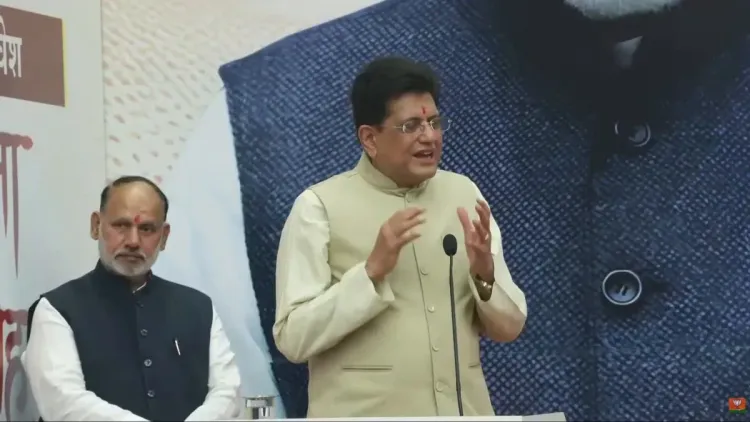
Union Commerce Minister Piyush Goyal hailed L.K. Advani's conduct toward party workers as a defining example of BJP's strength and organisational ethos, posting a tribute on X on November 8, 2026.
Key Takeaways
Piyush Goyal , Union Commerce Minister and Leader of the House in the Rajya Sabha, posted a tribute to L.K.
Advani on November 8, 2026 .
Goyal called Advani's conduct toward BJP workers 'the strength, inspiration, and learning of this party.' L.K.
Advani served as Deputy Prime Minister of India from 2002 to 2004 and was central to building the BJP's cadre network.
The tribute reflects the BJP's longstanding internal culture of venerating senior leaders for personal engagement with grassroots workers.
No specific occasion for the tribute was stated in the post; it is framed as a lesson in organisational values.
A short tribute, but a loaded one. Union Commerce and Industry Minister Piyush Goyal on Sunday, November 8, 2026, invoked the name of veteran BJP patriarch L.K. Advani to hold up a simple, enduring lesson — that the way a leader treats the party's foot soldiers is not incidental, but foundational.
Posting on X in Hindi, Goyal wrote: 'Shraddhey Advani ji ka karyakartaon ke saath vyavhaar ek aisi misaal hai jo is party ki takat, prerna aur seekh hai' — 'The way the revered Advani ji conducts himself with workers is an example that is the strength, inspiration, and learning of this party.'
The Man Behind the Message: Who Is L.K. Advani?
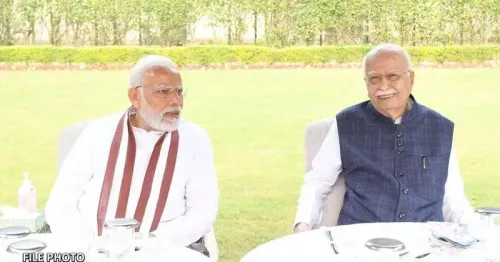
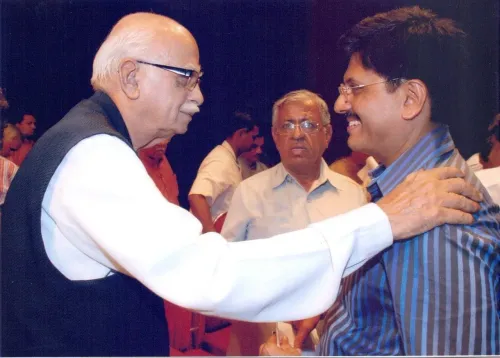
Lal Krishna Advani is among the most consequential figures in BJP's history. As party president across two stints and Deputy Prime Minister of India from 2002 to 2004, he was central to building the BJP from a marginal parliamentary force in the early 1980s into a mass-cadre organisation. Within party folklore, Advani is remembered not just for electoral strategy but for the personal warmth he extended to rank-and-file workers — a trait Goyal now explicitly frames as a source of institutional strength.
Why Goyal's Framing Matters Inside the BJP
The BJP's self-image rests heavily on its cadre-based structure — the idea that karyakartas (workers) are the party's backbone, not mere foot soldiers. Senior leaders who visibly invest in those relationships become living proof of the party's organisational philosophy. By singling out Advani's conduct toward workers as an 'example' and a 'lesson', Goyal is doing something deliberate: reinforcing a behavioural norm, not simply offering praise.
The timing carries no stated occasion in the post itself, but the sentiment is unambiguous — this is an act of institutional memory-keeping, reminding a new generation of BJP cadre what the party's older guard modelled.
A Legacy Written in Grassroots Relationships
Advani's expansion of the BJP through the late 1980s and 1990s was built on exactly the kind of ground-level engagement Goyal highlights. Party veterans have long recalled how Advani would remember workers by name across constituencies, attend local events, and treat the smallest booth-level volunteer with seriousness. That culture of mentorship, the argument goes, is what turned a party of ideologues into a national electoral machine.
When a sitting Rajya Sabha Leader of the House and senior cabinet minister publicly names that culture as 'the strength of this party', it signals that the lesson is considered live — not archival.
The tribute is brief. The point it makes is not.
Point of View
Goyal is signalling that relational culture, not just policy or propaganda, is what BJP's leadership considers its competitive advantage. It also reflects a broader pattern of senior BJP figures periodically invoking Advani's legacy to anchor the party's organisational identity, particularly as a younger generation of leaders rises. The tribute asks that generation to inherit not just the BJP's vote share, but its internal etiquette.
NationPress
8 Nov 2026
Frequently Asked Questions
What did Piyush Goyal say about L.K. Advani?
Piyush Goyal said that Advani's conduct toward BJP workers is an example that represents the strength, inspiration, and learning of the party.
Why is L.K. Advani important to the BJP?
L.K. Advani is one of the founding architects of the modern BJP, having served as party president and Deputy Prime Minister of India from 2002 to 2004. He is credited with building the party's mass-cadre organisation from the ground up.
What is the BJP's culture of karyakartas?
The BJP's internal philosophy places heavy emphasis on its grassroots workers, known as karyakartas. Senior leaders engaging respectfully with these workers is considered a core organisational value.
What is Piyush Goyal's current role in the BJP and government?
Piyush Goyal is Union Minister of Commerce and Industry and also serves as Leader of the House in the Rajya Sabha, making him one of the most senior BJP figures in Parliament.
Was there a specific occasion for Goyal's tribute to Advani?
No specific occasion was stated in Goyal's post. The tribute appears to be an unprompted reflection on Advani's conduct and its significance as an organisational lesson for the party.