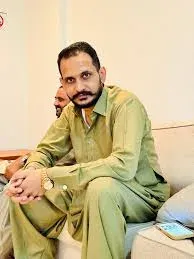
ISI operative Shehzad Bhatti building pan-India terror network via jobless youth
Synopsis
A former social media influencer turned ISI operative, Shehzad Bhatti, is allegedly building a pan-India terror network by recruiting economically vulnerable youth — biryani sellers, vegetable vendors, small moneylenders — with payments as low as ₹5,000. The Maharashtra ATS has over 100 suspects under watch, and the network's state-hopping design is making it unusually hard to dismantle.
Key Takeaways
Shehzad Bhatti , a former social media influencer, has allegedly been recruited by Pakistan's ISI to build a pan-India operative network.
Recruits have reportedly been paid as little as ₹5,000 for initial tasks including narcotics smuggling and intelligence gathering.
The network has operated across Uttar Pradesh , Haryana , and Maharashtra , shifting states to evade security agencies.
More than 100 youth in Maharashtra are currently under surveillance by security agencies.
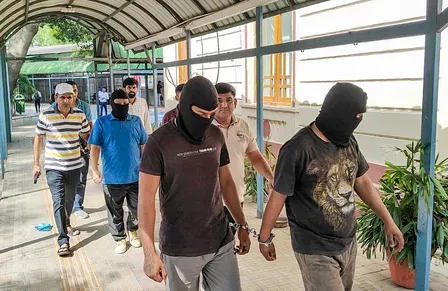
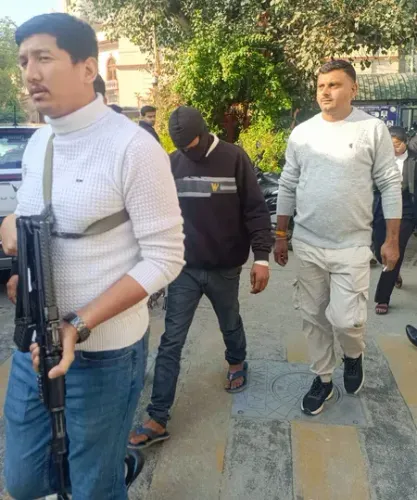
The Maharashtra Anti-Terrorism Squad (ATS) is conducting an active investigation into the network's expansion.
Officials say the network deliberately conceals its terror-related end-goal from new recruits to lower resistance to joining.
An Inter-Services Intelligence (ISI) operative identified as Shehzad Bhatti has been running a large-scale recruitment network inside India, targeting unemployed and low-income youth for activities ranging from drug smuggling and weapons trafficking to intelligence gathering and, ultimately, terror-related operations, according to security officials. Intelligence inputs indicate the network has been active for several months, with operations already traced across Uttar Pradesh, Haryana, and Maharashtra.
Who Is Shehzad Bhatti
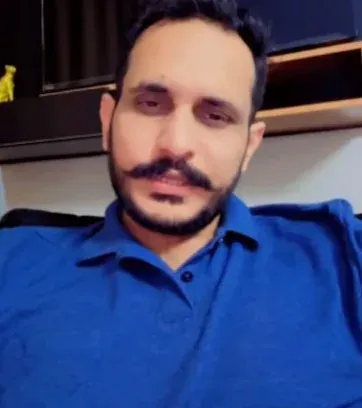
Bhatti was formerly known as a social media influencer before allegedly being recruited by Pakistan's Inter-Services Intelligence and tasked with building a pan-India module of operatives. According to officials, he was specifically directed to target youth in North Indian states and has, over the past six months, allegedly enlisted recruits across the region — in some cases for payments as low as ₹5,000.
The recruitment model, officials say, deliberately avoids disclosing any terror-related end-goal to new recruits. Instead, initial tasks are framed as low-risk assignments — smuggling small quantities of narcotics, gathering information about sensitive locations, or transporting minor contraband — designed to test reliability and build a track record before recruits are drawn deeper into the network.
The Shifting State-by-State Strategy
A key feature of Bhatti's alleged operation is its mobility. An Intelligence Bureau official said the network deliberately avoids simultaneous pan-India recruitment. 'They are not indulging in pan-India recruitments. They are targeting youth from one state at a time, and this helps them evade the security agencies,' the official said.
When security agencies reportedly began closing in on his operations in Uttar Pradesh, Bhatti is said to have shifted focus to Maharashtra. Investigators in Maharashtra now say more than 100 youth are under active surveillance by security agencies in the state.
Who Is Being Targeted
In Uttar Pradesh and Haryana, investigators say Bhatti's network focused on economically vulnerable individuals — including biryani sellers, small-time moneylenders, and vegetable vendors — who were initially assigned tasks such as smuggling small firearms and marijuana. Officials believe these assignments were designed to test their reliability and gradually prepare them for more serious operations.
The recruitment pattern differs markedly from that of conventional terror outfits. Rather than ideological indoctrination, the primary lure is financial — with recruits reportedly agreeing to assignments in exchange for modest sums. 'The tasks that were assigned initially required the recruits to smuggle narcotics in smaller quantities. They were also told to gather information about sensitive locations. These tasks do not appear risky when compared to being told to carry out a terror attack,' the Intelligence Bureau official said.
Maharashtra ATS Investigation
The Maharashtra Anti-Terrorism Squad (ATS) is conducting an active investigation into the network's expansion in the state. According to officials, Bhatti and his associates were using an online outreach programme, financial inducements, and propaganda to widen their reach. The ATS probe reportedly reveals a far larger operational plan than what has so far been publicly disclosed.
Officials say Bhatti's broader objective is to establish extensive modules across multiple states — a network capable of executing coordinated tasks on demand. Whenever surveillance intensifies in one state, he is said to relocate operations to another, making dismantlement a sustained challenge for law enforcement agencies.
The Security Challenge Ahead
Officials describe dismantling this network as a significant challenge, given its decentralised structure and deliberate strategy of operating below the threshold of conventional terror activity. Investigators believe Bhatti will continue the recruitment drive until he has established viable modules across several states. The case underscores a broader concern among Indian security agencies about ISI-backed networks that exploit economic vulnerability rather than religious or political grievance as an entry point.
Point of View
000 assignments, the network stays below the radar of conventional counter-terror profiling. India's security architecture is built to detect motivated extremists; it is far less equipped for a franchise model that looks, at entry level, like petty crime. The Maharashtra ATS investigation is critical, but the deeper question is structural: how many similar low-visibility networks are active in states where the trail has not yet been picked up.
NationPress
10 Oct 2026
Frequently Asked Questions
Who is Shehzad Bhatti and what is his alleged role?
Shehzad Bhatti is a former social media influencer who was allegedly recruited by Pakistan's Inter-Services Intelligence (ISI) to build a pan-India network of operatives. He is accused of targeting unemployed and low-income youth across multiple Indian states for tasks ranging from drug smuggling to intelligence gathering and, eventually, terror-related activities.
How does Bhatti's recruitment network allegedly operate?
The network targets economically vulnerable youth and offers them small payments — reportedly as low as ₹5,000 — for seemingly minor tasks such as smuggling narcotics or scouting sensitive locations. Recruits are not initially told about any terror-related end-goal; they are gradually drawn into more serious operations only after proving reliable on early assignments.
Which states are affected and how many people are under watch?
The network has reportedly been active in Uttar Pradesh, Haryana, and Maharashtra. In Maharashtra alone, more than 100 youth are currently under surveillance by security agencies, according to officials. Bhatti is said to shift operations to a new state whenever agencies begin closing in on his network.
What is the Maharashtra ATS investigating?
The Maharashtra Anti-Terrorism Squad (ATS) is investigating the expansion of Bhatti's network in the state. Officials say the probe has revealed a far larger operational plan, including the use of online outreach, financial inducements, and propaganda to widen recruitment.
Why is this network considered difficult to dismantle?
Security officials say the network's decentralised, state-by-state structure and its reliance on low-visibility tasks — which resemble petty crime rather than terrorism at the entry level — make it hard to detect and dismantle. Bhatti is said to constantly relocate operations to stay ahead of law enforcement surveillance.