Ajmal Gujjar's expanding ISI network role flagged by agencies: money, not ideology
Synopsis
Indian agencies have flagged a sharp rise in Ajmal Gujjar's operational activity within an ISI-backed network co-run with former influencer Shahzad Bhatti. What makes this syndicate uniquely dangerous: it recruits across religions using cash, not ideology — and it is reportedly aiming to plant more than 20 modules across India before executing major strikes.
Key Takeaways
Ajmal Gujjar , operating from Pakistan , heads the smuggling arm of an ISI-backed network co-led with Shahzad Bhatti .
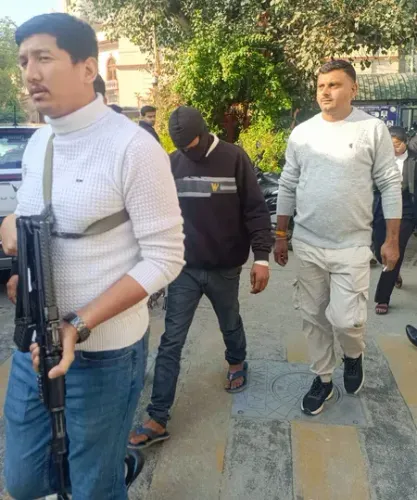
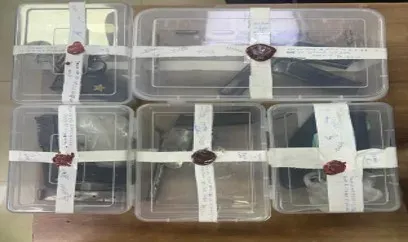
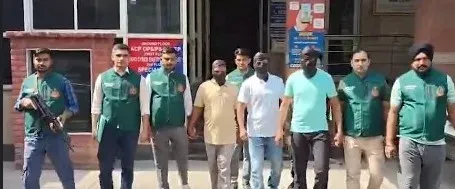
The Delhi Police Special Cell arrested seven persons on Tuesday after busting a terror module linked to the syndicate.
The network has made multiple drone-based attempts to drop arms, ammunition, and narcotics near the Punjab border .
The syndicate recruits on the basis of money, not ideology or religion, making recruitment significantly easier, according to officials.
Bhatti and Gujjar reportedly plan to operate more than 20 separate modules across India to ensure continuity if some are busted.
Officials say the pair are under ISI pressure to build a homegrown terror network that conceals any link back to Pakistan .
Indian security agencies have flagged the rapidly growing operational role of Ajmal Gujjar within an ISI-backed terror network linked to a string of cases currently under police investigation. Gujjar, who operates out of Pakistan, reportedly functions as the logistics and smuggling arm of a syndicate co-run with Shahzad Bhatti — a former social media influencer turned ISI operative. The network is described by officials as money-driven rather than ideologically motivated, a factor that has significantly broadened its recruitment base.
How the Bhatti-Gujjar Syndicate Is Structured
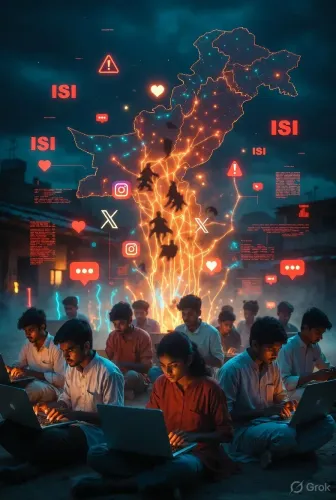
According to officials, Shahzad Bhatti handles planning, execution, and all social media operations, leveraging his prior experience as an influencer to recruit youth across multiple platforms. He reportedly scouts targets by studying their financial vulnerabilities before initiating contact, then offers upfront payments before revealing the nature of the assignment.
Ajmal Gujjar plays a complementary but distinctly operational role — overseeing the smuggling of arms and ammunition into India from Pakistan. Officials say his activities have 'increased considerably' over the past couple of months, raising alarm within the intelligence community. Gujjar reportedly taps into domestic underworld networks to distribute weapons to recruits after cross-border delivery.
Drone Drops and the Punjab Border Trail
The syndicate has made multiple attempts to deliver arms, ammunition, and narcotics into India using drones, according to officials. Most of these attempted drop-offs have been traced to the Punjab border. While direct arms smuggling from Pakistan has proven difficult, the network has adapted by using established criminal supply chains within India to bridge the gap.
Delhi Terror Module Busted, More Feared Active
On Tuesday, the Special Cell of the Delhi Police dismantled a terror module and arrested seven persons. According to officials, this module — like one busted in May — was operating under the direction of Bhatti and Gujjar. Agencies believe the duo has already established multiple modules in and around Delhi, with a stated ambition of running more than 20 separate modules across various parts of the country. The distributed structure is designed to ensure operational continuity even if several modules are neutralised.
Money Over Ideology: What Makes This Network Dangerous
Officials stress that the Bhatti-Gujjar syndicate recruits without regard to religion, community, or ideology. 'It is money over ideology, and religion is not a factor they take into account,' an official said. This transactional model has reportedly made recruitment significantly easier, as the syndicate pays recruits handsomely and upfront. Planned operations reportedly include targeted killings and mass shootings at crowded locations, including places of worship.
ISI Pressure and the Larger Design
Officials say both Bhatti and Gujjar are operating under direct ISI pressure to build a large-scale homegrown terror infrastructure in India. The intent, according to officials, is to have local youth carry out attacks in a way that obscures any trail back to Pakistan. Dismantling the entire network is described as a 'Herculean task,' with agencies warning that the syndicate shows no signs of standing down until it executes at least a few major strikes.
Point of View
Franchise-style network. By removing religion as a filter, the syndicate dramatically widens its recruitment pool, making it harder for agencies to profile or predict. The 20-module ambition signals that this is not a reactive operation but a planned, scalable infrastructure. The deeper concern is the ISI's apparent pivot toward plausible deniability: if locally recruited, financially motivated individuals carry out attacks, attribution becomes a diplomatic and legal minefield for India.
NationPress
20 Sept 2026
Frequently Asked Questions
Who is Ajmal Gujjar and what is his role in the ISI network?
Ajmal Gujjar is a Pakistan-based operative who, according to officials, serves as the logistics and smuggling chief of an ISI-backed terror network co-run with Shahzad Bhatti. He oversees the cross-border movement of arms and ammunition into India and uses domestic underworld contacts to distribute weapons to recruits.
Who is Shahzad Bhatti and how does he recruit members?
Shahzad Bhatti is a former social media influencer who was reportedly roped in by the ISI and now handles planning, execution, and online recruitment for the network. He scouts financially vulnerable individuals on social media, offers upfront payments, and then reveals the assignment — a model that officials say has made recruitment unusually easy.
What did the Delhi Police Special Cell uncover on Tuesday?
The Special Cell of the Delhi Police busted a terror module on Tuesday and arrested seven persons. Officials say this module, like one dismantled in May, was operating under the direction of Bhatti and Gujjar.
Why is this network considered more dangerous than ideology-driven groups?
Because the Bhatti-Gujjar syndicate recruits purely on financial incentives, with no religious or ideological filter, it can draw from a far wider pool of individuals. Officials note this transactional model has made recruitment significantly faster and harder to profile using conventional counter-terror methods.
How are arms being smuggled into India by this network?
The syndicate has made multiple attempts to deliver arms, ammunition, and narcotics using drones, with most drop-off attempts traced to the Punjab border, according to officials. When direct smuggling proves difficult, Gujjar reportedly routes weapons through established criminal underworld networks inside India.