SFJ-Bhatti nexus targets India: ISI-backed networks recruit criminals to provoke police
Synopsis
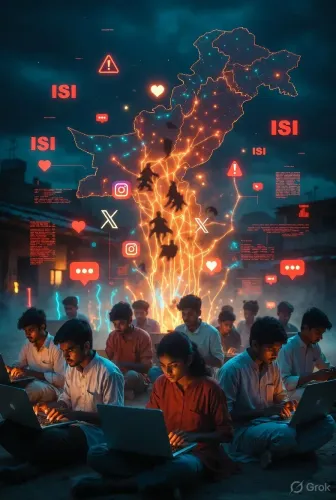
Indian intelligence has uncovered a calculated ISI-directed playbook: recruit Indians with criminal records, plant them in protests to provoke police, film the crackdown, and sell the footage to the world as evidence of a 'police state.' The SFJ-Bhatti nexus is the engine — hawala cash and fake charities are the fuel.
Key Takeaways
The ISI has allegedly directed Sikhs for Justice (SFJ) and the Shahzad Bhatti network to jointly recruit individuals with criminal backgrounds inside India.
Recruits are paid via hawala channels and through fake charities operating within the country.
The stated goal is to infiltrate protests, provoke police action, capture visuals, and circulate them globally to portray India as a police state.
Propaganda videos on platforms like YouTube spiked after Operation Sindoor , according to intelligence officials.
The networks are primarily based in North America and Europe , and the campaign is described as systematic and long-term rather than opportunistic.
Indian security agencies have flagged a coordinated campaign allegedly orchestrated by ISI-backed foreign networks, including Sikhs for Justice (SFJ) and the Shahzad Bhatti network, to recruit individuals with criminal backgrounds inside India, incite violence at protests, and weaponise the resulting police response to fuel an anti-India narrative globally, according to intelligence officials.
How the Operation Works
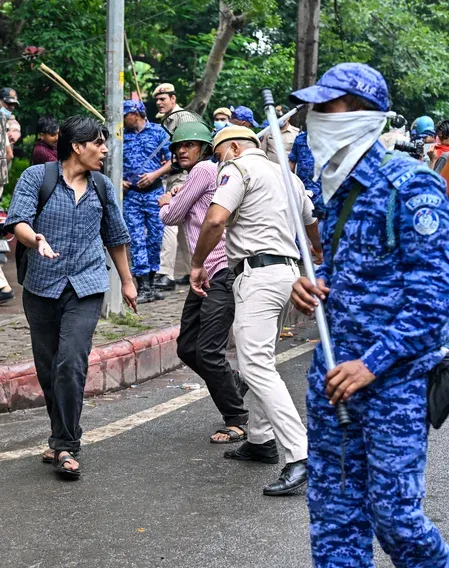
According to an Intelligence Bureau (IB) official, the ISI has directed SFJ and the Bhatti network to operate in tandem on what is described as a 'major operation.' The strategy is calculated: paid recruits — specifically those with prior records for rioting or communal violence — are tasked with infiltrating peaceful protests and instigating clashes. The intent is to provoke a strong law-enforcement response, capture the visuals, and circulate them internationally to portray India as a state that uses excessive force against its own citizens.
'The aim is to malign the image of the country by showing to the world that the police have been given a free hand to act against protesters,' an official said. Persons previously booked for rioting or communal violence are described as 'perfect candidates' for these networks, given their experience in escalating situations.
Funding Routes and Propaganda Infrastructure
Officials say the networks are routing funds to recruits through hawala channels. Additionally, a web of fake charities operating within India has reportedly been instructed to distribute payments to those recruited. On the digital front, these networks have directed operatives to flood platforms such as YouTube with propaganda videos carrying false narratives. According to officials, the volume of such content — driven primarily by Pakistani accounts — surged sharply after Operation Sindoor, reportedly in an effort to obscure the losses suffered by Pakistani forces at the hands of the Indian armed forces.
Geographic Footprint and Targets
Indian agencies have established that these networks are primarily operating out of North America and Europe. The recruitment pool is not random: operatives are specifically seeking individuals with documented histories of criminal violence, making them both easier to radicalise and harder to trace back to the foreign handlers. Officials note that this is not a hurried campaign — it is described as a systematic, long-term effort to gradually shift domestic discourse.
The Broader Strategic Goal
The ultimate objective, according to officials, extends beyond individual incidents. By engineering confrontations and amplifying them through international media, the networks seek to establish a sustained narrative that India is a police state — a framing that could be leveraged diplomatically and in diaspora communities abroad. This comes amid a broader pattern of cross-border information operations that Indian agencies have been tracking for several years, with the tempo reportedly increasing since Operation Sindoor.
Agencies are continuing to monitor the campaign and are working to identify and neutralise both the domestic recruits and the foreign handlers directing them.
Point of View
Motivated by money rather than ideology, and experienced in escalating confrontations. The post-Operation Sindoor surge in propaganda is also telling — it suggests these networks are reactive as much as proactive, ramping up when India's military actions threaten the counter-narrative. The harder question, which official briefings do not address, is how effectively domestic law enforcement can distinguish between a planted agitator and a genuine protester — a distinction that matters enormously for civil liberties and for the credibility of India's own counter-narrative.
NationPress
14 Sept 2026
Frequently Asked Questions
What is the SFJ-Bhatti nexus and what is it accused of doing in India?
Sikhs for Justice (SFJ) and the Shahzad Bhatti network are two foreign-based outfits that Indian intelligence officials allege are operating under ISI direction to recruit individuals with criminal records inside India, deploy them to incite violence at protests, and use the resulting police response to build an anti-India narrative globally.
How are these networks funding their recruits inside India?
According to intelligence officials, funds are being routed to recruits through hawala channels. A network of fake charities operating within India has also reportedly been instructed to distribute payments to those recruited for the operation.
Why are individuals with criminal backgrounds being specifically targeted for recruitment?
Officials say persons previously booked for rioting or communal violence are preferred because they have direct experience in escalating confrontations and inciting clashes, making them effective at provoking a strong police response — which is the core objective of the operation.
How does the propaganda dimension of this campaign work?
The networks have reportedly instructed operatives to flood platforms like YouTube with videos carrying false narratives. Officials say this activity intensified after Operation Sindoor, with Pakistani-linked accounts amplifying content to counter India's military narrative and frame the country as a police state.
Where are these foreign networks based, and how long has this campaign been running?
Indian agencies have assessed that the networks are primarily operating from North America and Europe. Officials describe the campaign as systematic and long-term — not a rushed effort, but a gradual attempt to shift domestic discourse and manufacture internationally viable incidents.